
Rogue Manta Ray Adjustable Bench Review After One Year: Is It Really Worth $1,371?
By Drew | Iron and Lime Fitness
Last Updated: Feb 2026
Iron and Lime Fitness is independent and supported by readers. We may earn a small commission at no cost to you if you buy through an affiliate link.
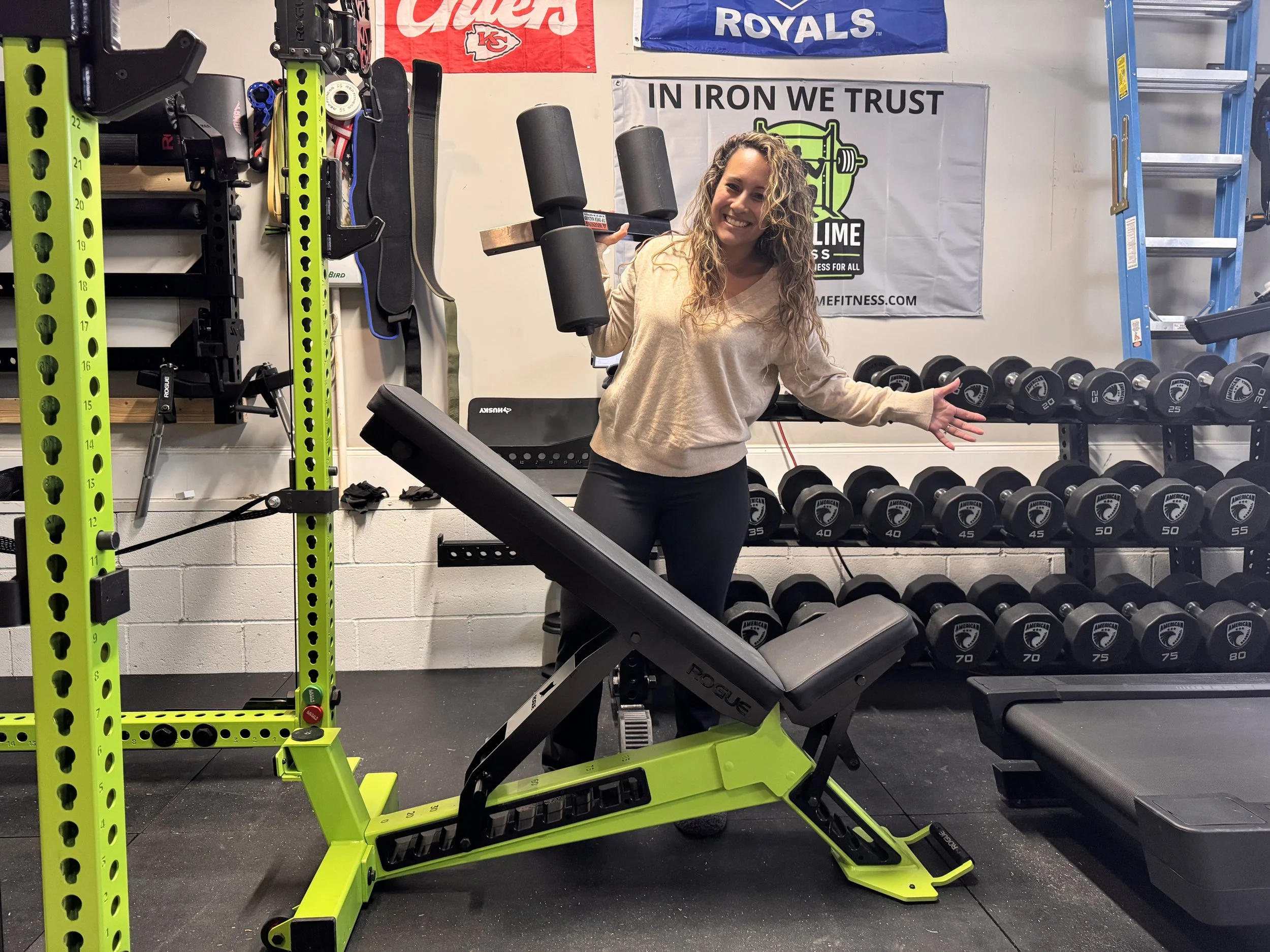
Jess from Iron and Lime Fitness with the Rogue Manta Ray Bench
If you’ve spent more than five minutes researching premium adjustable benches, you’ve already run into the Rogue Manta Ray. It dominates forums, pops up in every serious home gym build list, and carries a reputation that ranges from “absolute tank” to “ridiculously overpriced flex piece.” Depending on who you ask, it’s either a masterpiece of American manufacturing or a wildly unnecessary luxury buy for people who like their equipment built to survive a nuclear winter. And honestly, both sides have a point. Rogue didn’t design this bench for casual lifters. They built it for the crowd that wants gear that feels bolted into the Earth.
I’ve had the bright green Manta Ray with the optional foot catch sitting in my garage gym for a full year now, and it has been through more chaos than most commercial benches ever will. It lived through months of brutal Georgia humidity without warping or softening. It endured early morning training sessions where the temperature swings from cold metal to sweat-soaked pads in minutes. It has been climbed on, stepped on, and occasionally assaulted by toddler fingerprints, cereal crumbs, sticky hands, and whatever else small children manage to smuggle into a garage gym. Add chalk dust, dropped dumbbells nearby, heavy barbell sessions, and daily movement across concrete, and you have a pretty good stress test for any piece of equipment Rogue claims is “overbuilt.”
After 365 days of real-world lifting, not showroom lighting, not Instagram posing, not “I used this twice and here’s my review” here’s the honest question every home gym owner actually cares about: Is the Rogue Manta Ray truly the king of adjustable benches, built to last longer than we will, or is it just an expensive, over-engineered piece of furniture that Rogue managed to convince us we needed? What follows is the truth you actually want before dropping over $1,300 on something you only use to sit or lie on.
Specs at a Glance
Before the deep dive, here is what you are really buying:
3x4 inch, 7 gauge steel frame
140 pounds total weight
5 seat positions (minus 20 degrees to 30 degrees)
10 back positions (0 degrees to 85 degrees)
25 x 57 inch footprint
17.5 inch height
12 inch wide back pad (classic profile)
Ladder style adjustment system
Unique Manta Ray front foot for stability
Rogue didn’t intend this to be a mid-tier bench or even a high-end option. This is their attempt at building the apex predator of adjustable benches. The foundation is a 3x4-inch, 7-gauge steel frame, which is far more overbuilt than almost anything you’d find in a commercial gym. At 140 pounds, the frame alone tells you this isn’t meant to be moved lightly or tossed around between sets. It’s designed to plant itself on the ground and stay put.
The adjustment system uses a ladder-style mechanism paired with UHMW liners, giving you five seat positions ranging from -20 to 30 degrees and ten back positions from completely flat up to a full 85-degree incline. This range covers virtually every press variation, row setup, and support angle you’ll need for structured programming. The 12-inch-wide pad is a classic width that most lifters are familiar with, meaning there’s no awkward transition period or learning curve when moving to this bench.
The overall footprint, 25 inches wide and 57 inches long, makes it substantial without being unwieldy, and the 17.5-inch height fits the standard for optimal bench press positioning. And of course, there’s the signature Manta Ray foot. It looks like a design flourish, but it serves a real purpose: maximum forward stability without the tripping hazard of a traditional wider front foot. Love it or not, it's unmistakably Rogue, and it plays its part well.
First Impressions
When you first unbox the Manta Ray, the immediate impression is that Rogue built this bench to survive a war. Everything feels oversized, reinforced, and intentionally overkill in a way that appeals to anyone who has ever overbuilt their garage gym. The welds look clean and thick, the powder coat feels durable, and the bright green colorway stands out with a confidence that practically screams “premium.”
The bench feels dense in your hands, solid in a way that makes every cheaper bench you’ve owned suddenly feel flimsy. Even the sound it makes when you adjust it, the clink and clunk of the ladder mechanism locking into place, gives off a level of quality most benches don’t offer. When you wheel it around for the first time, you notice the weight, but you also notice how smoothly it rolls for its size.
What immediately becomes clear is that Rogue wasn’t trying to make a versatile, lightweight home gym bench for casual use. This is the bench for someone who wants commercial-level durability at home or for someone who routinely trains with heavy weight and demands uncompromising stability. The Manta Ray sets expectations high from day one, but the question is whether it holds up once the honeymoon phase fades.
One Year Later - The Real Review
A year of living with the Manta Ray reveals what specs can’t: how it actually performs when integrated into daily training. Over the course of 365 days, this bench has served as the platform for incline presses, flat presses, dumbbell work, rows, step-ups, seated shoulder work, and plenty of mixed programming. It has been dragged, bumped, leaned on, sweated on, stepped on by toddlers, and used in temperatures ranging from cold morning metal to the humid highs of a Georgia summer.
This is where the Manta Ray earns its stripes. A lot of equipment feels impressive for the first month. Fewer pieces feel impressive after a year’s worth of real use. And the Manta Ray lands somewhere in the middle: impressive in many ways, solid in its performance, but not without quirks that become more noticeable as time goes on.
The Pad and Vinyl
The pad is one of the first components people worry about when dropping over a thousand dollars on a bench, especially if it’s stored in a garage. Rogue’s vinyl is thick, grippy, and has that “grabber” texture that locks your shoulders into position during heavy benching. After a year of heavy training, I can confidently say the durability is excellent. No cracks, no peeling, no bubbling, and no softness or sag. It holds its shape and function exactly like day one, which is impressive considering the humidity fluctuations it deals with.
But that grip comes with a tradeoff. The same texture that helps you bench like a statue also traps dust, sweat marks, oil from your skin, chalk, toddler fingerprints, and anything else that happens to land on it. If you’re the type who wants your gym to look pristine every time you walk in, this pad will test your patience. Wiping it clean isn’t as simple as a quick pass with a towel. The vinyl wants to grab the towel and everything else. You’ll eventually stop caring, but until then…it’s a battle you won’t win.
For performance purposes, the pad is outstanding. For aesthetics, it’s a maintenance challenge.
Verdict: Great for lifting. Annoying for clean freaks.
Stability
Stability is where the Rogue Manta Ray earns its reputation. Simply put, this bench is not going anywhere once it touches the floor. At 140 pounds and built from 7-gauge steel, it has the feel of professional equipment found in high-end collegiate weight rooms. The moment you sit or lie on it, the first thing you notice is the complete absence of flex or give. It feels like you’re lifting on a slab of concrete, not a padded piece of fitness equipment.
When you press heavy, especially with dumbbells, you want absolute confidence that the bench beneath you isn’t going to shift, tip, or wiggle. The Manta Ray delivers that in nearly every position. Seated shoulder press feels grounded. Flat bench feels immovable. Even incline work feels more locked-in than on most commercial benches. That solidity, combined with the wide wheels and low center of gravity, makes the Manta Ray feel like a training partner that never surprises you.
But the stability story isn’t perfect. There is one position where the back pad develops a slight side-to-side wiggle. It’s subtle, but once you feel it, you can’t unfeel it. It shows up most noticeably in flat and decline positions, especially when shifting weight or climbing into the foot catch. It doesn’t ruin the lift, and it doesn’t feel dangerous, but for a bench at this price point, you expect absolute rigidity across all angles. It’s not enough to call the bench unstable (it’s not) but it is a reminder that nothing is flawless, even at the premium tier.
When the Manta Ray is set, it’s as stable as any bench on the market. But that small wiggle in certain angles keeps it from being technically perfect.
Verdict: Best in class stability, with one irritating flaw.
Ladder System
The ladder adjustment mechanism is one of the Manta Ray’s strongest features and arguably the component that sets it apart from many competitors. Over the past year, I’ve adjusted this bench thousands of times. between incline presses, rows, seated curls, shoulder work, Bulgarian split squats, and everything in between. The ladder system has held up as well as the day I unboxed it.
Each adjustment feels clean and deliberate. The UHMW liners inside the channel keep metal-on-metal contact from occurring, which helps preserve the powder coat and eliminates the rattling or grinding sound you get from cheaper benches. There’s a satisfying clink as the bench drops into position, and once it locks, it stays locked. There is no slippage or micro-adjustment under load, even with heavy dumbbells or barbell setups.
The speed and simplicity of the ladder system make it ideal for supersets, drop sets, or workouts where you’re constantly rotating angles. Compared to pop-pin systems, which rely on a small piece of hardware to hold your entire body weight and whatever you’re lifting, this ladder system inspires much more confidence. It’s built like a mechanism Rogue expects you to adjust thousands of times over decades, which is exactly what most serious home gym users want.
Of all the features on the Manta Ray, the ladder system is the one that truly feels refined, durable, and engineered to last a lifetime.
Verdict: Nearly perfect.
Cons You Should Actually Care About
No piece of equipment is perfect, and the Manta Ray is no exception. In fact, its cons become more noticeable precisely because the price sets expectations so high. When you pay well over a thousand dollars for a bench, the margin for flaw is tiny. These are the drawbacks that matter most after a year of real-world use.
It Is Heavy
At 140 pounds, the Manta Ray is one of the heaviest adjustable benches available for home gyms. Now, that weight absolutely contributes to its stability, but it also works against you when you're moving it around. The wheels help, and it glides decently well on smooth concrete, but make no mistake: if you’re constantly repositioning your bench between sets or using it in circuits, you’re going to feel that weight.
It’s the equivalent of having a fullback in your gym: powerful, dependable, but not exactly nimble. If you value portability, this bench fights you. If you want something that stays planted and never shifts, it’s perfect. Just be prepared to work for it when you move it.
The Price
Let’s not play games.
1,371 dollars shipped is a lot of money for a bench.
Yes, it’s extremely well-built. Yes, it’s massively stable. Yes, it will likely outlive most other equipment in your gym. But you’re paying a premium not just for performance, you're paying for branding, manufacturing standards, and Rogue’s reputation for overbuilt gear.
If you have the budget and want the best, the decision makes sense. If you’re trying to stretch your dollars, there are multiple benches from REP, Sorinex, and Titan that deliver 80–90 percent of the performance at half the price. The Manta Ray is a luxury buy, and you should treat it as such.
The Wiggle
This one deserves repeating because it’s the most unexpected flaw. The side-to-side movement in certain positions shouldn’t exist at this price tier. It doesn’t make the bench unsafe, but it does detract from the “absolute tank” identity Rogue tries to sell.
For incline, flat, and most accessory work, you won’t notice it. But decline work or getting into the foot catch will expose the looseness. For some people, this won’t matter. For others, especially those sensitive to equipment feel, it will bother you every single session.
No Handle for the Foot Catch
The foot catch sits high, and without a handle to grab, getting into position for decline movements becomes awkward. The design seems to assume you’ll just hoist yourself into place using the pad alone, which works…but it’s far from ideal.
For a bench this expensive, not adding a simple handle feels like an oversight. And while you can get around it, or even weld a handle yourself, you shouldn’t have to modify premium equipment to make it function smoothly.
The Vinyl Cleaning Battle
Functionally, the vinyl is outstanding. It grips your back, holds your shoulders, and keeps you stable. Aesthetically? It’s a losing battle. Dust, sweat, toddler fingerprints, chalk, anything that touches it stays visible. Even wiping it down takes more effort because the texture grabs the cleaning cloth.
If you want a pristine-looking bench at all times, be ready for a fight.
Plastic Handle
Rogue usually nails the small details, but the plastic handle on the Manta Ray’s pickup point feels like a cost-saving choice on a piece of equipment that shouldn’t be cutting corners. For a bench that costs nearly $1,400, a metal handle should be baseline. The plastic works fine, but it doesn’t match the otherwise premium feel of the bench.
So - Is the Rogue Manta Ray Worth It?
After 12 months of daily training, countless adjustments, a full cycle of Georgia seasons, and more toddler-related chaos than Rogue probably expected this bench to endure, the verdict is clear: the Rogue Manta Ray is one of the most reliable, confidence-inspiring benches you can buy. Every time I sit or lie on it, the bench feels exactly the same. And in a home gym, consistency is king.
The build quality is undeniably top-tier. The stability under heavy loads is unmatched by anything I’ve used from REP, Titan, or even some commercial offerings. The ladder system is nearly perfect. And the long-term durability of the pad and steel frame is exceptional. When Rogue claims this bench is designed to last a lifetime, it doesn’t feel like marketing hype, it feels realistic.
But the price tag forces a more nuanced conclusion. This is not a bench for everyone. At $1,371 shipped with the foot catch, the Manta Ray crosses from “premium equipment” into “luxury equipment.” It’s the kind of purchase you make when you’ve decided that your bench isn’t just a tool, but a centerpiece of your gym. It’s for people who train hard, train often, and want gear that will outlast them.
If you want a bench that feels bulletproof every time you sit on it, you’ll love the Manta Ray. If you’re stretching to make the purchase work financially, or if you just need something functional, there are far more rational options on the market. This is a bench for serious lifters who value reliability above everything else, and who are willing to pay for it.
Should You Buy One Used?
If there’s one piece of advice I would give to anyone considering the Manta Ray, it’s this: buy it used if you can.
The bench is built from materials that don’t age quickly. The steel frame will last forever. The ladder system doesn’t degrade easily. The wheels are robust. There’s almost nothing on this bench that can “go bad” through normal use. The pad is the only component that really wears over time, and even that is more about appearance than performance, and Rogue pads are replaceable.
Used Manta Rays pop up on marketplaces sometimes, especially in metro areas or near military bases where people rotate duty stations and offload equipment. If you can find one within a couple hours of driving, you can easily save $400–$600. And considering the bench’s long-term durability, buying used is arguably the smartest move you can make.
When inspecting a used one, check:
Pad integrity (tears, lumps, or excessive compression)
Ladder wear (should be minimal)
Frame scratches (cosmetic, not structural)
Wiggle in the back pad (should be similar to mine)
If the steel looks good and the pad is acceptable, you’re getting a premium bench at a massive discount. If I could do it over again, I would have driven the two hours to grab the used one I passed on. I would have saved hundreds, and the experience would have been identical.
Final Thoughts
The Rogue Manta Ray is a rare piece of home gym equipment: it’s overbuilt, overengineered, and overpriced, and still manages to justify its existence. It’s not perfect, but it’s consistent, durable, and confidence-inspiring in a way that cheaper benches simply aren’t. If you’re someone who trains heavy, trains often, or trains alone, the psychological value of trusting your equipment is enormous. This bench delivers that trust every single day.
But don’t misunderstand: this is not a bench that everyone needs. The price puts it into the luxury tier. And unless you’re a dedicated lifter or someone who values premium craftsmanship as much as performance, you may never fully appreciate what the Manta Ray offers.
For me, after a year of pushing, pulling, sweating, swearing, and occasionally wishing I’d bought the used one instead, I can say this confidently: I don’t regret the purchase. The bench has become an unchanging part of my training environment, as reliable as my morning routine, my playlists, and my daycare payments. Painful, but consistent.
If you’re considering the Manta Ray, take your time, weigh your priorities, and know what you’re buying: a lifetime bench. A bench that won’t quit. A bench built for lifters who value the long game.
And if you already own one? Drop a comment. I want to hear whether your experience matches mine, especially with the wiggle, the vinyl challenges, and the foot catch setup.
Overall Rating: ★★★★★ (5/5)
If you find it on sale for around $500, grab it. You won’t regret it.
And if you do, maybe use that extra hundred you saved to buy some new plates, or, in my case, try to convince my wife that eight 45s isn’t enough.
Strength for Life. Fitness for All.
Shop the Bench:
Rogue Manta Ray Bench
Shop Here
Watch the full video unboxing and impressions on our YouTube channel
Rogue Manta Ray Bench (1-Year of Use) Review | Worth the Massive Price Tag? | Let's Find Out
Support the Channel and get some sweet swag out of it
More Articles here:
Rogue FM-6 Twin Functional Trainer Review
American Barbell Dumbbell Set and Rack Review
“Best Budget Gear for Building a Garage Gym”
Bells of Steel Safety Straps Review: A Perfect Fit for the Rogue FM-6
Train hard. Live bold. Stay lime.