
Here's Why I Wouldn't Buy The Rogue FM-6 Again: Rogue FM-6 Long-Term Review
By Drew | Iron and Lime Fitness
Last Updated: December 2025
Iron and Lime Fitness is independent and supported by readers. We may earn a small commission at no cost to you if you buy through an affiliate link.
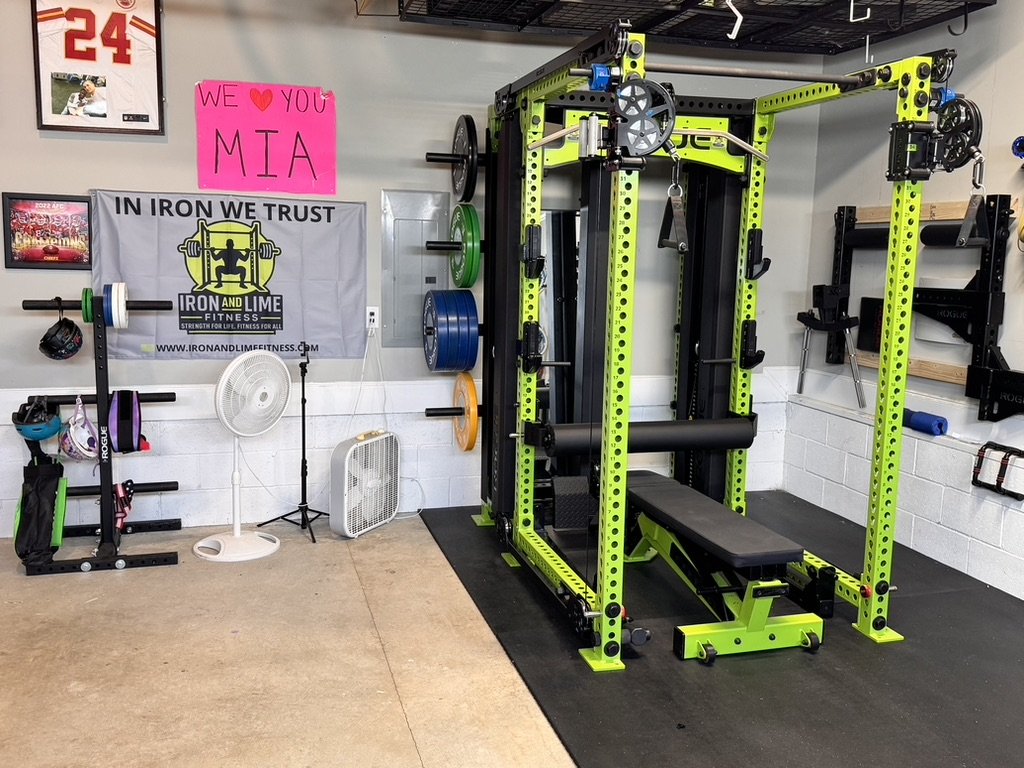
The Iron and Lime Fitness Gym
If you are reading this, you are probably standing in your garage right now doing mental math. You are measuring wall space. You are thinking about ceiling height. You are looking at your rack, your plates, maybe your kid’s bike shoved in the corner, and asking yourself the same question every serious garage gym owner eventually asks:
Do I build the dream… or do I build within reality?
Because that’s the tension. On one side is the fantasy. The 8,000 square foot commercial facility. Dedicated plate-loaded machines for every angle imaginable. A lat pulldown that never shares space. A functional trainer that never interferes with squats. Rows of equipment that never have to compromise. On the other side is real life. Two car garage. Mortgage. Budget. A spouse who would still like to park inside during pollen season. And you trying to squeeze a legitimate training environment into square footage that was designed for lawn equipment and storage bins.
That is exactly where the Rogue FM-6 Twin Functional Trainer enters the conversation.
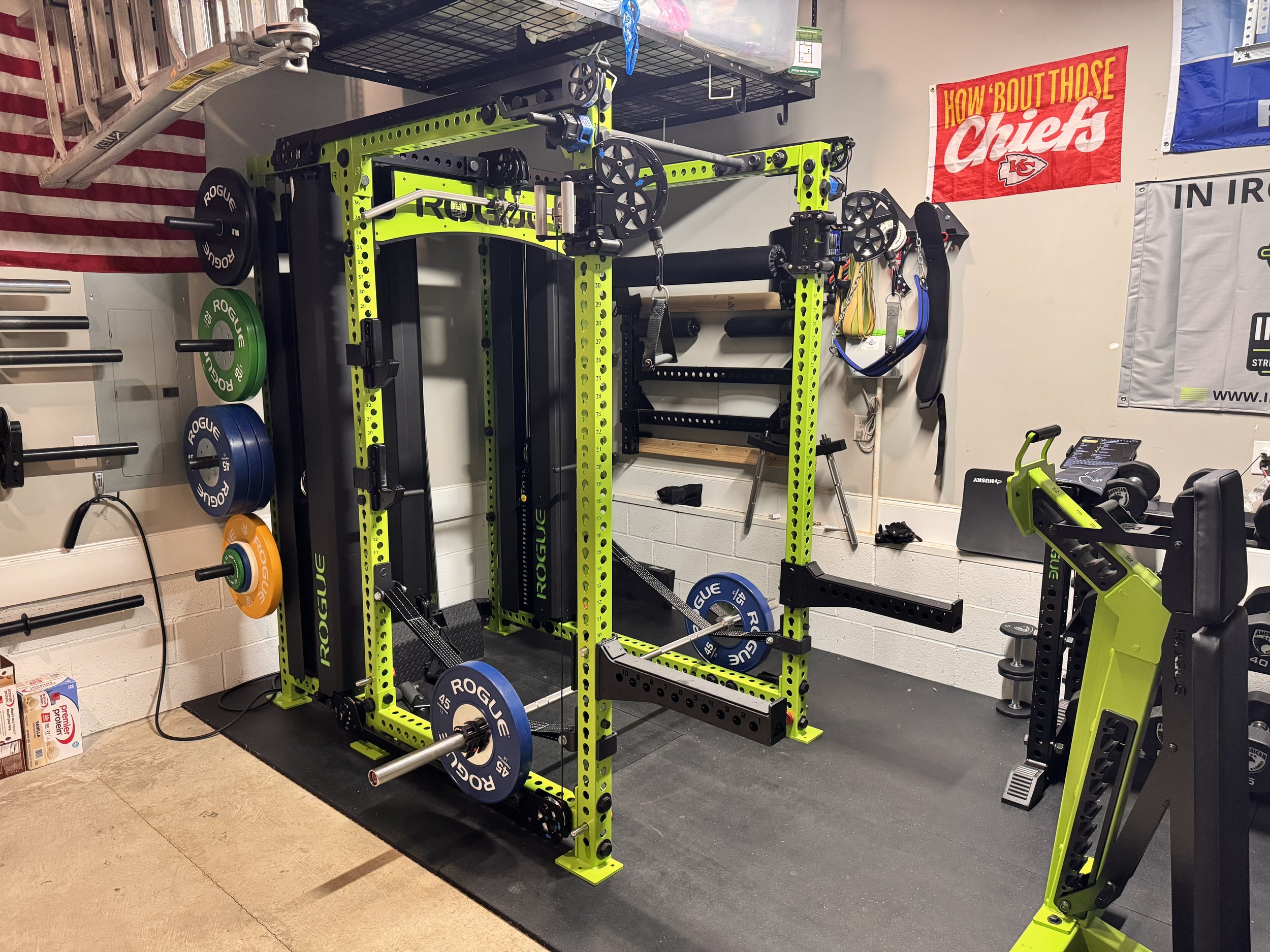
On paper, it reads like the solution we have all been waiting for. A heavy-duty power rack. Integrated functional trainer. Lat pulldown. Low row. Storage. All consolidated into a 49 by 49 inch rack cage and roughly 76 by 80 inch footprint overall. One footprint. One purchase. One setup. The pitch is clean. Efficient. Logical. It feels like the adult, disciplined decision. And if you are like me, that promise hits you right in the buy once, cry once nerve. I bought into it. Not because of hype. Not because of an unboxing thumbnail. But because the idea made sense. Consolidate. Simplify. Eliminate redundancy. Build infrastructure that works harder than the square footage it occupies.
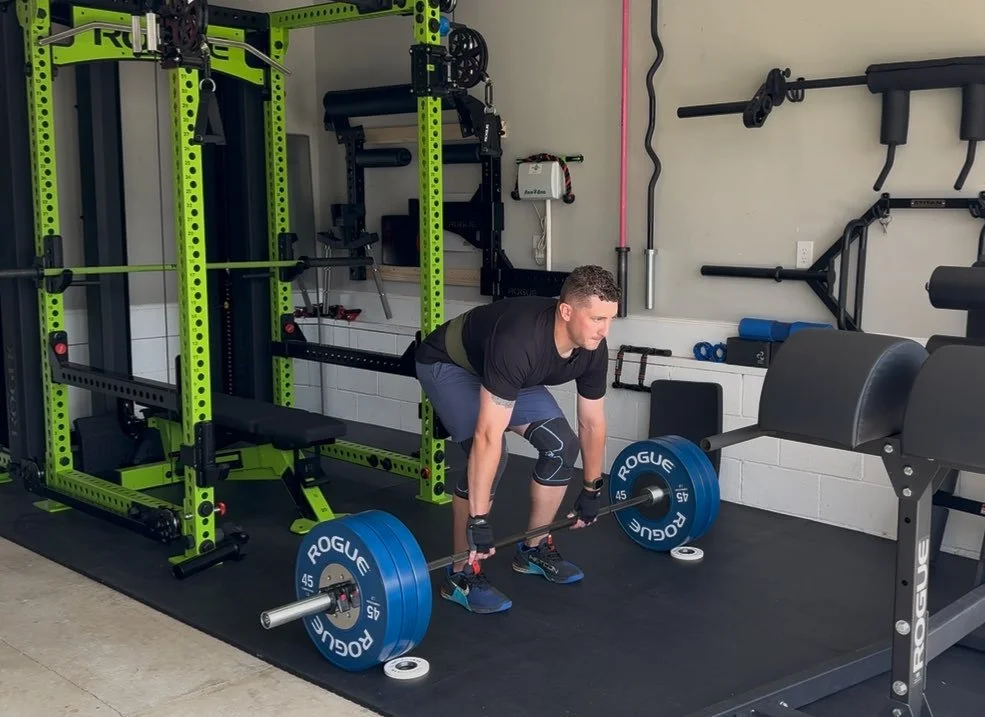
For a full year, I trained on it. Not highlight-reel workouts. Not demo lifts for content. Real sessions. Early mornings. Supersets when time was tight. Pull days, push days, heavy barbell work mixed with cables. Sweat on the knurling. many heavy lifts on the pulleys. The kind of use that exposes weaknesses you will never see in a first-impressions video. And after 365 days of living with it, moving around it, adjusting around it, programming around it, I landed somewhere I did not expect.
If I were starting over, I would not buy it again.
To understand why, you have to stop looking at the spec sheet. Specs sell. Measurements look clean in a graphic. Marketing departments are very good at showing you what something can do. What matters more is what it is like to live with. Because owning a machine and training around a machine are two very different things.
Watch the full YouTube video below, and then come back. We are going to break this down the way it actually deserves to be broken down.
The Allure vs. The Reality
When you hit “Buy,” you are not just purchasing steel. You are buying efficiency. You picture a frictionless training session. Barbell work flows straight into cable work. Heavy squats into flys. Bench press into face pulls. No walking across the room. No adjusting three different stations. Just one consolidated command center where everything lives inside arm’s reach. That is the fantasy. Clean. Streamlined. Surgical.
And to be fair, the FM-6 absolutely delivers on that idea.
But here is the part nobody talks about enough: “all-in-one” almost always means “compromise-in-all.” The machine is impressive. The engineering is legitimate. The footprint solution is real. But over time, something subtle starts happening. The design begins to dictate your training instead of your training dictating the design. That sounds dramatic, but if you’ve trained long enough, you know exactly what I mean. With separate stations, you move freely. Squat rack over here. Functional trainer over there. Lat tower in its own lane. You transition physically, and that transition becomes part of your rhythm. It gives your brain a reset between movements. It keeps things clean. With an integrated system, everything shares space. Cable columns compete with J-cups. Attachments live where your bar path wants to live. Storage pegs occupy the same visual and physical space as your movement patterns. Nothing is unusable, but nothing is truly independent either.
So instead of seamless flow, you end up adjusting.
Slide this trolley
Put on the multi-use rack roller for lat pulldowns
Shift the trolley and remove the j-cups for the lat pull down
Re-rack plates differently.
Work around the pulleys.
Take things off to do low row
Individually, none of those adjustments are a big deal. But training is repetition. And over months, small friction compounds. The FM-6 solves the space problem almost perfectly. If square footage is your primary constraint, it is a brilliant answer. But it introduces something else that does not show up on a spec sheet: workflow friction. And friction is dangerous in a garage gym. Because when you train at 4:30 in the morning before work, or late at night after the kids are down, you do not need clever. You need simple. You need movement to feel intuitive. You need equipment that gets out of your way.
Over time, I realized the FM-6 was not limiting what I could do. It was quietly reshaping how I chose to do it. And that distinction matters more than most people realize.
My Review Standard: Why This Matters
Before we go any further, you need to understand the filter I run everything through. Nothing in this gym is a prop. I do not rotate equipment in for a weekend, shoot a polished video, and ship it back before the dust settles. I buy it. I assemble it. I bleed on it. I program around it. And I keep it long enough for the honeymoon phase to wear off. If something earns its keep, it stays in the gym. If it does not, it eventually ends up photographed in my driveway with a Marketplace listing and a firm price.
That is the standard.
Because here is the truth most people do not want to admit: almost everything looks incredible on Day One. Fresh powder coat. Smooth pulleys. Tight tolerances. No scratches. No workflow friction yet. You are excited. You just dropped real money. Of course it feels right. But steel tells the truth over time. Month Three is different. Month Six is different. Month Twelve is where reality shows up. That is when you discover if something integrates into your training or if you are constantly working around it. That is when minor annoyances stop being minor. That is when you find out whether the equipment supports your programming or subtly reshapes it.
I train year-round. Heavy barbell work. Accessory volume. Supersets when time is tight. Deloads. High fatigue days. Low motivation days. Early mornings before the house wakes up. If a piece of equipment cannot survive that without becoming friction, it does not survive here. So when I say something works, it is because it has proven itself over time. And when I say I would not buy something again, it is not emotional. It is not dramatic. It is the conclusion after a full cycle of real-world use. That distinction matters. Because this is not about first impressions.
It is about long-term integration.
What the Rogue FM-6 Does Well
Before I dismantle anything, let’s give credit where it’s due. The FM-6 is not junk. It is not poorly engineered. It is not a flimsy compromise build. In many ways, it is exactly what Rogue set out to make. And there are areas where it absolutely delivers.
1. Build Quality and Stability
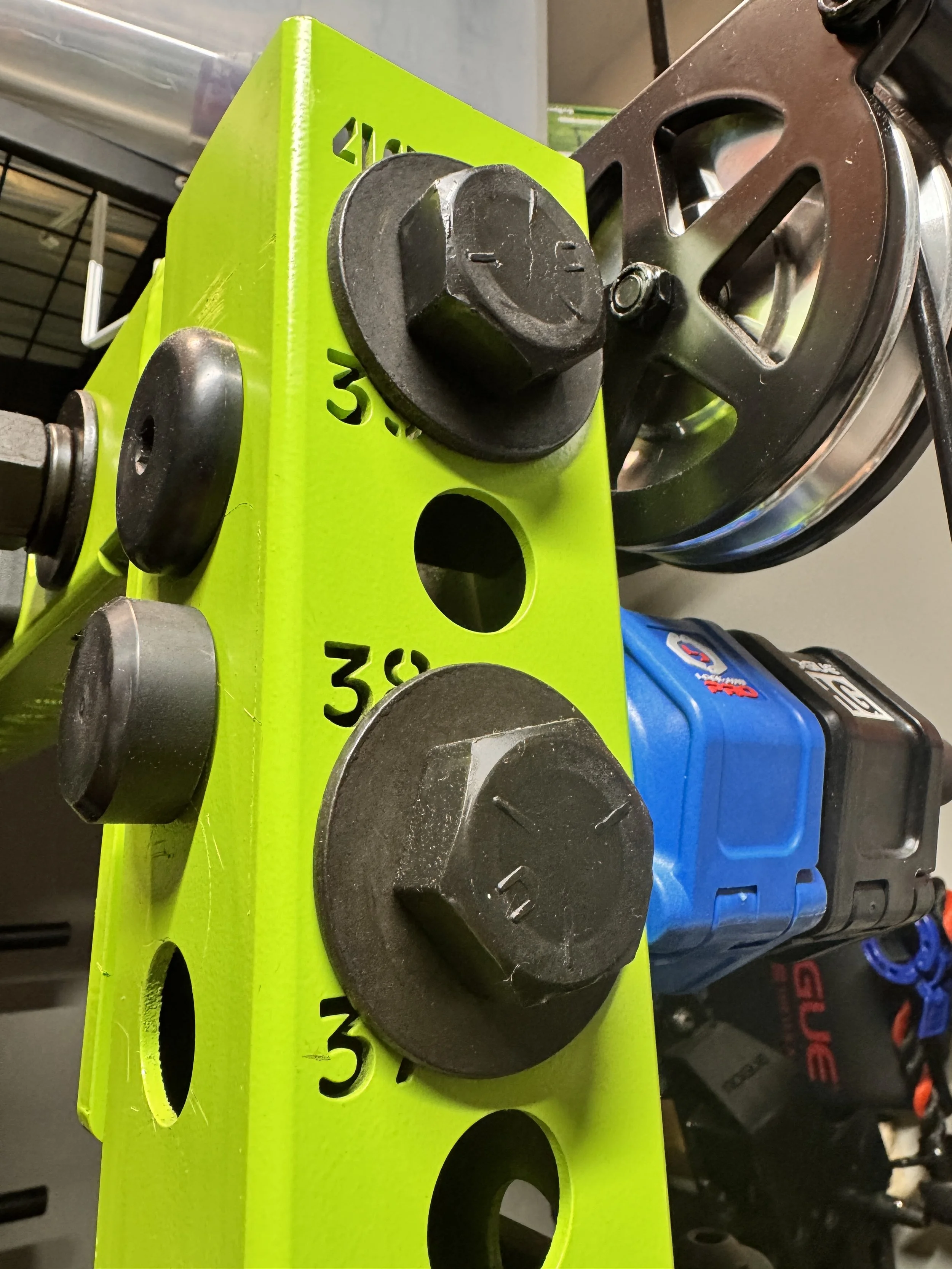
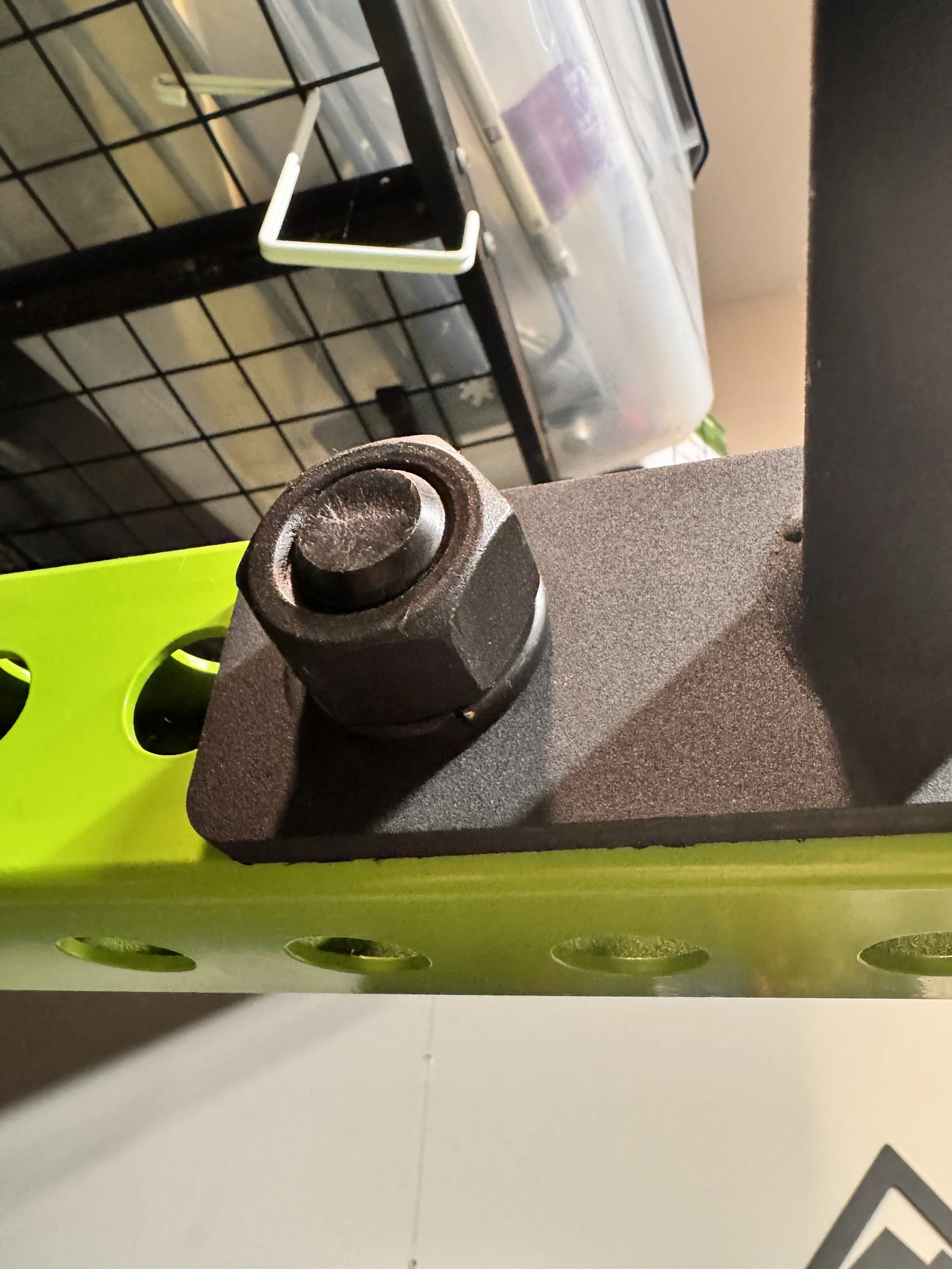
This thing is a tank. When people talk about the “Rogue standard,” they are not exaggerating. The FM-6 is built out of 3x3 inch 11-gauge steel uprights with hardware that looks like it belongs on industrial equipment. Once it is bolted down, it feels planted. Predictable. Serious. When you unrack 400 plus pounds, you do not want surprises. You do not want shimmy. You do not want a subtle sway that makes you question whether the rack or your core is the weak link.
The FM-6 does not flinch.
There is no noticeable flex under load. No rattling uprights. No hardware shifting. It gives you that psychological safety net every solo lifter understands. When you train alone, especially early in the morning or late at night, trust in your rack is not optional. With the FM-6, you never question whether the rack can handle it. The only question left is whether you can. Now, for full transparency, there is some minor movement in the front uprights when performing weighted dips off the side. I mentioned this in my Mutant Metals UDA review (You can read it here and watch it here). In practice, it is negligible and does not impact training. But I am not in the business of pretending equipment is flawless. Overall, from a structural standpoint, this rack is overbuilt in the best way possible.
2. Smooth Lat Pulldown and Low Row
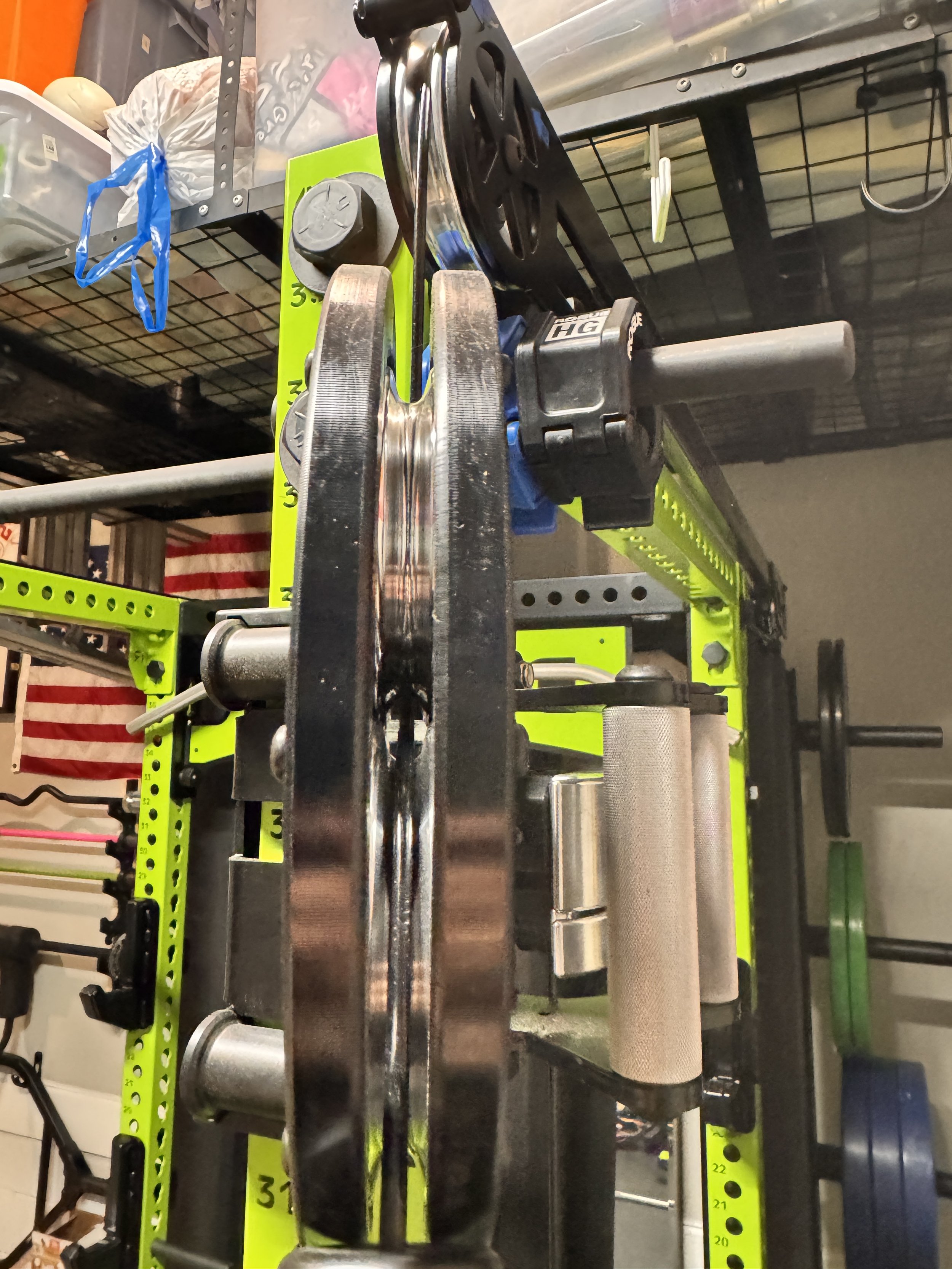
If there is one area where the FM-6 truly shines, it is here. The lat pulldown and low row are excellent. And I do not mean “good for an all-in-one.” I mean legitimately smooth. The kind of smooth that disappears during the set. A lot of combo racks treat the pulley system like an afterthought. Cheap nylon bushings. Draggy cables. Inconsistent resistance that forces you to fight the machine before you even fight the weight. You feel a stutter at the bottom. A jerk at the top. That annoying break-away force when you initiate the movement. Rogue did not cut that corner. The resistance on the FM-6 pulldown and row is consistent from the deep stretch to peak contraction. There is no dead spot. No sudden tension jump. It feels natural. Controlled. Professional.
And it is quiet.
That matters more than people realize. In a home gym, especially if you train while your family is asleep, the difference between sealed bearings and a noisy system is the difference between a peaceful session and waking the house. The FM-6 pulley system runs clean and silent. That is not an accident. That is quality.
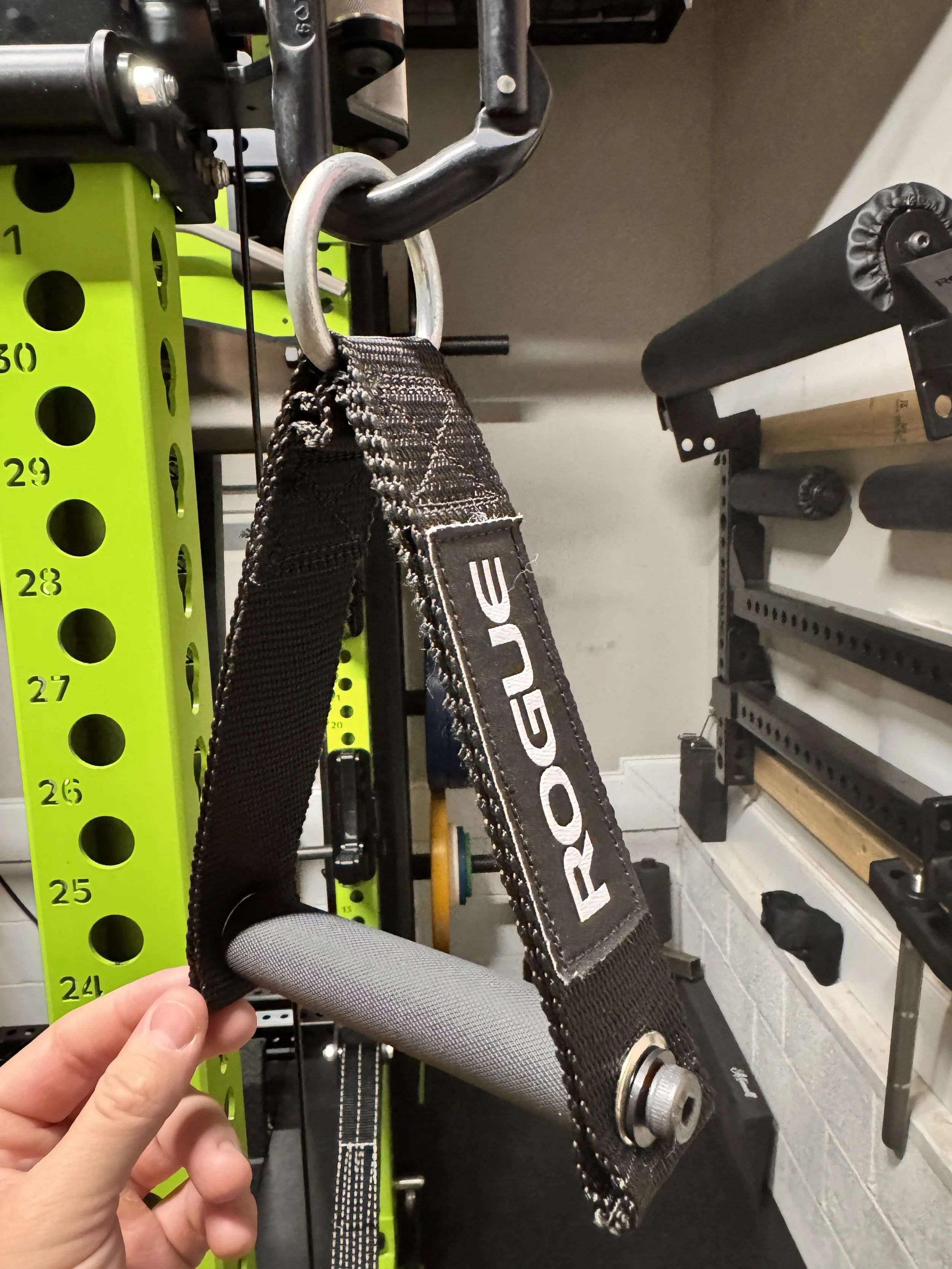
3. Pulley Quality
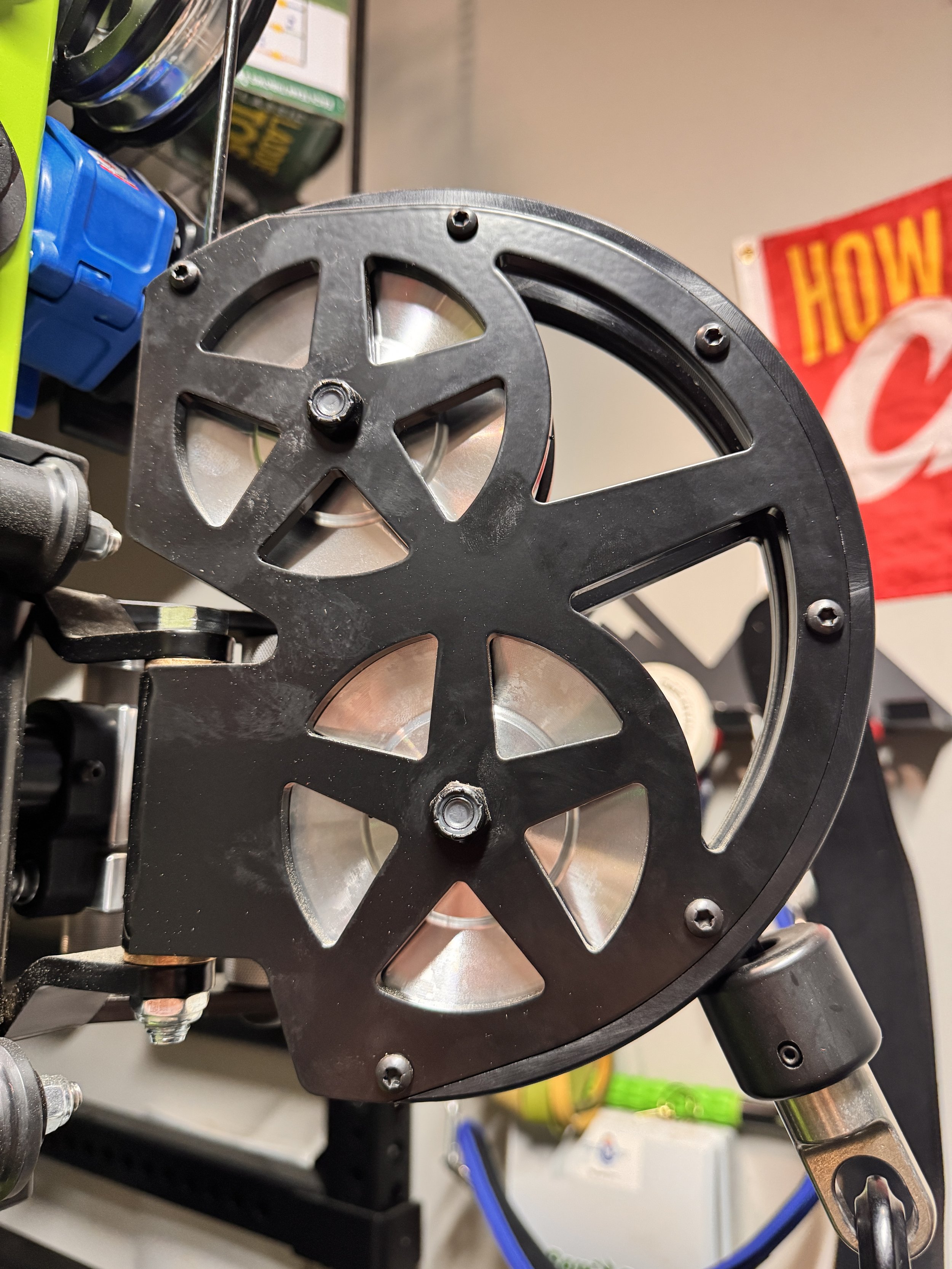
The individual pulleys are excellent. Smooth rotation. Minimal friction. No grinding. This is one of those details you do not think about until you have trained on a bad system. Then you realize how much mental bandwidth cheap hardware consumes. Good pulleys disappear when you train. The FM-6 pulleys disappear like Harry Potter when he got that cloak (grew up reading the books but fully understand some people won’t get the reference)
4. Garage Practicality
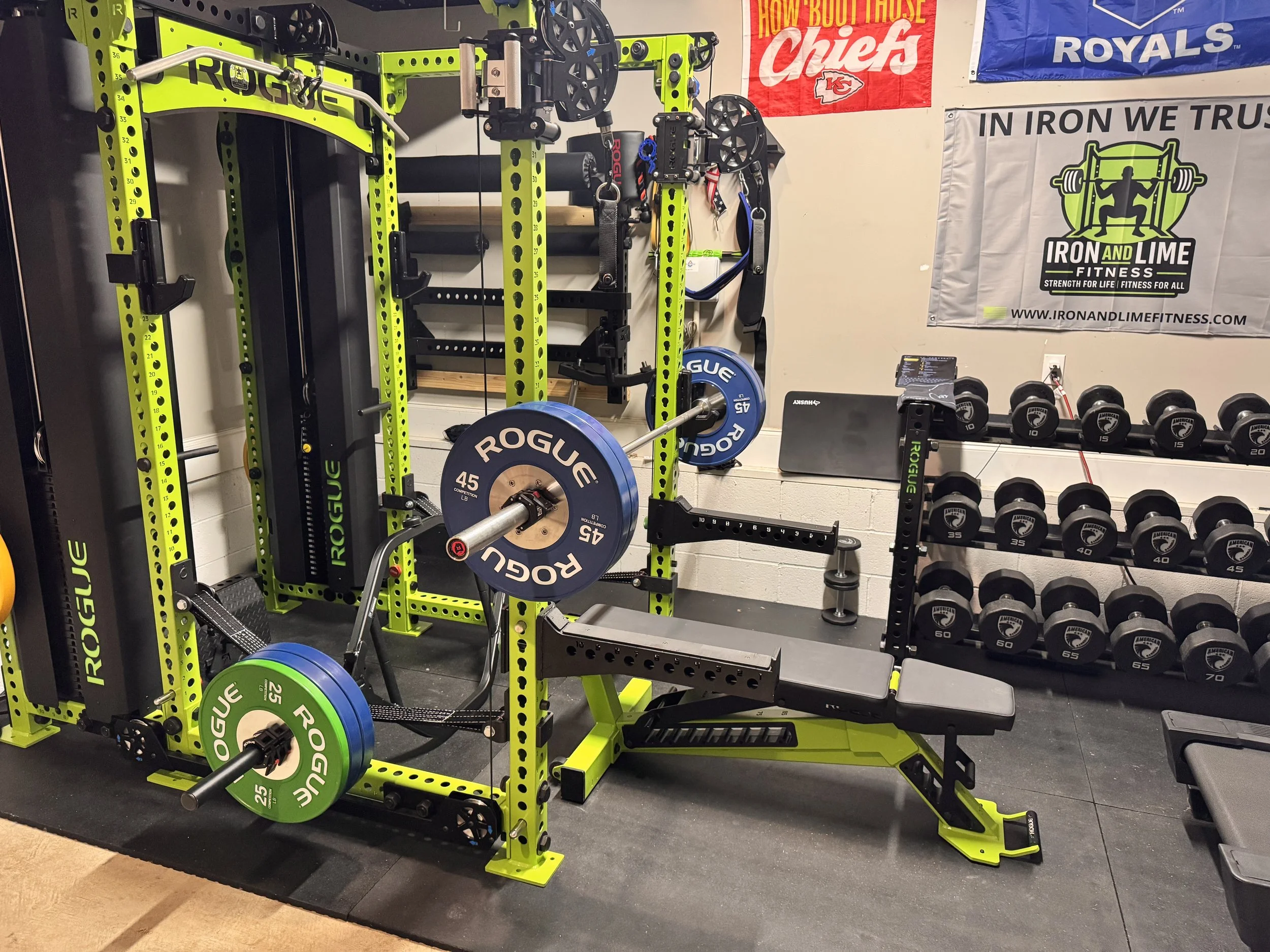
Let’s talk footprint, because this is the entire reason most people look at this rack in the first place. On paper, a 49 by 49 inch rack cage with roughly a 76 by 80 inch overall footprint sounds massive. When you read those numbers, it feels like you are giving up half your garage. In practice, it is surprisingly manageable. The square design is efficient. It consolidates multiple stations into a centralized zone without forcing you to dedicate an entire wall to separate units. You can still park a vehicle. You can still move around the perimeter. You can keep storage shelves, a rower, maybe a bike. If your number one constraint is literal square footage, the FM-6 makes a compelling case for itself. It allows your garage to remain a garage while still functioning as a legitimate training space.
From a pure space-efficiency standpoint, it defends its existence extremely well.
So yes, the FM-6 does a lot right.
It is built like a tank.
The pulleys are excellent.
The lat pulldown and low row are top-tier for a combo system.
The footprint is intelligently designed for a real-world garage.
None of those are small wins. But as we are about to get into, strength on paper and strength in workflow are not the same thing.
Where Long-Term Use Changes Your Perspective
This is the part most reviews never reach. Day one impressions are loud. Twelve month impressions are honest. When you live with a rack through full training cycles, strength blocks, deloads, specialty bar phases, rushed weekday sessions, and slow Saturday lifts, certain details start to matter more than specs ever suggested they would. The FM-6’s 49-inch width is one of those details.
The 49-Inch (Outside to Outside) Width Trade-Off
On paper, 49 inches sounds generous. Open. Accommodating. Like you are buying breathing room. Sometimes it feels exactly that way. Wide stance squats feel stable. Inside work does not feel cramped in the traditional sense. Other times, that width becomes a limitation in ways that are subtle but persistent. When you step out of a heavy squat, you are not thinking about geometry. You are thinking about staying tight. Bracing. Settling. Owning the load. The walkout should be automatic. One or two controlled steps back. Plant. Adjust. Go.
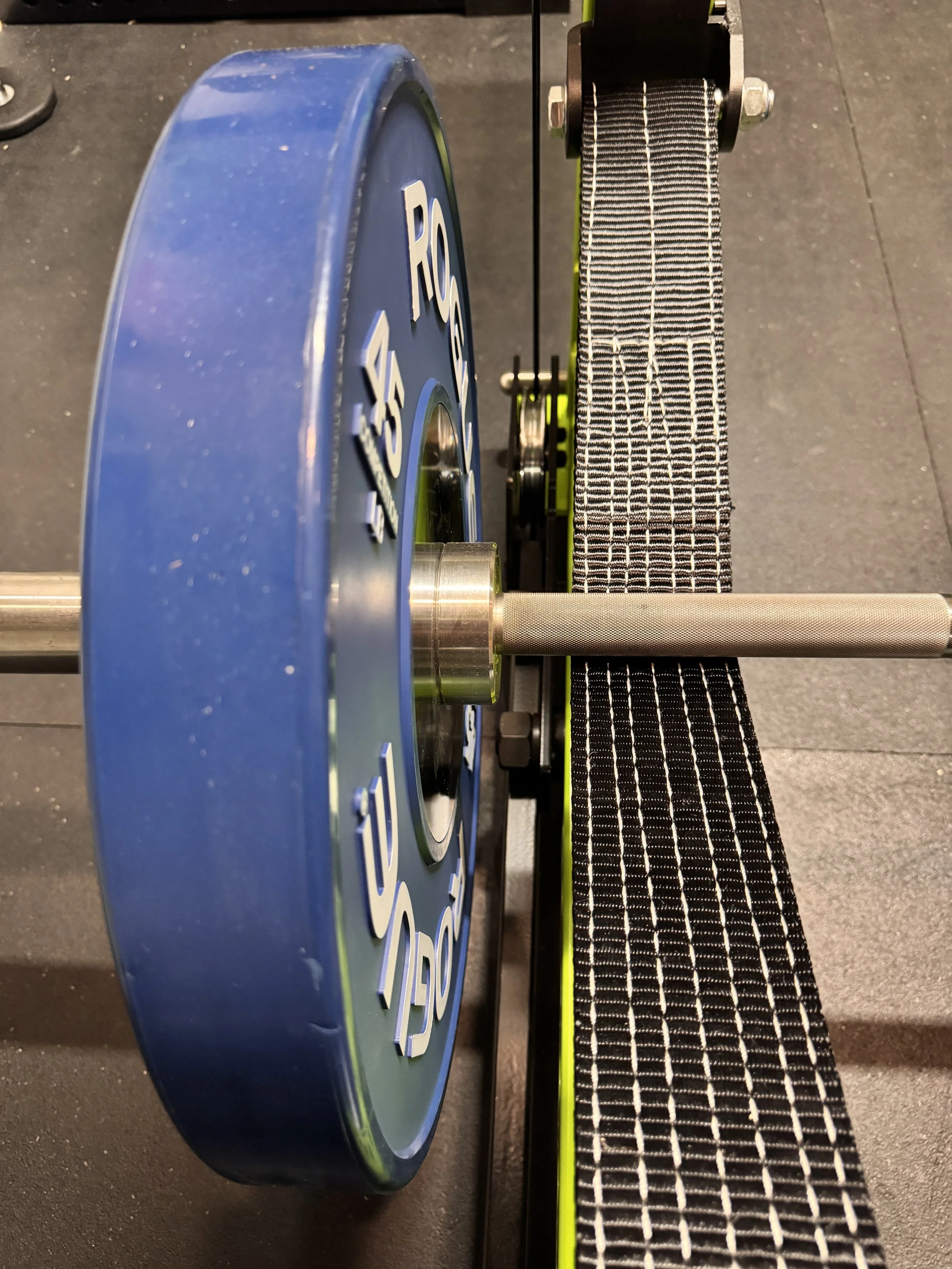
With the FM-6, the width between the uprights is just wide enough that if your walkout is not perfectly centered, the plates can clip the uprights. Not slam into them. Not catastrophically fail. Clip. And that tiny contact is enough to break your concentration at the worst possible moment. You feel it. You hear it. Your brain shifts from internal focus to external awareness. That is not where you want your head when you have 400 pounds on your back.
It is not dangerous. But it is disruptive. Over time, you start adjusting your walkout to protect against the rack instead of simply executing the lift.
That is friction.
Specialty Bars Feel Tight
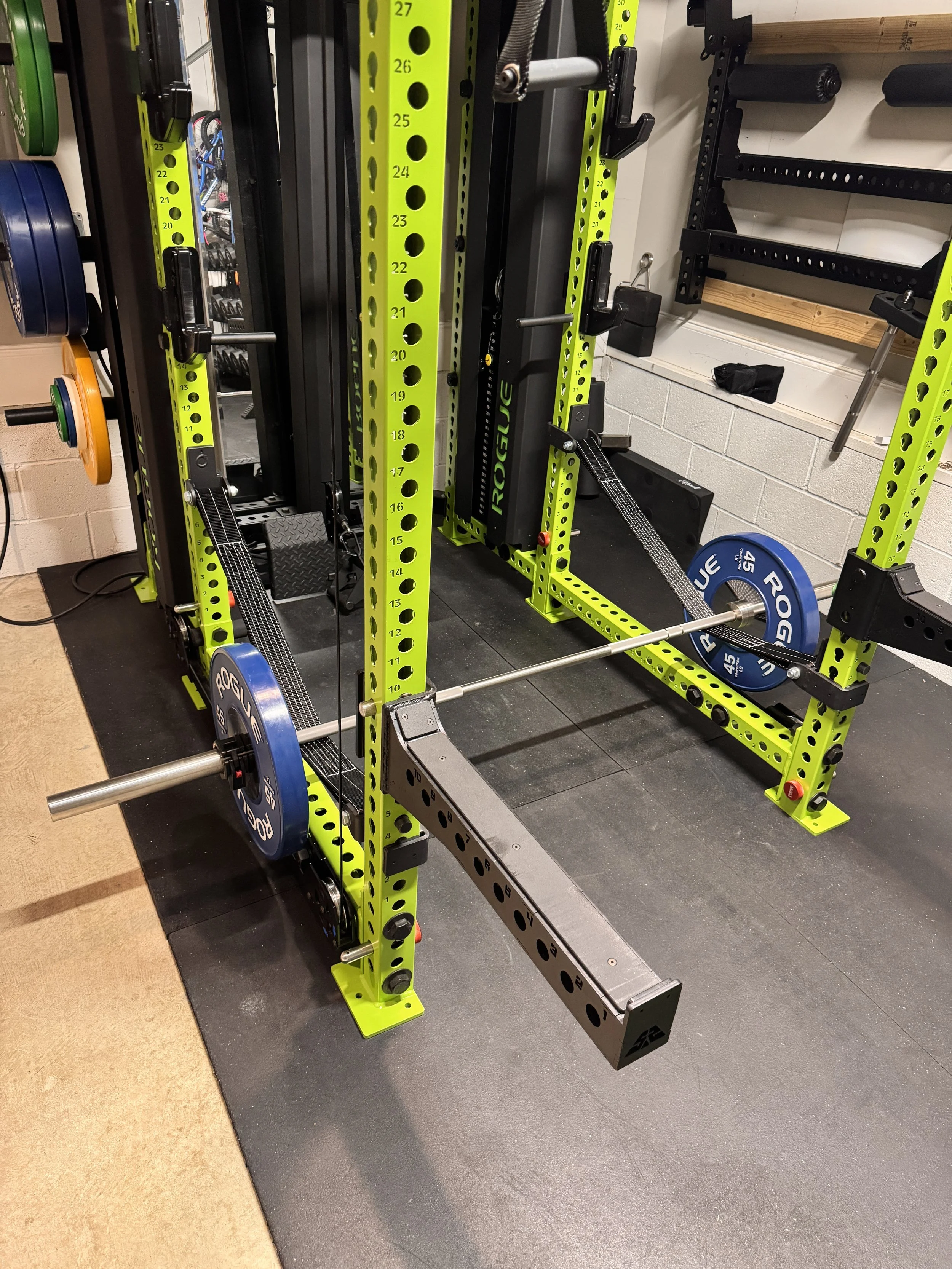
If you run specialty bars, the equation changes again. A Transformer bar. A Swiss bar. Even certain cambered setups. The geometry gets busy fast. Sleeves sit differently. Load distribution changes. Clearance becomes something you think about more than you want to. You can make it work. I did. But it never feels effortless. And when equipment costs what this rack costs, effortless is the expectation.
The “Claustrophobic” Press
Overhead pressing inside the rack is where this really becomes noticeable. Between the width, the cable trolleys, the pulley lines, and the visual mass of everything attached to the uprights, the rack starts to feel like a tunnel. Not physically restrictive. Mentally restrictive. You press and you are hyper-aware of your environment. Am I going to hit the trolley handle? Is that cable going to brush the sleeve? Am I perfectly centered? Instead of focusing on bar path and lockout, part of your brain is scanning for interference.
That mental tax adds up.
In a traditional rack with clean uprights, you step in and press. Nothing else is visually competing with your lift. The rack disappears. The FM-6 never fully disappears because it is always multitasking.
The Sandwich J-Cup Reality
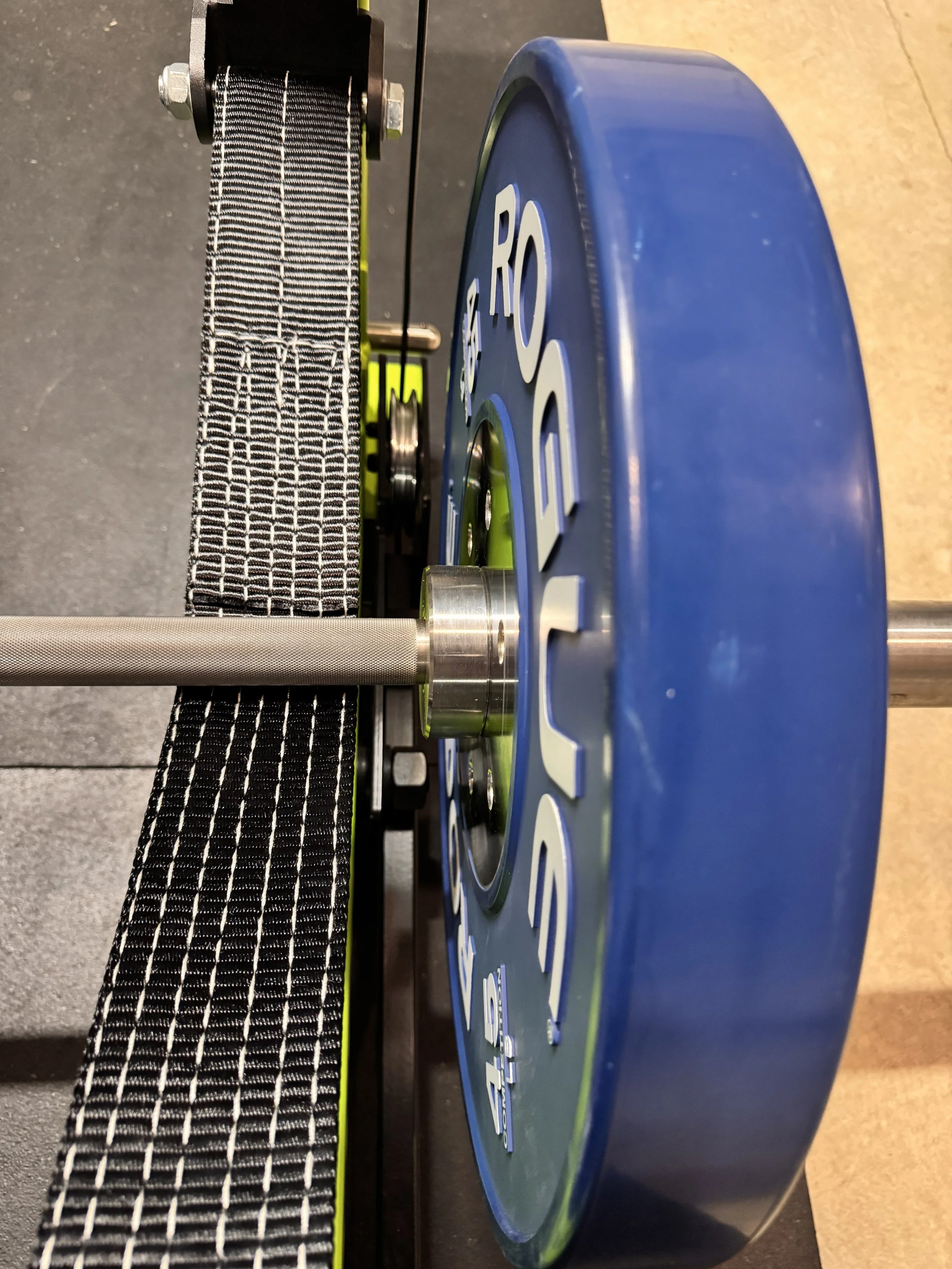
Here is something most people will not tell you upfront: over time, Sandwich J-cups stop feeling like an upgrade and start feeling like a requirement. The design pushes the bar slightly forward from the upright. That small offset buys you critical clearance. It reduces the chance of plates grazing steel during a walkout. It creates breathing room for specialty bars. They make the rack better.
But here is the uncomfortable question.
On a rack that already sits at a premium price point, should you have to add premium accessories just to make core barbell movements feel natural? That is not a deal breaker. It is not catastrophic. But it is part of the long-term ownership equation. Because this is where perspective shifts. At first, you think you are buying maximum efficiency in one footprint. After a year, you realize you are also buying a specific style of movement inside a very busy structure.
And the longer you train, the more you start to value simplicity over consolidation.
Trolleys That Limit Attachments
This is where the FM-6 starts revealing its real personality. When you first see the integrated trolley system, it looks like the future. Clean lines. Sliding precision. Everything consolidated onto the uprights in a way that feels efficient and intentional. And to be clear, from a cable perspective, it works. But here is the trade-off no one emphasizes enough: those trolleys own the uprights. The defining feature of the FM-6 is also the thing that limits it.
On a traditional rack, your uprights are open real estate. You can mount jammer arms. Lever arms. Specialty attachments. You can experiment. Change the ecosystem as your training evolves. The rack is a platform. On the FM-6, the uprights are partially monopolized by the sliding cable system. The trolleys need space to travel. They need clearance. They need uninterrupted vertical real estate.
That means something has to give.
The Jammer Arm Problem
If you like lever arms, you already understand the issue. Jammer arms are not gimmicks when programmed correctly. The 35” Rogue LT-1 50 Cals are on my wish list even. They are powerful tools for athletic development. Pressing variations. Split stance work. Explosive training. Horizontal and vertical patterns that feel different than cables. They require mounting points on the uprights.
On the FM-6, those mounting points are occupied. You cannot have full trolley functionality and lever arms living comfortably on the rack at the same time. The system forces a decision. You are either operating as a cable-focused rack or as a traditional attachment-friendly rack. It does not flex well between identities. You do not decide not to use jammer arms. The rack decides for you.
And that is where the “all-in-one” philosophy starts to feel like “choose your lane.”
The Setup Shuffle
Then there is the daily friction. If you want to run cable flys, you slide the trolley down. But your J-cups might be in the way. Your safeties might be in the way. So you move them. If you want to squat, you slide the trolley up. Now the trolley handles sit above your head. The cables shift. You adjust again.
Individually, none of this is hard. It is not complicated. It does not require a wrench and a teardown. But it adds minutes. Two minutes here. Three minutes there. A quick shuffle between movements. Another adjustment mid-workout. Over a single session, it is an inconvenience.
Over a year, it is hours.
And in a garage gym, time is everything. Most of us are training before work, after bedtime routines, between responsibilities. The difference between seamless and slightly inconvenient compounds. What looks efficient in a product photo becomes reconfiguration in real life.
Where the Compromise Becomes Clear
Some attachments technically work. Others work awkwardly. Some simply do not work at all. This is where the FM-6’s identity becomes clear. It is a cable-centric rack that also allows barbell training. Not a fully open rack that happens to include cables. That distinction matters.
Because once you start building out your gym with future growth in mind, you realize the uprights are no longer a blank canvas. They are partially spoken for. And that is the moment you start questioning whether consolidation was actually flexibility or just compression.
Cable Protection Shrouds: Good Intent, Real Consequences
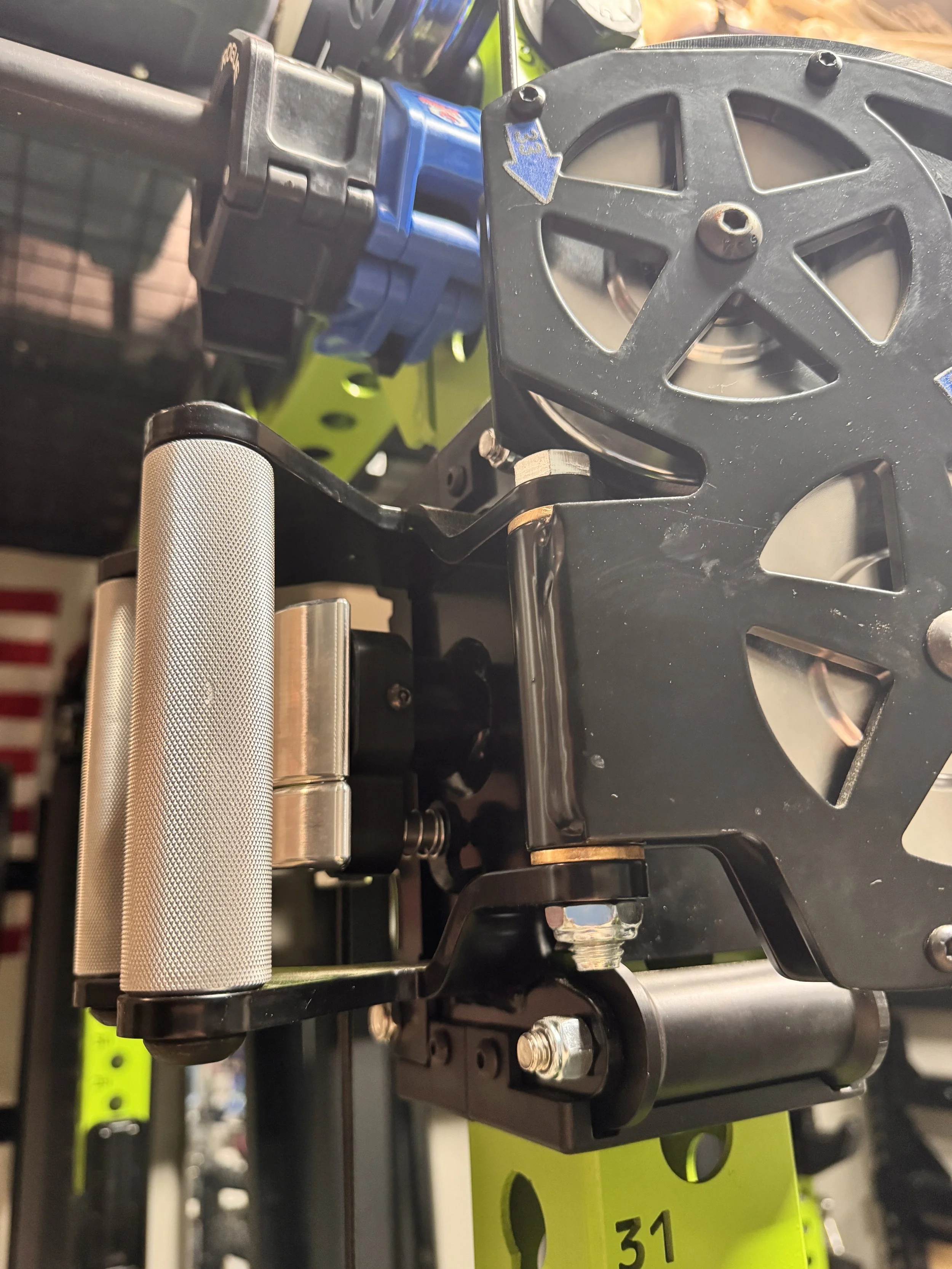
On paper, this one made complete sense to me. I have kids. Curious hands. A garage that doubles as a training space and a life space. So when Rogue added cable protection shrouds to cover the pulleys and lines, I saw it as responsible design. Protect the cables. Protect fingers. Keep everything clean and shielded. From a safety standpoint, it is hard to argue against that. But here is where good intent collides with real-world use.
Those shrouds do more than protect cables. They fundamentally change how the middle uprights function. Which is crucial to understand if you’re considering this investment.
The Unintended Blockade
Once the shrouds are installed, the middle uprights are no longer true uprights in the traditional sense. Depending on the attachment and orientation, you cannot pass a pin through them. That one detail sounds small until you start trying to mount attachments. On a standard rack, pass-through pinning is part of the system’s flexibility. It allows you to anchor attachments securely. It allows you to configure spotters and specialty equipment exactly where you want them. With the FM-6 shrouds in place, that pass-through capability is gone. It effectively deletes a portion of the rack’s utility.
The middle uprights become visually present but functionally limited.
Attachment Incompatibility
This is where it starts to sting. High-end third-party attachments, like the Mutant Metals UDA or Surplus Strength Spotter Arms, are designed with pass-through pinning in mind. That design is not overkill. It is about stability, safety, and eliminating slop under load. The shrouds make that only possible from certain sides, or even not at all in some cases. You cannot run the pin through the upright because the shroud physically blocks it. So now you are forced to rely solely on the front uprights for certain attachments.
That reduces your setup options. It reduces flexibility. And depending on how your garage is laid out, it can reduce safety margin. If you have limited space in front of the rack and you were planning to use the middle uprights for spotters or specialty attachments, you quickly realize that is not happening. In practice, those middle uprights become home to J-cups and flip-down safeties.
That is it. For a rack marketed as a do-everything solution, that is a meaningful constraint.
The "Floating Plate" Issue
The pulleys on the FM-6 are excellent. I’ve already said that. Smooth. Quiet. Consistent. But for most of the first year, one side had what I can only describe as the “floating plate” problem. And for a rack in this price bracket, that surprised me. Here’s what is happening mechanically.
Cables stretch. They have a break-in period. Until they fully settle under load, the tension in the system is not perfectly equalized. That slight slack translates into the top plate in the weight stack not sitting completely flush at rest. So instead of the stack resting clean and aligned, the top plate hovers just enough to create misalignment in the selector holes. It is not dramatic. It is not broken. But it is there. And you feel it every time you change weight. You go to slide the selector pin in, and the holes do not line up perfectly. You have to jiggle the stack. Maybe pull down on the cable slightly to seat it. Sometimes you nudge the plate with your hand to get it to settle. It becomes a small ritual before every adjustment.
If you are casually moving between sets, it is tolerable. If you are running drop sets, supersets, or timed rest periods, it becomes friction. Not catastrophic friction. Just enough to break rhythm. And when you are training hard and moving with intent, rhythm matters. I adjusted the cables. I loosened and rechecked the trolley alignment. I went through the usual troubleshooting process. Eventually, as the cables stretched and fully broke in, the plate seated properly. The issue is mostly resolved now.
But here is the part that sticks with me.
At this price point, I did not expect to spend months dealing with something that feels like a budget stack problem. It was not a failure. It was not a warranty situation. It was simply an irritant that lingered longer than it should have. And again, this is what long-term ownership reveals. On day one, everything feels premium. By month six, you start noticing the small things that either disappear…or keep showing up.
The Bigger Picture
Again, none of this is catastrophic. The rack still works. You can still train hard. You can still progress. But over time, you start noticing how many small decisions the rack makes for you. You wanted protection for your kids. What you got was protection that quietly narrowed your attachment ecosystem. And when you are building a garage gym that is supposed to evolve with your training, that kind of constraint matters more in year one than it ever does on day one.
The Real Lesson of All-In-One Systems
Here is the part most people do not hear before they swipe the card. All-in-one systems sell efficiency. One footprint. One structure. One purchase. It sounds disciplined. Strategic. Mature. Like you are making the smart, consolidated decision instead of piecing together a Frankenstein gym. But when everything lives inside one structure, every compromise compounds. Attachments compete for real estate. One design decision restricts another function. A trolley system limits lever arms. Protective shrouds block pass-through pins. J-cups need upgrading just to feel natural. None of these are catastrophic on their own. But stack them together and you start to feel it.
Friction builds quietly. That is what this year taught me more than anything else.
The FM-6 is an integrated system. It is a Swiss Army Knife. It has a blade, a spoon, and a saw. And it absolutely works. But none of those tools are as good as a dedicated chef’s knife, a real soup spoon, or an actual hand saw. When you train once or twice a week, you might not notice, or as multiple people have commented on Youtube, set up the night before (not always practical for me with kids stuff all over the garage and an EV that has to plug in). When you train five to six days a week, year-round, you notice everything.
The setup shuffle. The attachment limitations. The subtle workflow interruptions. The fact that the rack never fully disappears because it is always multitasking. And that leads to the bigger philosophical shift. Modularity beats integration. A modular setup isolates compromise. A dedicated rack does not have to worry about cables. A standalone cable system does not have to share uprights with spotter arms. Each piece does one job well. And when your training evolves, you swap one component without tearing down the entire ecosystem.
That flexibility matters long term.
Sorinex XL Power Rack
What I’d Do Differently
If I were starting over today, I would build modular from day one.
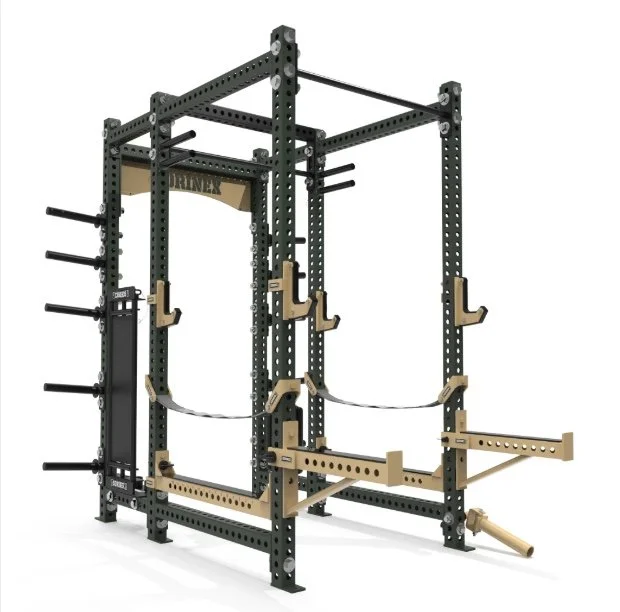
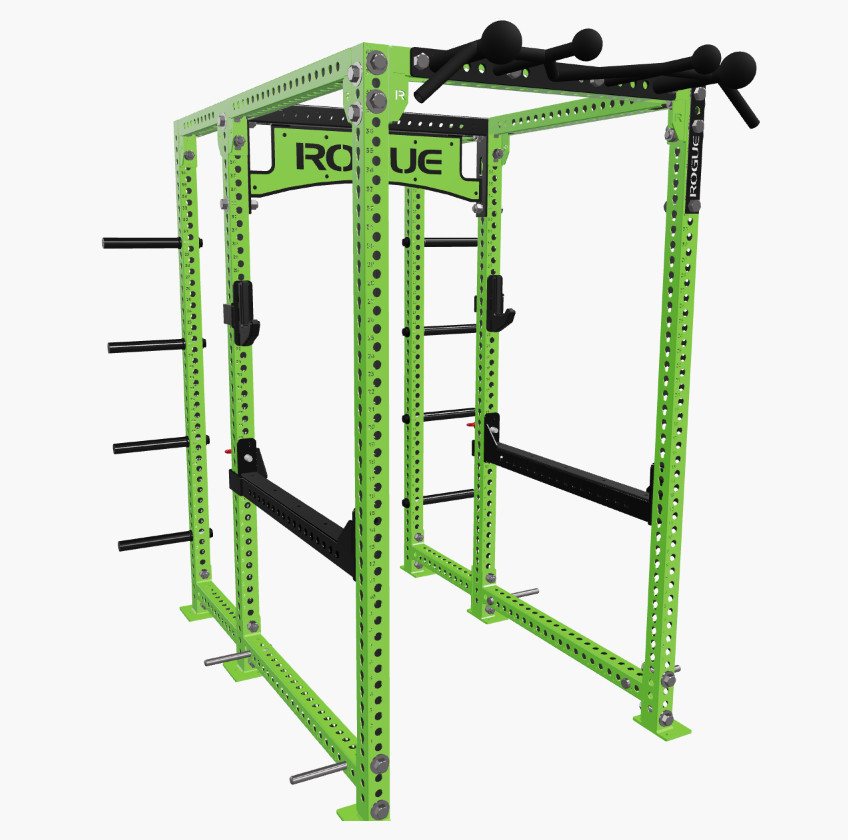
I would run a dedicated rack. Something like a Rogue RM-6 (pictured below) or a Sorinex XL (pictured above). A rack that is just a rack. Holes everywhere. No monopolized uprights. No trolley systems claiming vertical space. It would accept jammer arms, monolifts, band pegs, specialty attachments, whatever direction my programming goes. It would be a blank canvas.
Then I would add a standalone cable system. A dedicated functional trainer or wall-mounted pulley tower that lives outside the rack’s footprint. Separate. Independent. Free to operate without interfering with barbell work.
Why?
Because I could superset heavy squats with face pulls without sliding a trolley or moving J-cups. I could leave spotter arms exactly where I want them permanently. I could upgrade the cable machine later without selling my rack. Or upgrade the rack without touching the cables. Each piece would evolve independently. That is the lesson. Integration looks efficient on a spreadsheet. Modularity feels efficient at 5 a.m. when you are under the bar and just want the equipment to get out of your way.
Rogue RM-6
Would it take more space? Yes. Would it cost more? Probably. Would it take more setup? Absolutely.
But the training experience would be cleaner. There would be fewer compromises. And I wouldn’t be reconfiguring my rack early in the morning just to get basic movements done. When you only have an hour to train, losing ten minutes to setup and teardown adds up fast.
Final Verdict: Who is the Rogue FM-6 For?
Let’s be clear.
The Rogue FM-6 is not bad equipment. It is strong. It is reliable. It is capable. It is built to a standard that most companies cannot touch. If steel quality and structural integrity are your measuring sticks, it passes without hesitation. But it is not universal. It is a very specific tool for a very specific kind of lifter.
If you value a single, consolidated footprint above everything else, the FM-6 makes a compelling case. If your garage absolutely cannot accommodate a separate rack and a separate cable tower, and consolidation is not a preference but a requirement, this system solves that problem elegantly. It keeps the room clean. It keeps the layout contained. It looks professional and uncluttered. If aesthetics matter to you, this rack photographs well and lives neatly.
It also makes sense if you are a generalist lifter. If your programming revolves around squats, bench, rows, pulldowns, flys, and standard accessory work, and you are not planning to dive deep into specialty attachments, lever arms, monolifts, or third-party ecosystems, the FM-6 will serve you well. You will appreciate the integrated design and likely never feel boxed in.
But if you train frequently and obsess over workflow efficiency, this is where the conversation changes.
If you run supersets and want to move instantly from heavy barbell work to cable work without touching your setup, the trolley adjustments will eventually irritate you. If you enjoy experimenting with attachments from multiple companies, this rack will start pushing back. If you are the kind of lifter who sees uprights as open real estate and loves evolving your setup every year, the FM-6 will feel restrictive.
And if long-term flexibility matters more to you than a clean single footprint, a traditional modular rack is the safer bet.
Something like a Rogue RM-6 or a Sorinex XL gives you a blank canvas. You can grow into it. Add to it. Change direction without dismantling your entire ecosystem. Over ten years, that freedom compounds in ways an integrated system cannot.
The Takeaway
The best gym setup removes friction so you can focus on training. When equipment starts demanding accommodation from you, it stops being a tool and starts being a roommate. And roommates eventually get evaluated. “Buy once, cry once” still applies. Quality matters. But so does “measure twice, cut once.” Think beyond day one excitement. Think about month twelve. Think about how your training might evolve. Think about whether you are buying efficiency or just compression.
Here is the bottom line. The Rogue FM-6 is a beautiful cage (especially in lime green). But it is still a cage.
It locks you into a specific way of training. If that way aligns perfectly with your space and philosophy, it is one of the best integrated systems on the market. If it does not, it becomes a very expensive coat rack holding plates and attachments you wish you could mount somewhere else. Choose based on how you actually train, not how the product page makes you feel.
Let's Talk
If you've got questions about fitness, being a dad, the Army, or if the Rogue FM-6 makes sense for your situation, drop a comment below or message me on Instagram (@ironandlimefitness) or Facebook. I reply to everyone because this stuff matters-your money, your training, your goals.
Support the Garage Grind:
This is a family-run operation. I do the videos, the editing, the writing, the filming, and obviously the training-all while balancing a full-time job and three kids who just want to hang out.
If this review helped you make a decision or gave you information you couldn't find anywhere else, hitting Like and Subscribe is the best way to keep this thing going. No ads, no sponsors, no BS-just real reviews from a real gym.
Let's train hard and stay consistent.
Strength for Life. Fitness for All.
- Drew
Iron & Lime Fitness
P.S. - If you end up buying this rack and want to compare notes after a few months, hit me up. I love to hear how others are loving or not loving the FM-6.
Overall Rating: ★★★★ (4/5)
If you find it used, grab it. You won’t regret it.
Strength for Life. Fitness for All.
Shop the Rack:
Rogue FM-6 Twin Functional Trainer
Shop Here
Watch the full video review on our YouTube channel
Here's Why I Wouldn't Buy The Rogue FM-6 Again
More Articles here:
Rogue Mutant Metals Ultimate Dip Attachment Review (1 Year Later): Is It Really Worth $365?
Rogue Kabuki Transformer Bar Review
Rogue Manta Ray Adjustable Bench Review
Rogue FM-6 Twin Functional Trainer Review
American Barbell Dumbbell Set and Rack Review
“Best Budget Gear for Building a Garage Gym”
Bells of Steel Safety Straps Review: A Perfect Fit for the Rogue FM-6
Train hard. Live bold. Stay lime.