
Rogue Mutant Metals Ultimate Dip Attachment Review (1 Year Later): Is It Really Worth $365?
By Drew | Iron and Lime Fitness
Last Updated: Feb 2026
Iron and Lime Fitness is independent and supported by readers. We may earn a small commission at no cost to you if you buy through an affiliate link.
A No-BS Review After 365 Days of Real Training
Rogue Mutant Metals UDA
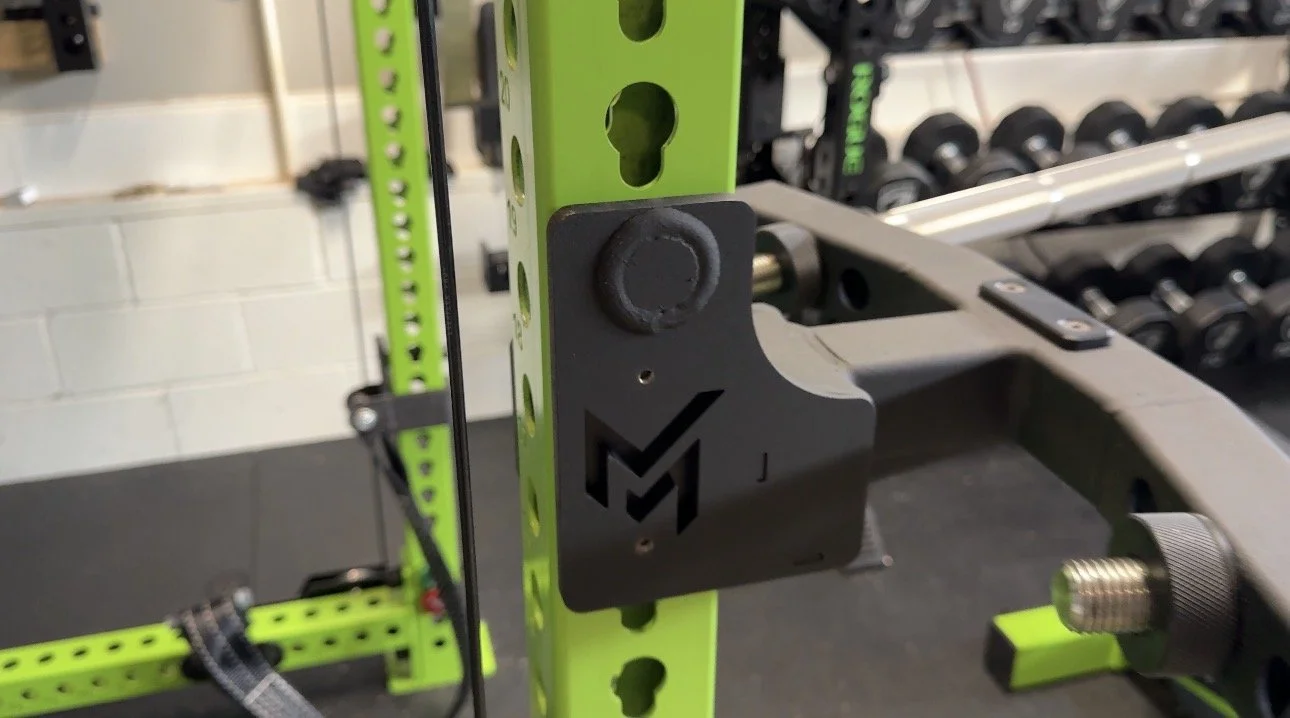
Mutant Metals Ultimate Dip Attachment (UDA) Overview
If you’ve been training in a garage gym for any real length of time, you already know this: dip attachments are usually treated like an accessory you buy because you “should,” not because you’re excited about it. They technically function. You can do dips on them. Check the box.
But that’s about where the praise ends.
Most of them feel like they were designed by someone who doesn’t actually train heavy. The handles are too thin or too slick. The width is fixed in a way that never quite lines up with your shoulders. Stability is “fine” until you start adding real weight to a belt. Then suddenly that slight wobble feels less like a quirk and more like a liability. And let’s not even talk about storage. Half of them live permanently attached to the rack because taking them on and off is a hassle, and the other half sit on the floor waiting to rearrange your shins. Over time, you just accept it. Dips are important. The attachment is mediocre. That’s the cost of doing business in a garage gym.
The Mutant Metals Ultimate Dip Attachment, the UDA, positions itself as the opposite of that mindset. It does not try to sell you on flashy marketing or clever taglines. It leans into something far more compelling for serious lifters: overbuilt steel, modularity that actually makes sense, and attention to the small details that matter once the honeymoon phase is over and you are strapping on a plate and grinding out hard reps. I have owned the UDA for over a year. This is not a fresh-out-of-the-box first impression. There was no sponsorship, no affiliate kickback shaping my opinion. I paid for it with my own money, mounted it to my rack, and used it consistently. It has seen bodyweight work, controlled tempo sets, and heavy weighted dips that make you question your life choices halfway through the set.
What follows is not hype. It is not an unboxing reaction. It is a long-term assessment from someone who trains in a garage, values equipment that earns its footprint, and expects attachments to hold up under real weight. The question is simple: does the UDA justify its price in a market full of “good enough,” or is it just another overbuilt accessory that looks impressive on Instagram but doesn’t change the training experience?
Let’s break it down.
Why Most Dip Attachments Fall Short
The classic V-style dip attachment is one of those pieces of equipment that has survived purely on tradition. Walk into almost any commercial gym, scroll any rack accessory catalog, and you’ll see some variation of the same design that’s been floating around for decades. For casual use, it gets the job done. Bodyweight dips for a pump at the end of chest day? Fine. A few quick sets before you head home? Sure. But the minute dips stop being fluff and start becoming programmed, progressive, and loaded heavy, the cracks show.
First problem is width. Fixed width sounds simple and convenient until you realize not everyone’s shoulders are built the same. Some lifters need a slightly narrower grip to stay comfortable. Others feel stronger and more stable a bit wider. With a standard V-bar, you get what you get. If it does not line up with your structure, you either adapt your mechanics or you irritate something. Neither is a great long-term strategy.
Then there’s the finish. Smooth powder coat looks clean. It photographs well. It also turns into a slip-and-slide once your hands start sweating and the weight hanging from your belt gets heavy enough to matter. Now you’re not just dipping. You’re actively squeezing the handles like you’re trying to crush them, which changes the tension in your forearms and elbows. Over time, that adds up.
Angle is another overlooked issue. Many dip attachments flare in ways that feel slightly “off” once you descend under control. It’s subtle at first. A little elbow irritation. A little shoulder discomfort. Nothing dramatic. But train long enough and those small irritations compound. Garage gym lifters don’t have the luxury of unlimited recovery. If something nags, it sticks around.
And finally, storage. In a tight garage space, every square foot matters. Standard dip attachments are bulky, awkward, and rarely designed with compact storage in mind. They either live permanently bolted to the rack, limiting setup options, or they get leaned against a wall waiting to take out your shin at 4:45 in the morning. Most people shrug and accept it because dips are treated like a secondary movement. An accessory. Something you tolerate because it works “well enough.” But if weighted dips are part of your core programming, if you’re loading a plate, then two, then three, those little compromises stop being minor annoyances. They become friction in your training. And friction, over time, slows progress.
That is the gap the UDA is trying to address. Not by reinventing dips, but by refusing to treat them like an afterthought.
What the Mutant Metals UDA Is (and Why It’s Different)
The UDA did not start as a mass-produced catalog item. It came out of a small shop in Pennsylvania, built by Mutant Metals for lifters who were tired of “good enough.” For a long time, it had that underground reputation. If you knew, you knew. And if you wanted one, you waited. Small batches. Real steel. No hype machine behind it. When Rogue Fitness partnered with Mutant Metals, that changed the accessibility, not the philosophy. It moved from boutique scarcity to broader availability, but the core DNA stayed intact. That matters. A lot of products lose their edge when they scale. The UDA didn’t suddenly become watered down for volume. It stayed overbuilt. At its foundation, the UDA is a modular dip attachment constructed from 11 gauge steel. That spec alone tells you the intent. This is not thin tubing designed to check a box in a product lineup. It is dense, rigid, and built to handle real loading. When you rack it, it feels like part of the rack, not an accessory hanging off the side.
But the real difference is not just the steel thickness. It is the design philosophy. The UDA is built around three priorities that most dip attachments ignore: adjustability, grip security, and intelligent storage. Adjustability means you are not locked into one fixed width that may or may not fit your structure. You can set it up in a way that aligns with your shoulders and elbows instead of forcing your body to adapt to a random angle. For serious training, that is not a luxury. It is joint preservation. Grip security is another deliberate choice. The handles are not an afterthought. They are designed to give you traction and confidence when the weight gets heavy. When you are lowering into a deep dip with multiple plates hanging from your belt, the last thing you should be thinking about is whether your hands are going to slide. And storage efficiency shows that someone actually trains in tight spaces. This was not designed in a vacuum by engineers who have never tripped over attachments in a one car garage. The UDA breaks down and stores in a way that respects limited square footage.
Put simply, this is not a bent piece of pipe welded into a V and called a day. It is a purpose-built tool. And in a garage gym where every attachment has to justify its footprint, that distinction matters.
Build Quality and Specs (The Overbuilt Kind)
Let’s get the objective specs on the table first.
The UDA is built from 11 gauge steel. It weighs in at roughly 31 pounds. It is made in the USA. You can order it with either a 1 inch pin for Monster racks or a 5/8 inch pin for Monster Lite. It includes UHMW lining to protect your uprights. On paper, that reads like a spec sheet. In person, it feels different. This is one of those pieces you pick up and immediately understand the design intent. It does not feel hollow. It does not feel thin. It does not feel like something that was optimized to shave material cost. It feels dense. The kind of dense that communicates stability before you even mount it. The welds are clean and consistent. No splatter. No sloppy seams. The tolerances are tight enough that when you slide it into the rack, it seats confidently without excessive play. That detail matters. Excess movement under load is where instability creeps in, and instability is the enemy when you start hanging real weight from a dip belt.
The powder coat, finished through Rogue’s process, is exactly what you would expect from commercial grade equipment. Even, durable, and resistant to the kind of wear that comes from repeated mounting and removal. After extended use, it holds up. No flaking. No premature chipping from normal training. The UHMW lining is not glamorous, but it is important. It protects your rack and keeps metal from grinding against metal. Over time, that preserves both the attachment and your uprights. Again, small detail. Big long term impact.
At 31 pounds, it is not light. And that is a good thing. You do not want a featherweight dip attachment. You want something that feels anchored. When you lower yourself into a deep dip with added plates swinging slightly beneath you, the last thing you want is movement at the connection point. This is commercial grade hardware scaled appropriately for a serious home gym. Not decorative. Not minimalist for the sake of marketing. Overbuilt on purpose. And in this category, overbuilt is exactly what you want.
The Handles: The Real Star of the Show
If we strip everything else away, this is the reason the UDA has the reputation it does. The handles are not an afterthought. They are the product. You are getting 1 3/8 inch solid steel handles with real knurling. Not decorative texture. Not lightly sandblasted powder coat pretending to offer grip. Actual, deliberate knurling cut into steel. That alone puts it in a different category than most dip attachments on the market. You can order them in matte black or stainless steel. I went stainless. After a full year of regular use, I would make the same choice again without hesitation. Stainless ages better. It feels better. It does not hide under coating. It develops character instead of wear marks.
The knurling hits a very narrow sweet spot. It is aggressive enough that once you wrap your hands around it, they stay there. When you are lowering into a weighted dip with multiple plates hanging from a belt, you are not thinking about whether your palms are going to slide. That mental bandwidth matters. You can focus on bracing, staying tight, and driving out of the bottom. At the same time, it is not so sharp that it shreds your skin. You can train dips consistently without feeling like you need to tape your hands or baby your calluses. It is controlled aggression. Purposeful, not punishing. The six inch knurl marks are another small but intelligent detail. They make centering your grip automatic. You do not have to guess. You do not have to eyeball it. You mount the attachment, grab the bars, and your hands fall into consistent positions set after set. Over time, that consistency reinforces better movement patterns.
This is where most dip attachments fall flat. They treat grip like a secondary feature. The UDA treats it like the foundation. And when you are hanging plates from your waist and trusting a piece of steel to hold you in place, grip security is not a luxury feature. It is a safety feature. That distinction is the difference between tolerating a dip attachment and actually enjoying training on it.
Adjustable Width Zones That Actually Matter
Here’s where the UDA stops being “nice” and starts being smart. Most dip attachments give you one hand position. One angle. One width. And the unspoken message is simple: this is what you get. If your shoulders love it, great. If they don’t, adjust your expectations. That’s fine if dips are a once-a-week bodyweight finisher. It’s not fine if dips are a progressive, loaded movement in your programming.
The UDA gives you three legitimately usable width zones:
• Narrow, roughly 11.5 to 20 inches
• Mid, roughly 15 to 24 inches
• Wide, roughly 19 to 27 inches
Those ranges overlap intentionally, which allows you to micro-adjust within each zone instead of jumping between dramatic extremes. That nuance matters. The adjustment process itself is refreshingly simple. No tools. No wrenches. No pulling pins and wrestling with stubborn hardware. You loosen a large knurled knob, slide the handles to where you want them, and lock them back down. Once they’re set, they stay set. No rattle. No drift under load. No subtle shifting that makes you question whether something is about to move mid-set. That stability is critical. The worst feeling during a heavy dip is uncertainty. If the handles shift even slightly while you’re under tension, it pulls you out of the groove and forces compensations.
More importantly, adjustable width changes how you can program dips.
Go narrower and you can emphasize triceps and keep your elbows tighter. Move mid-range and you’ll often find a balanced position that feels natural and powerful. Slide wider and you can bias chest involvement while opening the shoulders slightly. Even more practical than muscle bias is joint comfort. Some days your shoulders feel bulletproof. Other days, especially if you’ve been pressing heavy, you need a slightly different setup to stay pain-free. The ability to fine-tune width means you adjust the equipment to your body, not the other way around. Most lifters underestimate this until they experience it. Then it’s hard to go back. Because once you realize that a few inches of adjustability can mean the difference between joint irritation and smooth, repeatable reps, the old fixed V-bar starts to feel outdated.
The 30-Degree Handle Angle: Simple but Smart
When people see that the UDA uses a fixed 30 degree handle angle, the first reaction is usually skepticism. Fixed? On a premium attachment? On paper, it can sound like a limitation. In practice, it is a deliberate decision. The 30 degree angle lands in a very usable middle ground. It is not so aggressive that it forces your elbows into an exaggerated tuck. It is not so straight that your wrists feel jammed or externally rotated under load. It simply aligns with how most lifters naturally descend into a dip when they are trying to stay strong and stable. If you prefer to tuck your elbows and drive a more triceps-dominant pattern, the angle supports that. If you flare slightly to involve more chest, it still feels natural. There is no awkward wrist crank at the bottom. No forced elbow path that makes you feel like you are fighting the equipment.
And when you combine that angle with the adjustable width zones, the system makes sense. Width becomes your primary adjustment variable. Angle stays consistent and predictable. That consistency builds familiarity, and familiarity builds strength. Could fully adjustable handle angles be interesting? From a design standpoint, sure. More adjustability is always tempting. But more moving parts also mean more complexity, more potential slop, and more opportunity for something to loosen over time. In actual training, I have never felt limited by the fixed 30 degree angle. I have felt supported by it. It just works.
Sometimes the smartest engineering decision is knowing where to stop.
Stability Under Heavy Load (This Is Where It Earns Its Price)
Specs are nice. Knurling is important. Adjustability is smart. But none of that matters if the attachment moves when the weight gets real. I’ve loaded the UDA heavy. Three 45 pound plates on a dip belt at roughly 215 bodyweight. That is not Instagram fluff weight. That is enough load to expose weaknesses in most attachments very quickly. The UDA does not flex. It does not shift. It does not sag. Once it is mounted and locked in, it feels like an extension of the rack itself. If there is any noise or movement, it is coming from the rack system, not the attachment. That distinction is important. Under heavy dips, especially at the bottom when you are stretched and loaded, even minor instability can change how you brace and drive out of the hole.
With the UDA, the limiting factor is you. Not the hardware.
The UHMW lining plays a quiet but critical role here. It protects the uprights, yes, but it also removes that subtle metal-on-metal slop you feel with cheaper attachments. There is no grinding sensation. No micro-shifting as the load oscillates slightly beneath you. It seats tight and stays tight. In a garage gym, attachments live and die by stability. You do not have a commercial frame bolted into reinforced flooring with unlimited redundancy. Your rack is your foundation. Anything you hang off it has to respect that system. This is one of the most stable rack attachments I have used. Not just dip attachments. Attachments, period. If weighted dips are just a novelty for you, that may sound like overkill. If weighted dips are part of your programming and you are progressing them like you would a barbell lift, stability is not a luxury feature. It is the entire game.
Vertical Storage: The Most Underrated Feature
Here is where the UDA quietly separates itself from almost everything else in the category. Training is one thing. Living with equipment is another. When you finish your last set, you do not have to wrestle it off the rack and find somewhere to stash a bulky V-bar that sticks out like a battering ram. You pull the pin, rotate the unit vertically, and remount it flat against the upright. That’s it. No teardown. No awkward balancing act. It hugs the rack. And when I say it hugs the rack, I mean it takes up almost no usable space. It does not protrude into your walking lane. It does not sit there waiting to introduce itself to your shin at 4:30 in the morning when the lights are still half off and the coffee has not kicked in. In a commercial gym with endless square footage, storage is an afterthought. In a real garage gym, storage is strategy.
Every attachment that lives on the floor becomes friction. Every obstacle you have to step around becomes a small excuse. Small excuses turn into missed sessions over time. That sounds dramatic, but anyone who trains consistently in tight quarters understands it. Clean space equals clear head. Clear head equals consistency. The UDA stores cleaner than any dip attachment I have owned. Period. It even fits on the back of my CTM-1. It does not demand permanent rack real estate. It does not clutter the floor. It does not make you choose between leaving it mounted or dealing with a bulky storage solution. It integrates. And in a garage gym built around discipline and efficiency, that matters more than most people realize.
Versatility Bonus (With a Caveat)
One of the quieter features of the UDA is that the handles are removable. They attach using standard 1 inch threaded bolts, which immediately gets your mind turning if you’re the kind of lifter who likes to experiment. In theory, you can take those knurled handles and mount them elsewhere on the rack. Neutral grip pull ups. Custom lever arm press setups. Creative variations that go beyond dips. On paper, that kind of modularity is a big win. You are not just buying a dip attachment. You are buying high quality handles that could potentially serve multiple roles. In practice, there is a detail you need to understand.
The handles are designed around 2x2 tubing. Most modern racks, especially in the serious home gym world, are 3x3. That dimensional difference matters. If you thread the handles directly into standard rack holes without thinking it through, you can end up with slight contact around the opening. I noticed minor pressure early on when I experimented with mounting them elsewhere and decided not to push it. Nothing catastrophic happened. No damage. But it was enough for me to recognize that the system was not optimized for that use case. This is the one legitimate design limitation worth highlighting. The handles are fantastic in their intended configuration. As standalone modular pieces on a 3x3 rack, they are not perfectly matched without additional hardware or spacing considerations. It is also good to note that the founder of Mutant Metals reached out and let me know that due to steel hardness, as long as the nut is tight on the bars, there should be no concern about damaging the threads.
Is it a deal breaker? No.
The UDA excels at what it was built to do. But if a future revision incorporated a more universal mounting interface that accounted cleanly for 3x3 racks, it would remove that friction entirely. When you are evaluating premium equipment, it is fair to acknowledge both the strengths and the small compromises. This is one of those compromises. Not fatal. Just worth knowing before you start getting creative with the hardware.
UDA vs Rogue Matador vs Rogue Velocidor
When you’re shopping this tier of equipment, you’re not just asking, “Does it work?” You’re asking, “Which one actually earns its footprint?” Let’s line them up.
Rogue Matador
The Rogue Matador is the baseline. It’s cheaper. It mounts easily. You can do dips on it. For a lot of lifters, that’s enough. But it’s a fixed-width design with smooth, powder-coated handles. Under bodyweight, it’s fine. Start adding plates and you’ll feel the difference quickly. Grip becomes more of a squeeze contest than a secure hold. Storage is bulky. It sticks out. It’s not something you’re excited to mount and unmount repeatedly. If dips are occasional accessory work, the Matador does the job. If dips are a progression lift for you, it starts to show its limits.
Rogue Velocidor
The Rogue Velocidor steps things up. It’s heavier. It offers more adjustability. It feels serious. But that seriousness comes at a cost. It’s more expensive. It’s bulkier. It’s harder to store cleanly in a tight garage setup. In many home gyms, it can feel like using a sledgehammer to drive a finishing nail. Is it well built? Yes. Is it necessary for most home gym owners? Probably not. For some lifters, especially those who want maximum overengineering, it makes sense. For many others, it’s simply more than they need to accomplish the task.
Mutant Metals UDA
The UDA hits the middle ground almost perfectly. It gives you elite-level grip with real knurling. It gives you meaningful width adjustability without unnecessary complexity. It gives you stability under heavy load without feeling like you’ve bolted a submarine hatch to your rack. And it stores cleanly, which in a real garage gym is not optional. It’s lighter and easier to live with than the Velocidor. It’s dramatically better in grip security and usability than the Matador.
That balance is what makes it stand out.
If dips are something you sprinkle in at the end of a workout, the Matador is fine. If you want the most industrial solution available and don’t care about footprint, the Velocidor is there. But if dips are a staple lift for you, something you load progressively and treat with the same seriousness as a barbell movement, the UDA is the clear winner. Not because it’s flashy. Because it simply works better where it counts.
Is the Mutant Metals UDA Worth $365?
Here’s the straight answer.
If dips are something you throw in once every couple of weeks and you never hang real weight from a belt, this is not for you. Save your money. Buy a basic attachment, knock out your bodyweight sets, and move on. You will not extract 365 dollars of value from this. But if weighted dips are programmed. If you track them. If you progressively overload them the same way you would a press or a squat. If you care about shoulder longevity, grip security, and keeping your garage gym tight and organized, then yes. Unequivocally yes. This is a Buy Once, Cry Once piece.
The UDA changes the experience of dips. It does not just “hold you up.” It makes the movement feel secure. Predictable. Stable. You stop thinking about whether the attachment is going to shift or whether your hands are going to slide. You focus on bracing, depth, and driving hard out of the bottom. Over time, that confidence matters. It turns dips from something you tolerate into something you program intentionally. That shift alone is worth more than a spec sheet comparison. The real downsides are simple.
First, price. Three hundred sixty five dollars is not impulse-buy territory for a rack attachment. You have to value the movement enough to justify it.
Second, once you train on it consistently, most other dip bars feel like compromises. The grip feels slick. The width feels arbitrary. The storage feels clumsy. It raises the standard in a way that is difficult to un-feel.
That is the honest tradeoff. If dips matter to you, this attachment earns its price. If they do not, it is overkill. And in a garage gym built on intention, knowing the difference is the whole game.
Who Should Buy It (and Who Shouldn’t)
Not every piece of premium equipment is for every lifter. The UDA is no different. This is a serious attachment for people who treat dips like a serious lift. You should buy it if weighted dips are part of your actual programming, not just something you throw in when you feel like it. If you’re adding plates, tracking numbers, and pushing progression over time, the stability and grip quality alone justify the investment.
You should buy it if grip matters to you. Real knurling changes the feel of the movement. Stability under load changes your confidence. If you care about those details, this attachment will feel like an upgrade every time you mount it. You should buy it if you train in limited space and understand that storage is not optional. A clean garage gym supports consistency. The way the UDA stores flat against the rack is not a gimmick. It’s a daily quality-of-life improvement. And you should buy it if you prefer equipment that is built to last decades. Eleven-gauge steel. Clean welds. Commercial-grade finish. This is not disposable hardware. It’s infrastructure.
You should skip it if dips are rare in your training. If you do them once in a while at bodyweight, the return on investment is not there. You should skip it if your budget is tight and you have bigger gaps in your gym. A better barbell, quality plates, or a solid bench will move the needle more for most lifters than a premium dip attachment. And you should skip it if you are genuinely content with basic attachments and have never felt limited by them. Not everyone needs to optimize every variable. The UDA is not about status. It’s about intention. If dips matter to you, it makes sense. If they don’t, it’s unnecessary.
Simple as that.
Final Verdict
The Mutant Metals Ultimate Dip Attachment is the best dip attachment I have used. Not because it looks impressive in photos. Not because it carries a premium price tag. And not because it has a cult following. It earns that title because it addresses the problems that only show up after years under the bar. Slipping grips. Awkward widths. Subtle instability when the weight gets heavy. Bulky storage that clutters a tight garage setup. These are not issues you notice on day one. They’re the friction points that accumulate over time. The UDA removes that friction.
It is overbuilt in the way serious equipment should be. It is thoughtful in the details that matter when you are loading plates and training with intent. And yes, it is expensive. But it feels like infrastructure, not an accessory. In a garage gym built around discipline, progression, and longevity, every attachment has to justify its footprint. The UDA does. It turns dips into a movement you can load confidently and repeatedly without second-guessing your setup.
At Iron and Lime Fitness, the standard is simple. Equipment earns its place or it doesn’t. This one earns it.
Strength for Life. Fitness for All.
Let's Talk
If you've got questions about programming, handle settings, specific positions, or whether the UDA makes sense for your situation, drop a comment below or message me on Instagram (@ironandlimefitness) or Facebook. I reply to everyone because this stuff matters-your money, your training, your goals.
Support the Garage Grind:
This is a family-run operation. I do the videos, the editing, the writing, the filming, and obviously the training-all while balancing a full-time job and three kids who think "rest day" means "build a blanket fort in dad's gym."
If this review helped you make a decision or gave you information you couldn't find anywhere else, hitting Like and Subscribe is the best way to keep this thing going. No ads, no sponsors, no BS-just real reviews from a real gym.
Let's train hard and stay consistent.
Strength for Life. Fitness for All.
- Drew
Iron & Lime Fitness
P.S. - If you end up buying this UDA and want to compare notes after a few months, hit me up. I'm always curious to hear how other lifters are programming with it and which positions they're finding most useful.
Overall Rating: ★★★★★ (5/5)
If you find it used, grab it. You won’t regret it.
Strength for Life. Fitness for All.
Shop the Bar:
Rogue Mutant Metals Ultimate Dip Attachment (UDA)
Shop Here
Watch the full video review on our YouTube channel
Mutant Metals UDA Review: The LAST Dip Bar You’ll Ever Buy? (Worth $365?)
More Articles here:
Rogue Kabuki Transformer Bar Review
Rogue Manta Ray Adjustable Bench Review
Rogue FM-6 Twin Functional Trainer Review
American Barbell Dumbbell Set and Rack Review
“Best Budget Gear for Building a Garage Gym”
Bells of Steel Safety Straps Review: A Perfect Fit for the Rogue FM-6
Train hard. Live bold. Stay lime.