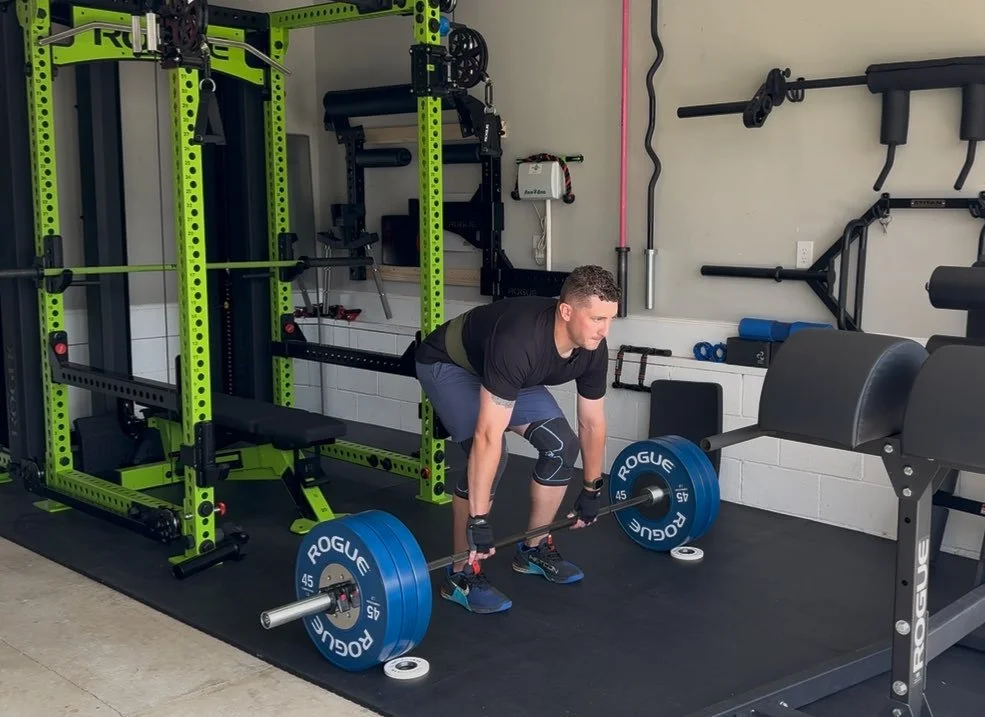

Rogue Fitness CTM-1 Review: Is it better than the Rep Adonis Cable Tower for Home Gyms?
By Drew | Iron and Lime Fitness
Last Updated: Feb 2026
Iron and Lime Fitness is independent and supported by readers. We may earn a small commission at no cost to you if you buy through an affiliate link.
There are two kinds of garage or home gym purchases. The first kind is impulse, which, if I’m being honest, I love. Not reckless impulse. More like the kind where something sits in my Rogue cart for three months, gets rebuilt and deleted thirty times, and eventually earns its way into the budget. Then there’s the true late-night impulse: catching a great sale. Not with Rogue, they operate more like Apple with MacBooks, meaning sales basically don’t exist, but with other companies. That 11:30 p.m. scroll when something looks cool, I’ve casually mentioned it to Jess once, and somehow a seller on Facebook Marketplace accepts an offer I didn’t expect them to take. That’s how I ended up with the American Barbell 10-Sided Dumbbells. I still paid for them, let’s be clear, but a deal is a deal.
Check out the Youtube video below
The second kind is infrastructure. Infrastructure is what actually changes how you train. It’s the piece that quietly becomes the backbone of your gym. It doesn’t just add variety. It adds capability. It adds versatility. The Rogue CTM-1 is infrastructure and so is the Rogue Indy Dual Functional Trainer. As for the CTM-1, this is Rogue’s true entry into the modern home gym single-stack cable tower category, unless you count the Rogue LP-2 Lat Pulldown/Low Row which at 108 inches tall is clearly built for commercial settings, not garages. On paper, the CTM-1 promises a 2:1 functional swivel pulley, a true 1:1 lat pulldown, and a true 1:1 low row, all from one compact platform. It’s built in the USA, finished like commercial equipment, and designed to feel like it belongs in a collegiate weight room, not an East Georgia garage.
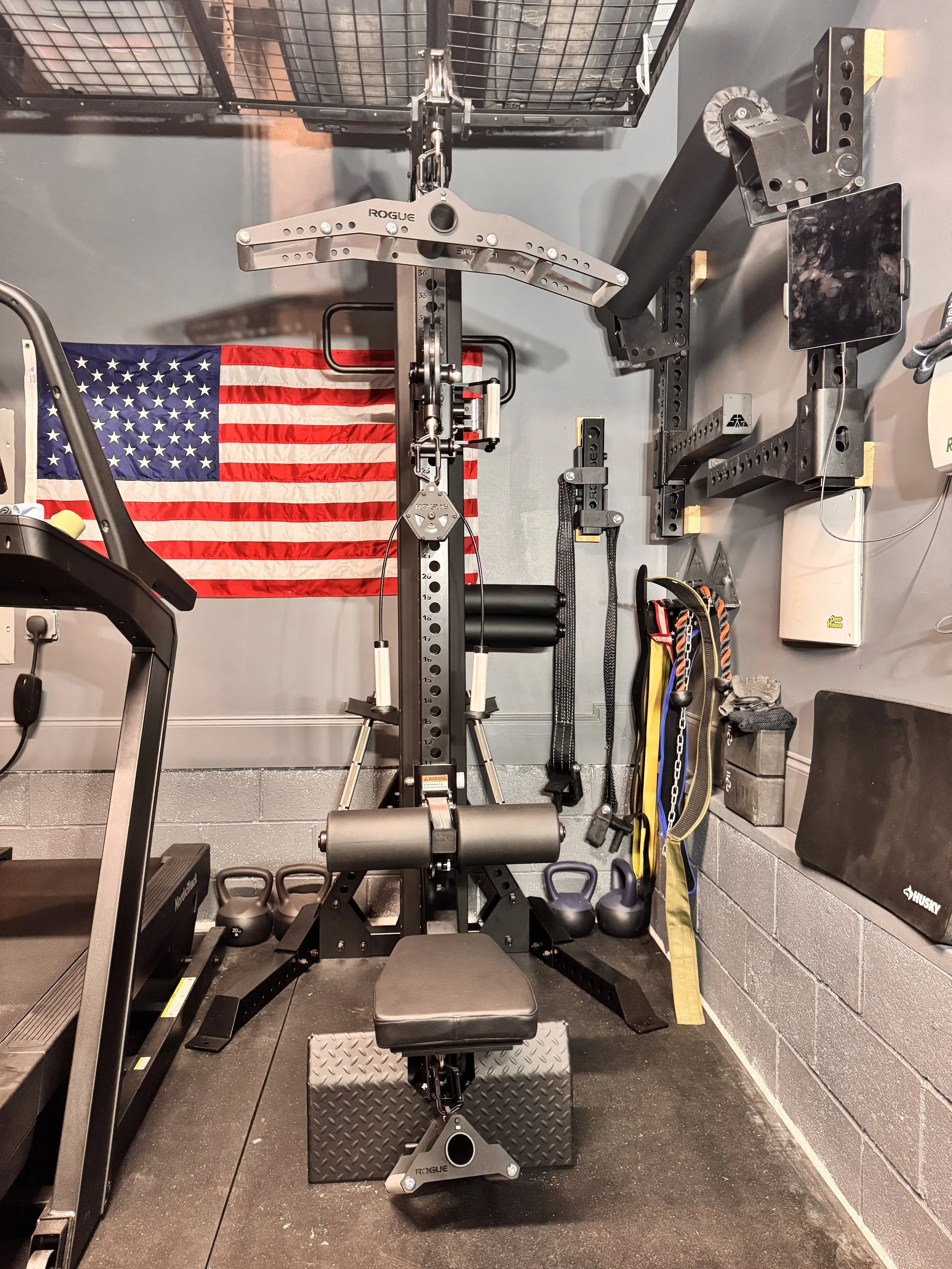
The Rogue CTM-1 is a vibe
But when you're looking at a piece of equipment this substantial, the real question isn't whether it’s good. It’s Rogue so we already know the welds are clean and the powder coat is elite and even if they weren’t, customer service would be right there to fix it (something other companies I have dealt with really struggle with). The real question is whether it actually deserves to take up precious real estate in a serious garage gym, especially in an era where rack-integrated systems and dual-tower setups are the gold standard. I would argue the benefit per square foot is there with the CTM-1 as it delivers. I’ve spent the last week living with it and training on it (which I’ll admit is a fast turnaround for a review), but I know the community has been waiting for the verdict. After putting it through the paces and seeing how it actually handles a heavy session, here is the straight, unfiltered answer.
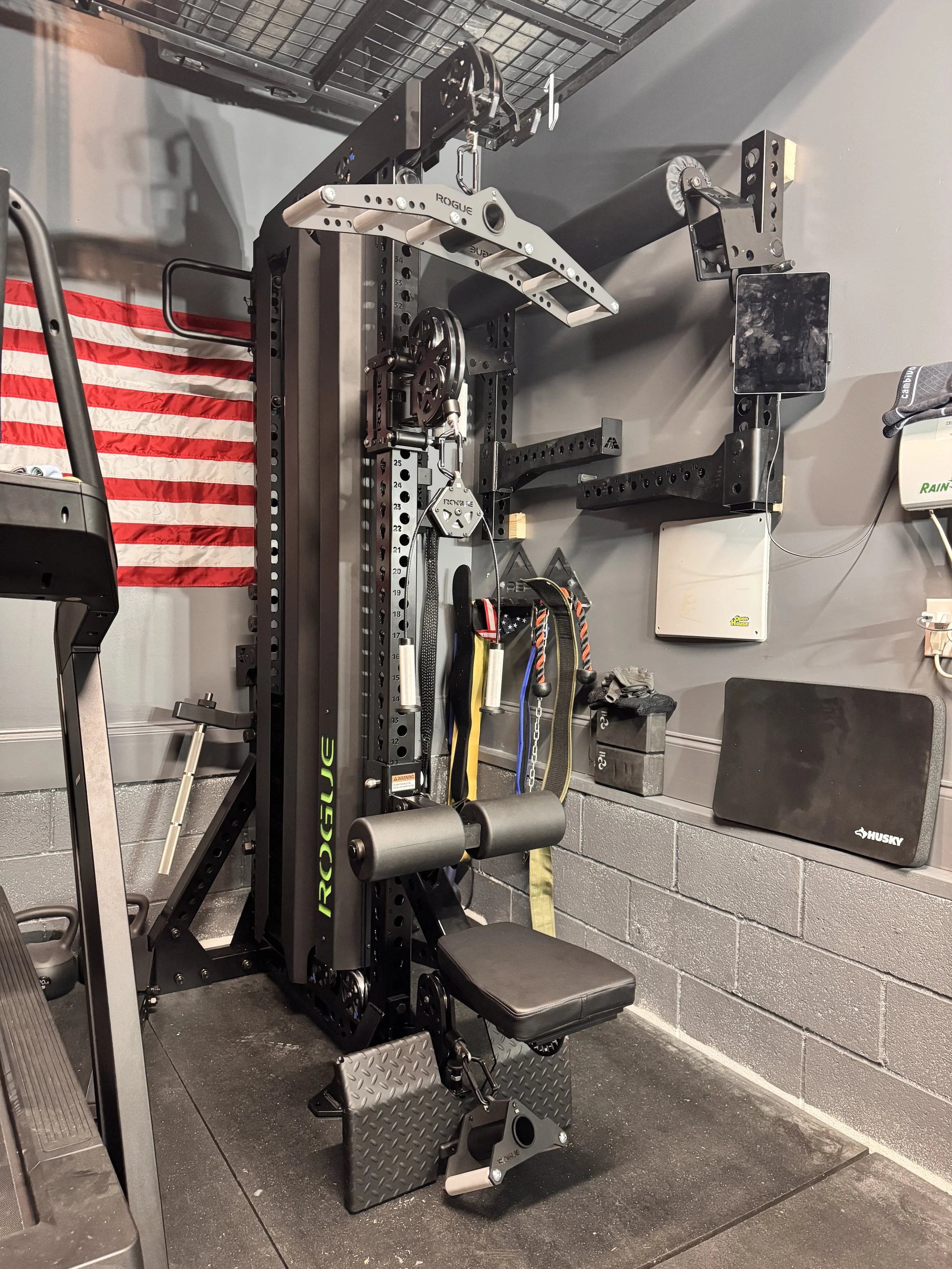
CTM-1 with the Iron and Lime inspired shrouds
What the Rogue CTM-1 Actually Is
This is where the CTM-1 really starts to separate itself from the pack. It isn’t just a stack of weights with cables bolted on; it’s a thoughtful piece of engineering. The pulley configuration is the entire point of this machine. You get a 2:1 ratio on the front trolley, perfect for functional accessory work where you want smoother travel and slightly lighter loading, and then you transition seamlessly into a true 1:1 lat pulldown and a true 1:1 low row. The best part? It all pulls from the same stack. No rerouting cables. No swapping hardware. No mid-workout reconfiguration. That matters more than it sounds like it does. And unlike the Rep Adonis (one of the only other true tri-capable competitor right now) you’re not capped at 210 pounds before you have to start manually loading plates. That last part matters more than most people realize. When you’re mid-session, the last thing you want to do is go hunting for 10-pound plates just to finish a set of rows. You slide the pin. You train. You move on.
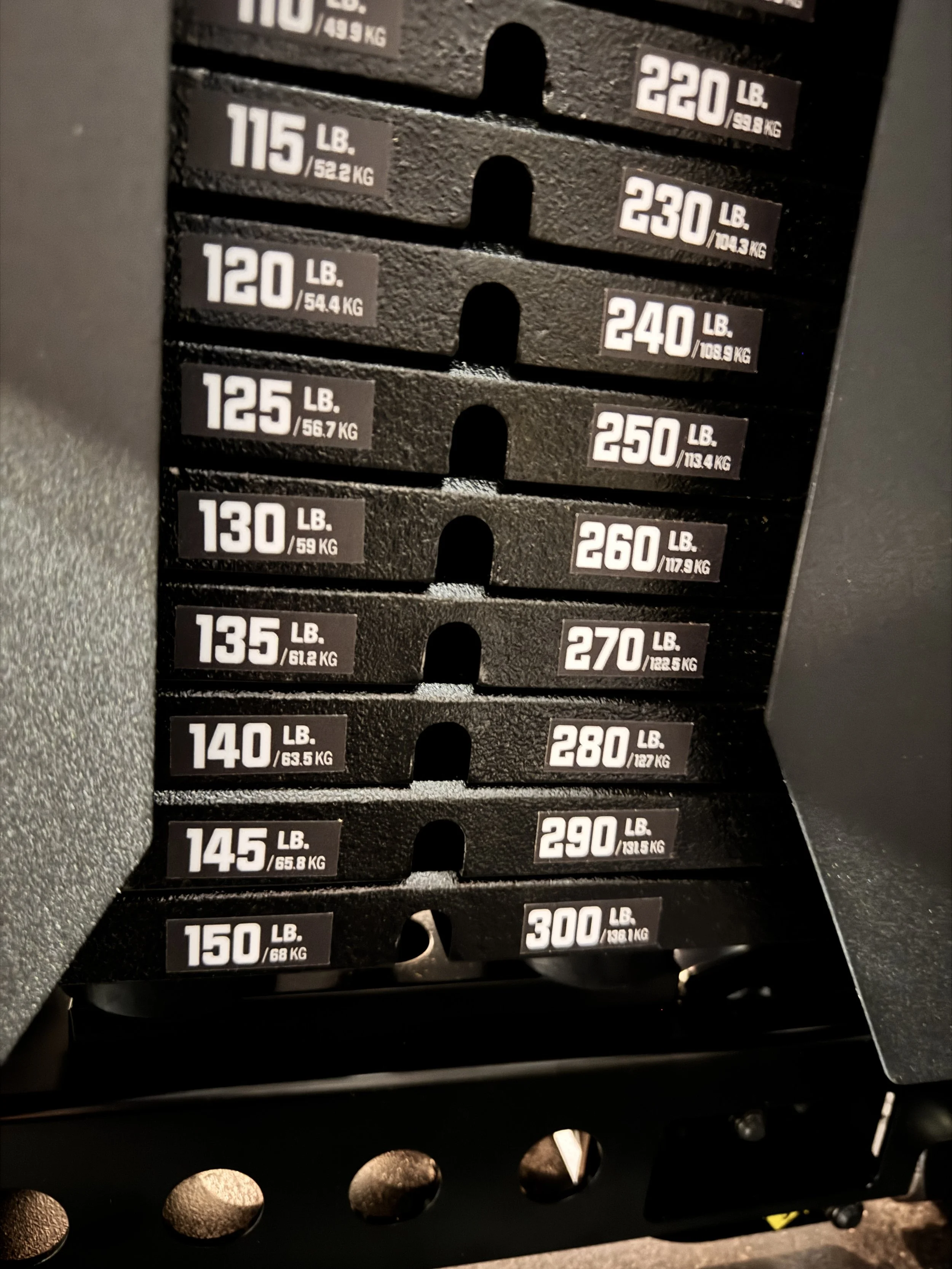
Rogue offers a true 300 lb weight stack in 10 lb increments
In a garage gym, friction kills consistency. Anyone who has watched my video on why I got ride of the FM-6 knows that is near and dear to my heart. If you haven’t seen it, check it out here. If something is annoying to adjust, you will use it less. If it takes too many steps to convert from one movement to another, you’ll skip it on busy days, just like I started to do subconsciously…and then consciously with the multi-use lat roller and the FM-6. The CTM-1 removes that friction. You go from lat pulldown to low row to single-arm cable work without reconfiguring anything. You just train. You can choose to order it with a 250-pound stack or a 300-pound stack. Additionally, for height, you can choose a 90-inch or 100-inch height. You can run it standalone or integrate it with a rack setup (I chose standalone for my little corner). It’s modular in the way Rogue equipment usually is, serious steel, serious hardware, and compatibility with the Monster ecosystem (Which is great for those trying to decide what ecosystem to build off of).
It’s not trying to be flashy. It’s trying to be permanent, and for me, it wiI be (at least until I can figure out how to get more space so I can order a Hammer Strength leg curl/leg extension).
Specs That Actually Matter in a Garage Gym
Let’s skip the marketing language and talk about what actually matters when this thing shows up in your driveway. And hopefully your delivery driver is as cool as mine, he always brings it up to the garage, he’s a stud, truly.
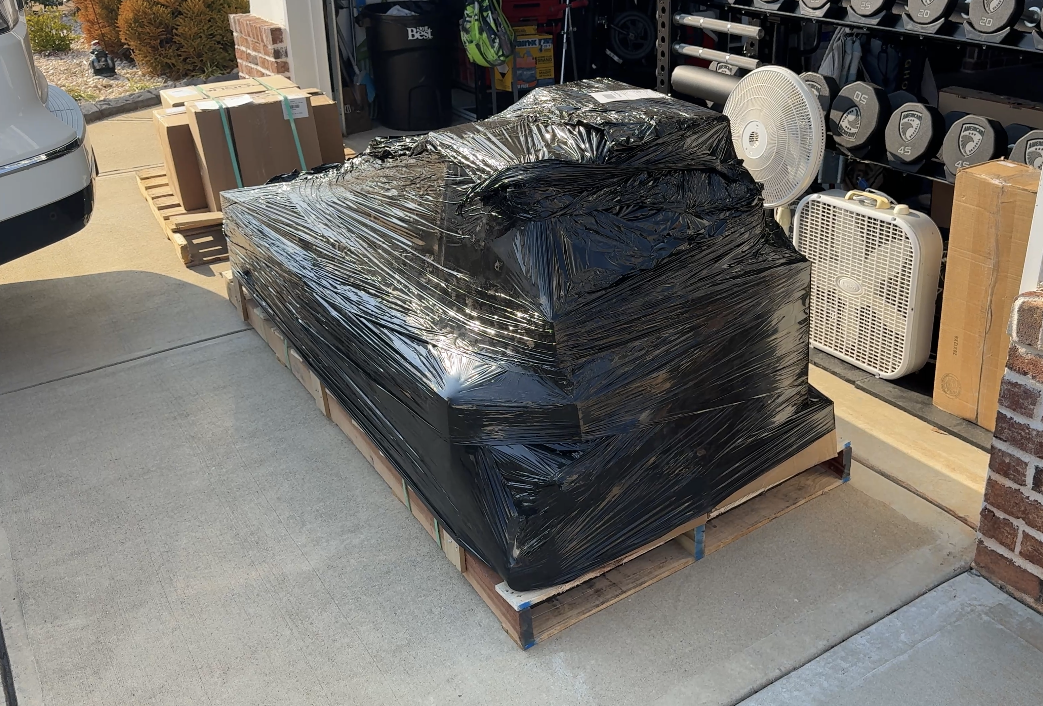
Pallet delivery is always high quality with Rogue
The footprint is roughly 50 by 52 inches without the seat, and about 63 inches deep once the seat is installed. In a commercial gym, that’s nothing. In a garage (especially my 9 x 18 space) that’s meaningful. Every inch counts.
Height comes in around 91.5 inches for the 90-inch version and about 101.5 inches for the taller model. What Rogue doesn’t emphasize loudly enough is that you need additional clearance for assembly. The top section has to slide down into place. Also, pay attention to the instructions, the printed sheet in the box and the PDF on the website show two different rear hole patterns. Look closely before you bolt everything down. If you’ve got low garage rails, openers, or tight HVAC runs, measure twice. Maybe three times.
The frame is 3x3, 11-gauge steel with 1-inch holes. In other words, it’s Monster rack DNA. If your gym already lives in the Rogue ecosystem, this integrates cleanly from both a functional and visual standpoint. It doesn’t look like an imported afterthought sitting next to serious equipment. It looks like it belongs.
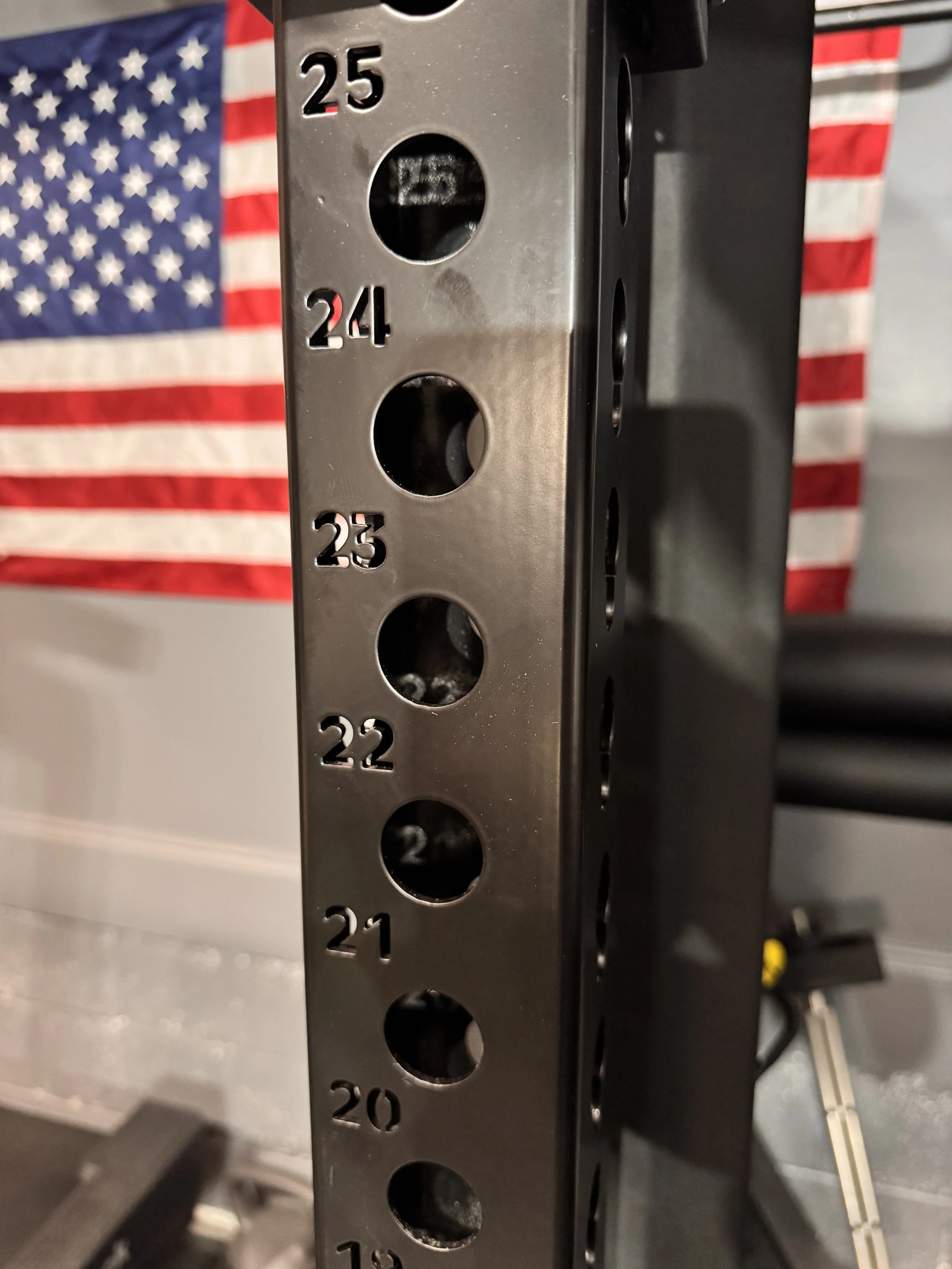
Clean laser cut numbers and a quality powercoat are standard on the Monster series
This thing feels like a rack with a cable tower built into it, because essentially, that’s what it is.
Why the Ratios Matter
The reason this entire category exists comes down to pulley ratios.
In 2:1 mode on the front swivel trolley, you’re pulling roughly half the stack weight at the handle. If the stack says 100 pounds, you’re moving about 50. Yes, there’s technically some pulley math involved, but for practical purposes, it’s essentially half. That gives you more cable travel and a smoother feel for isolation work. Flyes, curls, lateral raises, Pallof presses (which I use constantly) these are the bread-and-butter accessory movements that build resilient joints and real muscle over time. I will be curious how much I use this single pulley once the dual Indy arrives.
The trolley on the CTM-1 feels substantial. It’s not featherlight, but it’s smooth and controlled and the rolling mechanism makes it feel lighter than it is. The rollers are solid, and the motion doesn’t feel cheap or hollow. That said, it is heavy. If your wife or kids are adjusting it regularly, that’s something to keep in mind. It’s built like Rogue builds things, sturdy first, effortless second.
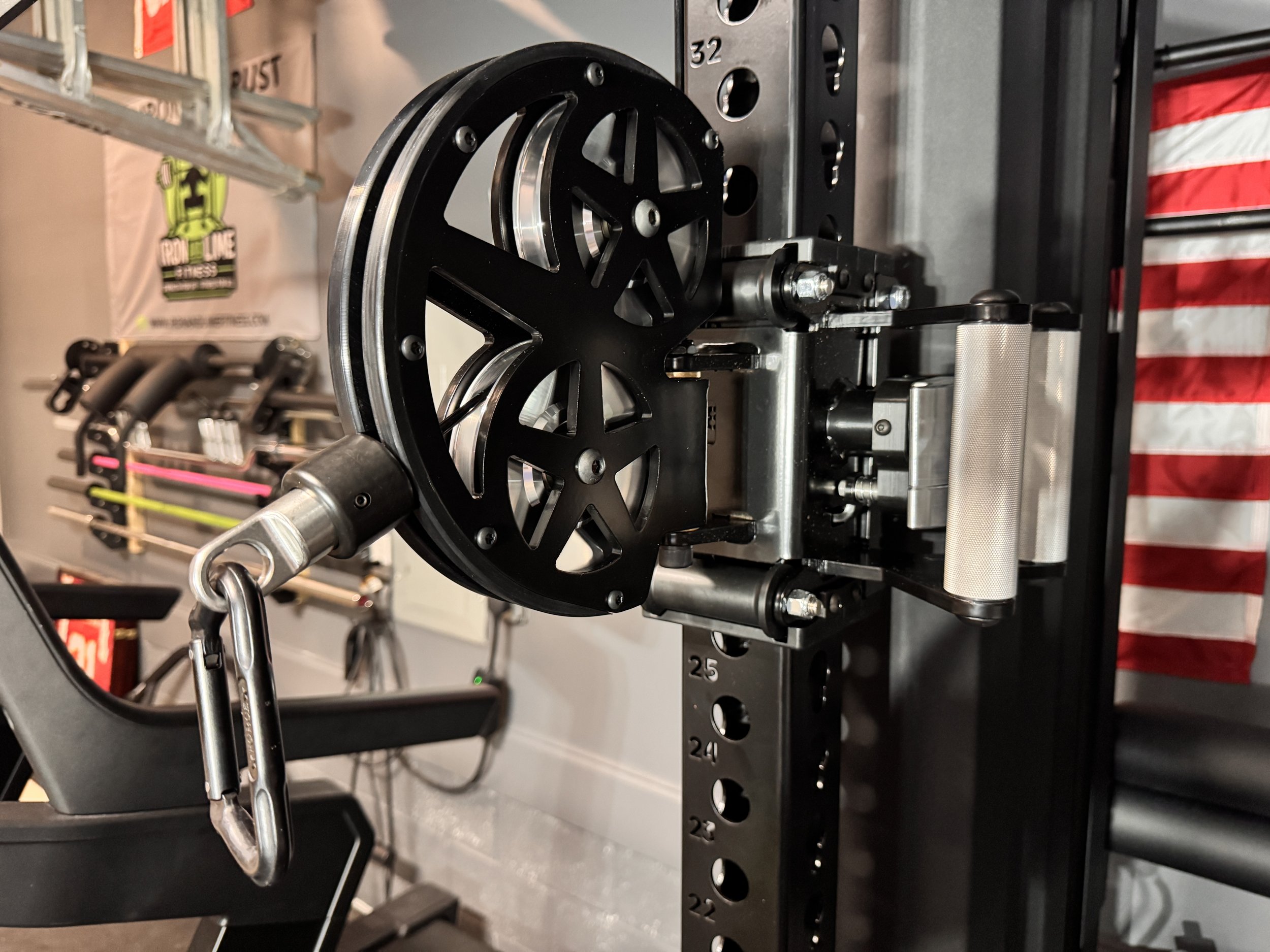
The CTM-1 trolleys are commercial quality and should outlive all of us with how robust they are
Then there’s the 1:1 side of the equation. When the pin says 200 on the lat pulldown or low row, you are pulling 200. No pulley math. No artificial lightness. No “this feels like less than it should.” If you train lat pulldowns seriously, that matters. The 250-pound stack will be more than enough for most lifters. The 300-pound stack exists for people who want headroom, or for those rare garage gym guests who walk in and try to prove something.
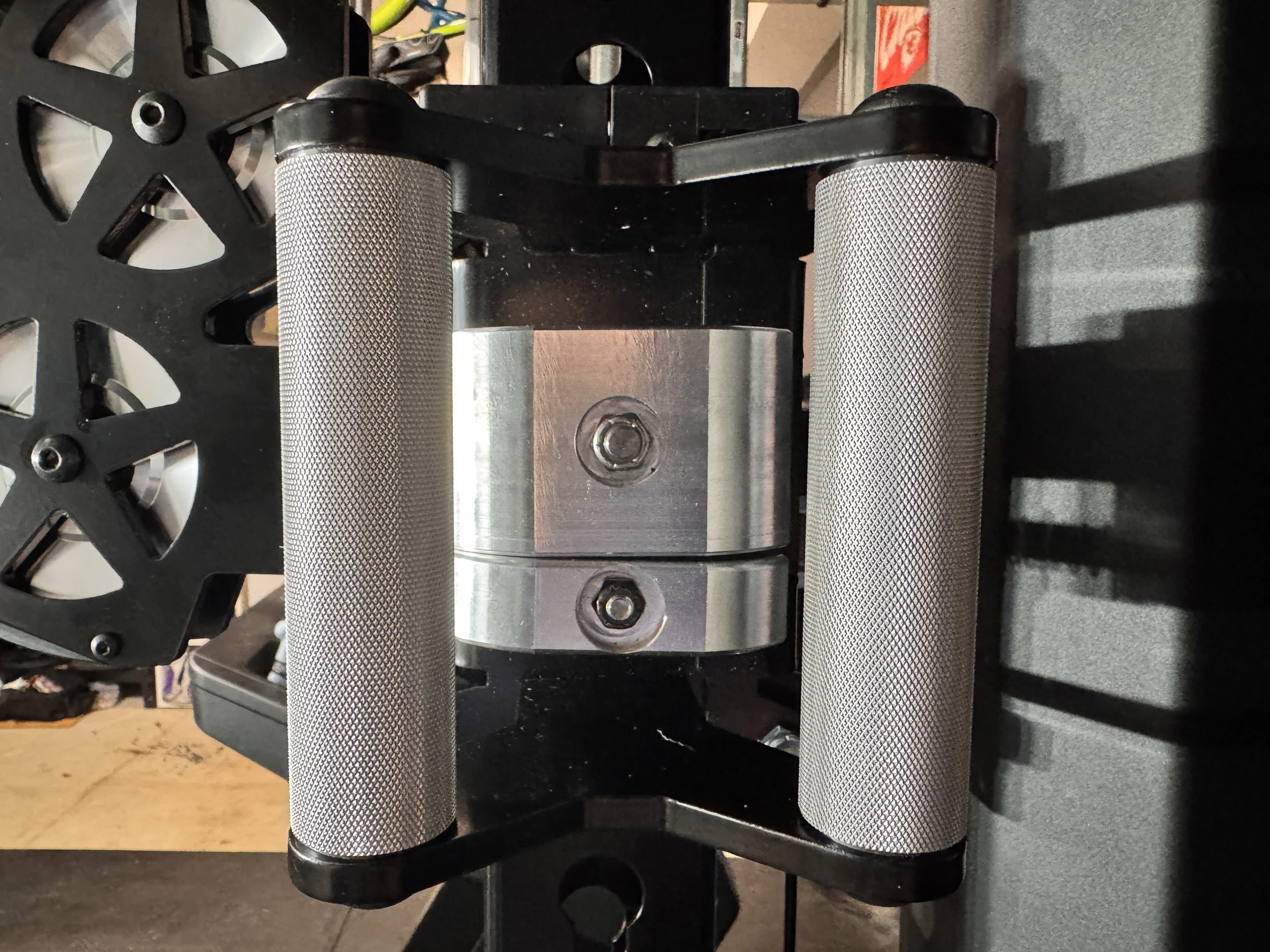
Harkening back to the M2 50 Cal with butterfly triggers
Real-World Use: Lat Pulldown
The lat pulldown feels like it was pulled straight out of a commercial facility and scaled down for a garage footprint. It’s smooth. It’s consistent. There’s no hesitation at the start of the pull and no awkward catch halfway through the rep. The seat locks you in securely, and the leg rollers are both comfortable and stable. There’s minimal movement or wobble, which is exactly what you want when the weight starts getting serious. If you’ve been using a plate-loaded pulldown that feels inconsistent or a little clunky, this will feel like a legitimate upgrade.
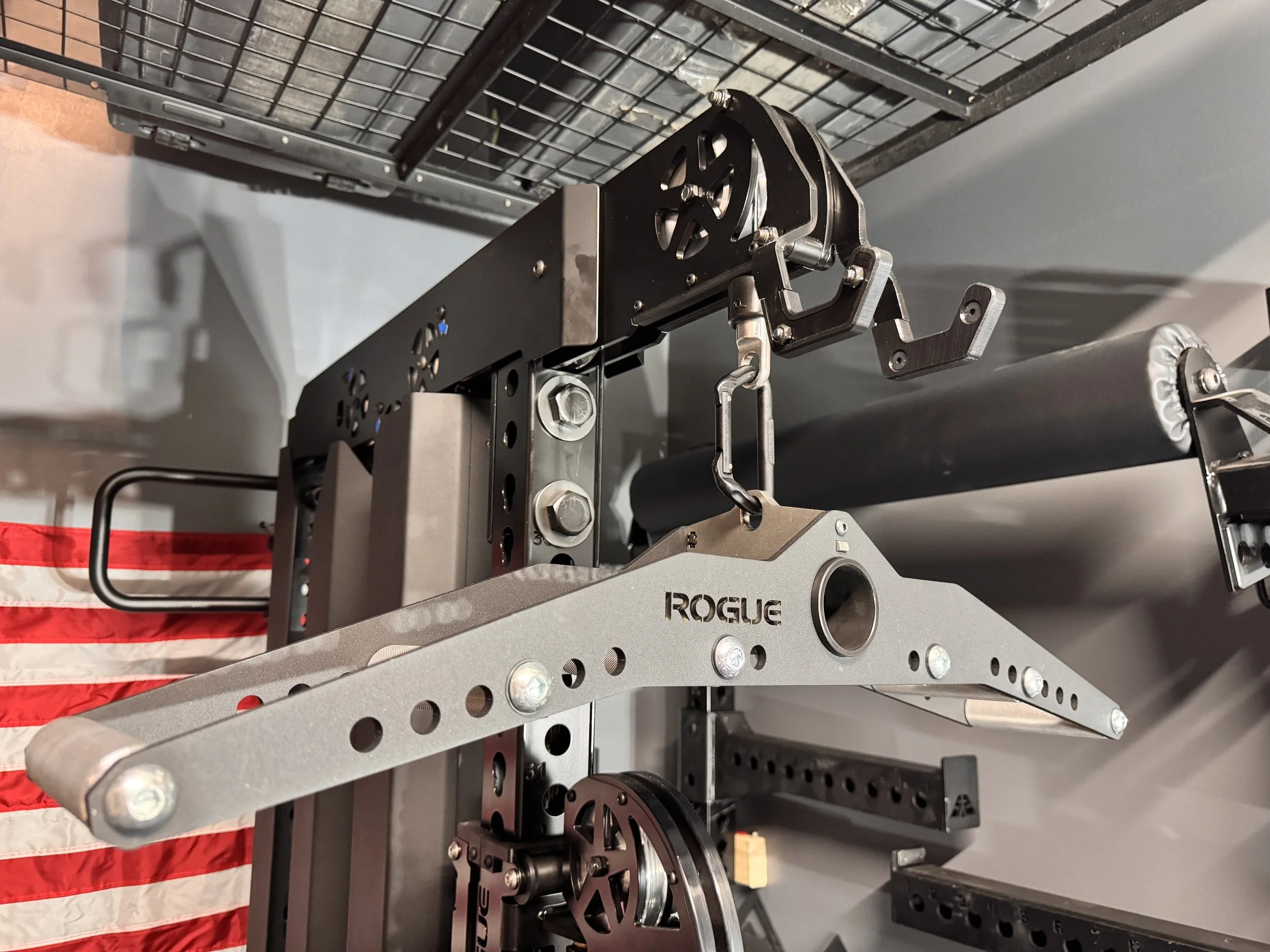
Rogue CG-1 Cable & Landmine Attachment
Real-World Use: Low Row
The low row is quietly one of the strongest features of the CTM-1. True 1:1 ratio. Smooth guide rods. Solid, adjustable footplate. You do row from the floor (Which may be awkward for some). That’s either completely fine or deeply offensive depending on how clean your garage is. Personally, I throw down a Rogue AbMat and move on with my life.
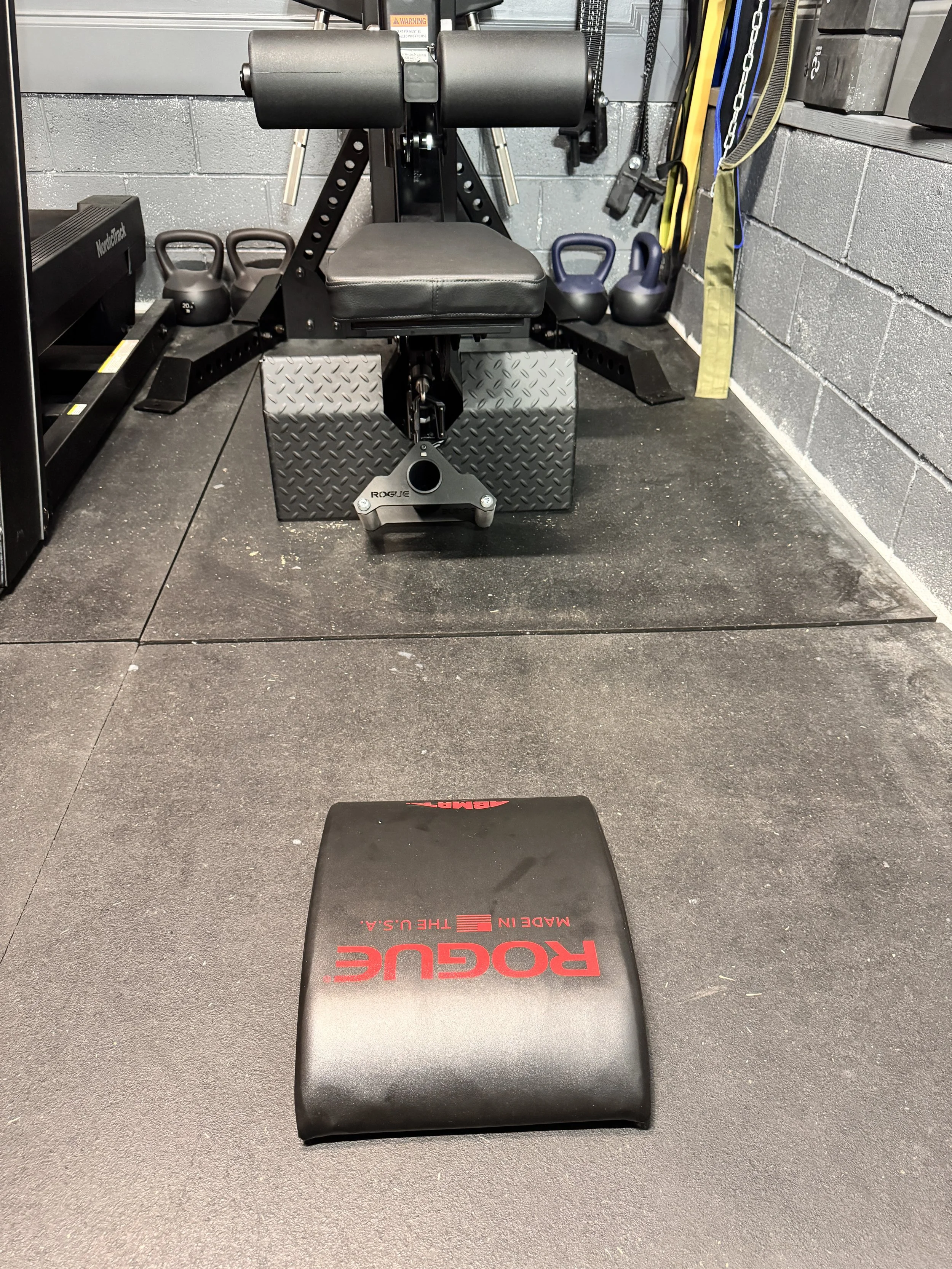
Rogue AbMat Used for Low Rows
From a training standpoint, it just works. It loads heavy, it feels predictable, and the pull is smooth from start to finish. There’s no strange friction off the floor and no jerkiness halfway through the movement. It feels finished, like it was thought through. In a home gym, you’re constantly balancing comfort with space. A fully seated commercial low row would add several feet to the depth of this machine. That might work in a collegiate weight room, but it’s not realistic for most garages. Given those constraints, Rogue made the right trade-off.
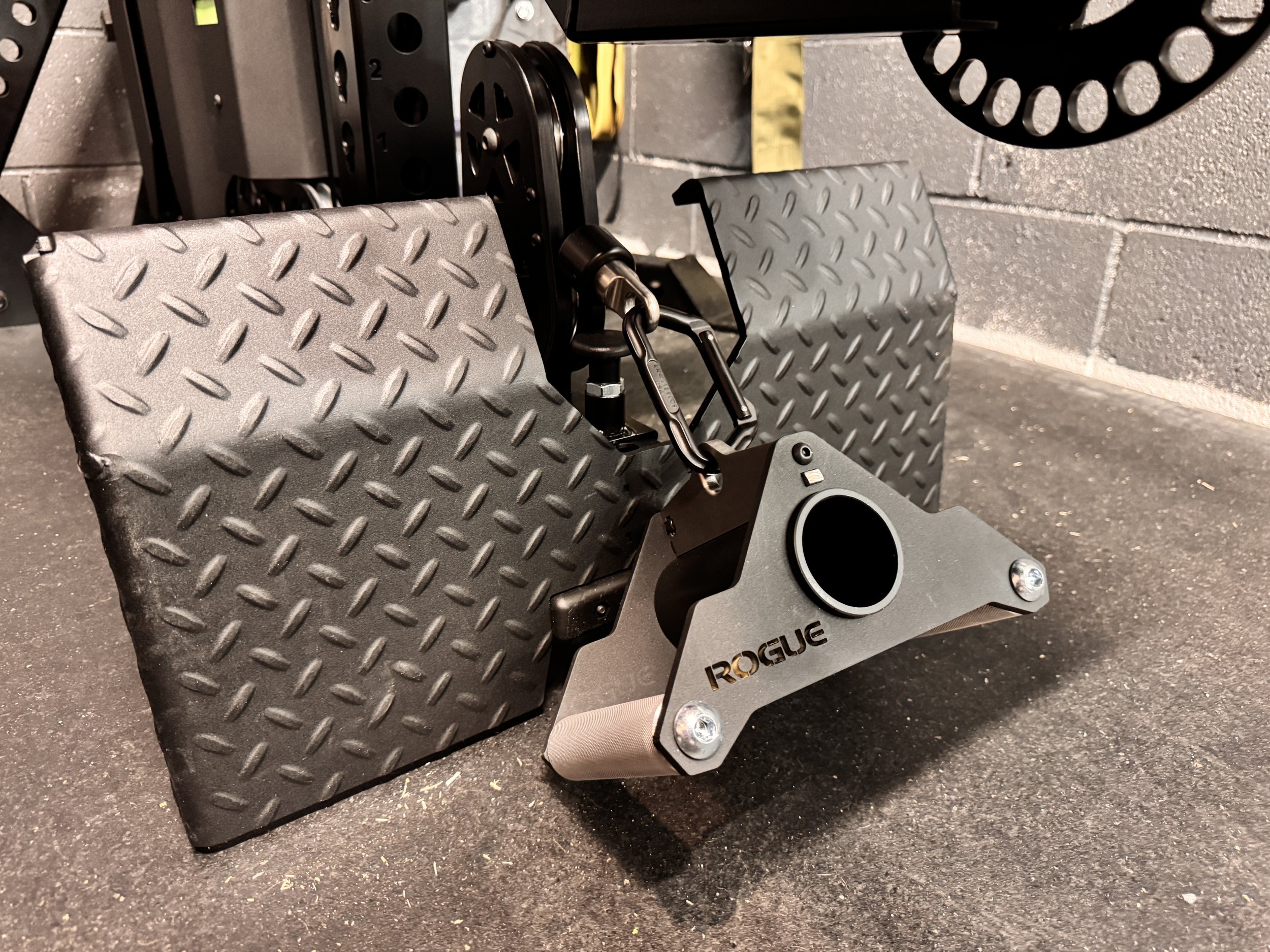
Attachements
The beauty of what Rogue is doing now is giving people the freedom to build out the attachments as add ons. I was able to do the same thing with the Indy Dual Functional Trainer and that thing will be sick.
The Multi-Use Seat: Smart but Not Perfect
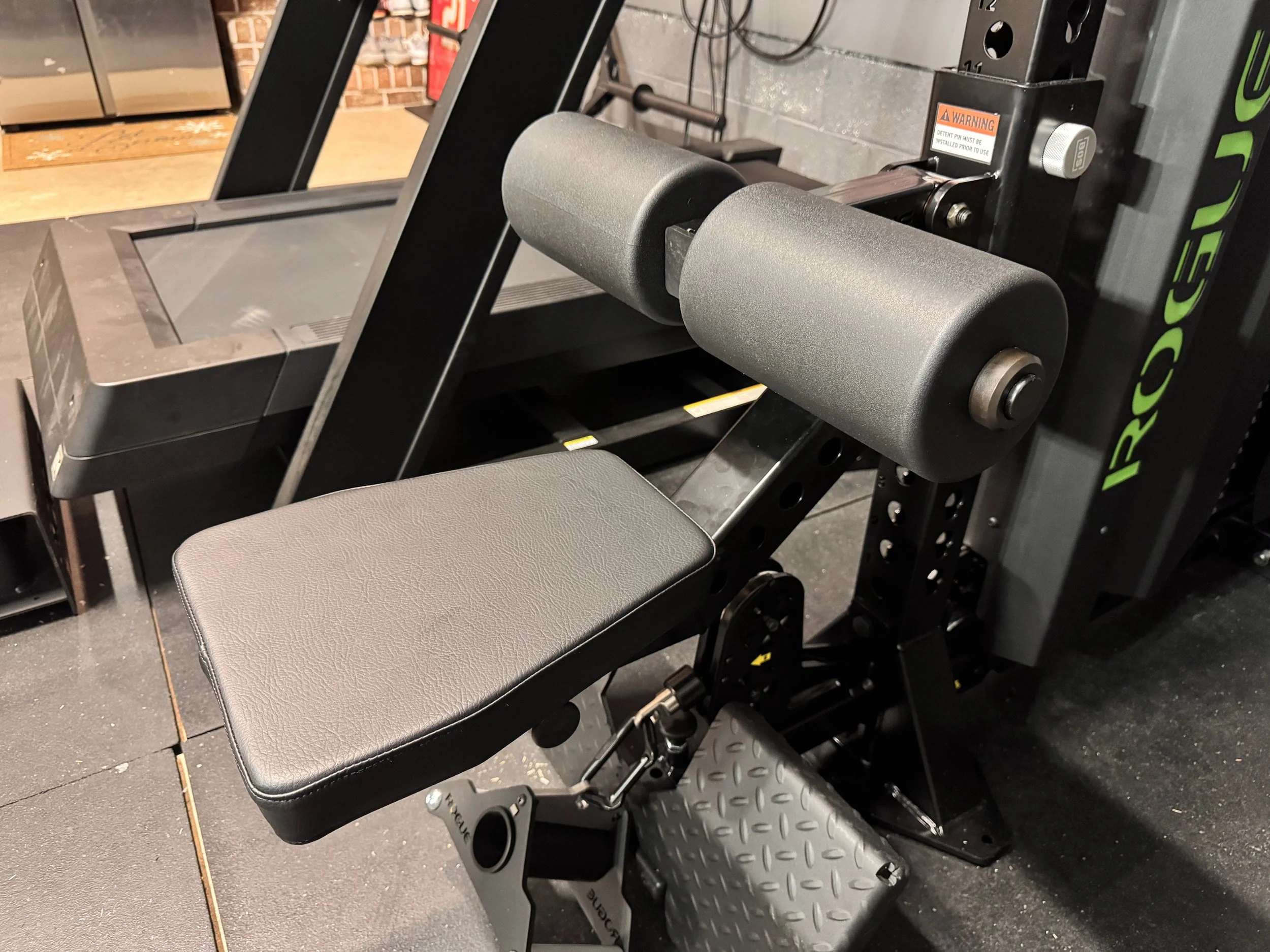
Rogue Monster Multi-Use Lat Seat
Rogue’s Monster Multi-Use Lat Seat adds real versatility. It’s not just a pulldown seat. You get multiple angle adjustments, adjustable leg rollers, and the ability to flip it over for chest-supported work. That opens the door to chest-supported rows, cable flyes, curls, extensions, and various angled pulling movements. In a tight space, that matters. It lets one piece of equipment do more without adding another footprint. Absolutely Rogue trademark quality, I mean, just look at that UHMW coverage, I also love that you can tighten down the nut to ensure there is no movement room in the seat.
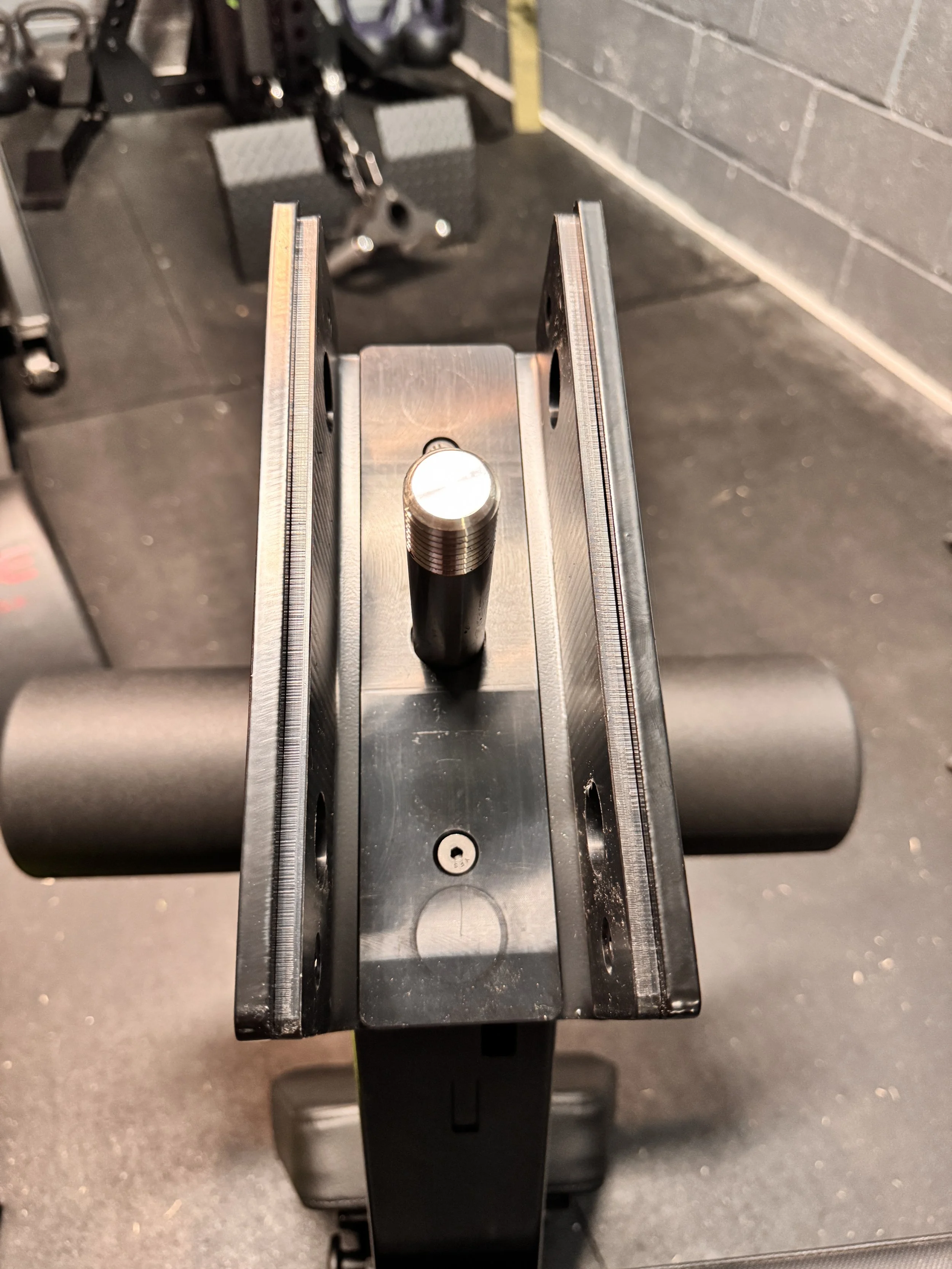
Rogue Monster Multi-Use Lat Seat UHMW to protect the rack
But here’s the criticism.
There is no elegant storage solution for the seat when it’s not in use. If your tower is up against a wall, you don’t have a clean “home” for it. For me, it’s mostly a non-issue because I plan to leave it installed. For someone constantly switching between full-tower use and open trolley use, that could become annoying. It’s not a dealbreaker. Shout out to the Bells of Steel Mag Pins, I would highly recommend as they are the best I’ve used.
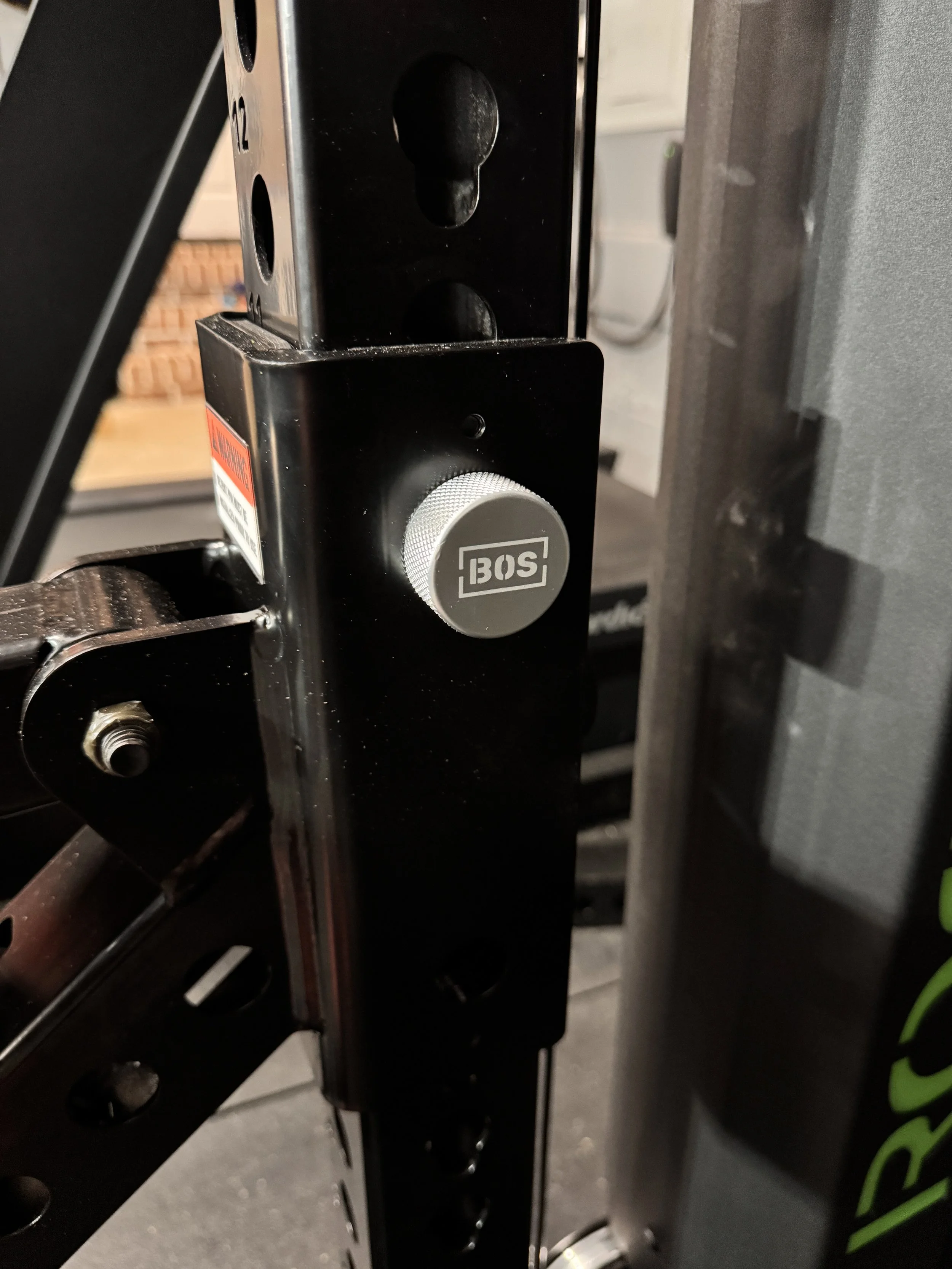
Bells of Steel Mag Pins are my favorite that I’ve used
But in a garage gym, small daily annoyances add up as we all saw with the FM-6.
Stainless Steel Lat Pull Bar
I ordered this separately because it’s that good. The Rogue Lat Bar (Stainless) is well worth the money and will last you a lifetime.
The Lat Pull Multi-Grip Bar
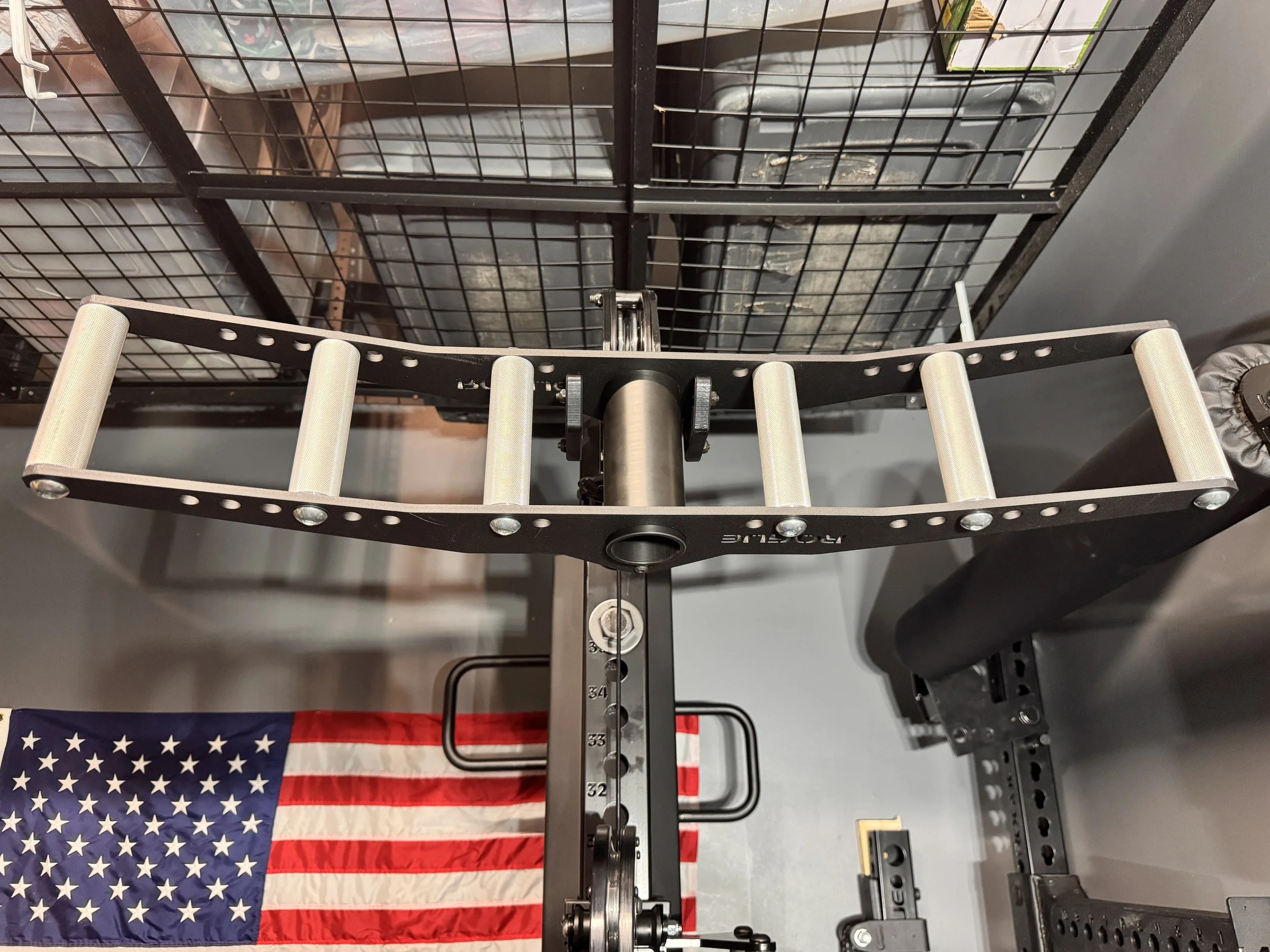
Easy choice here, the official name is Rogue CG-1 Cable & Landmine Attachment. 3 different widths and all super solid, while still being light to handle. 100% would recommend, can also do landmine pulls.
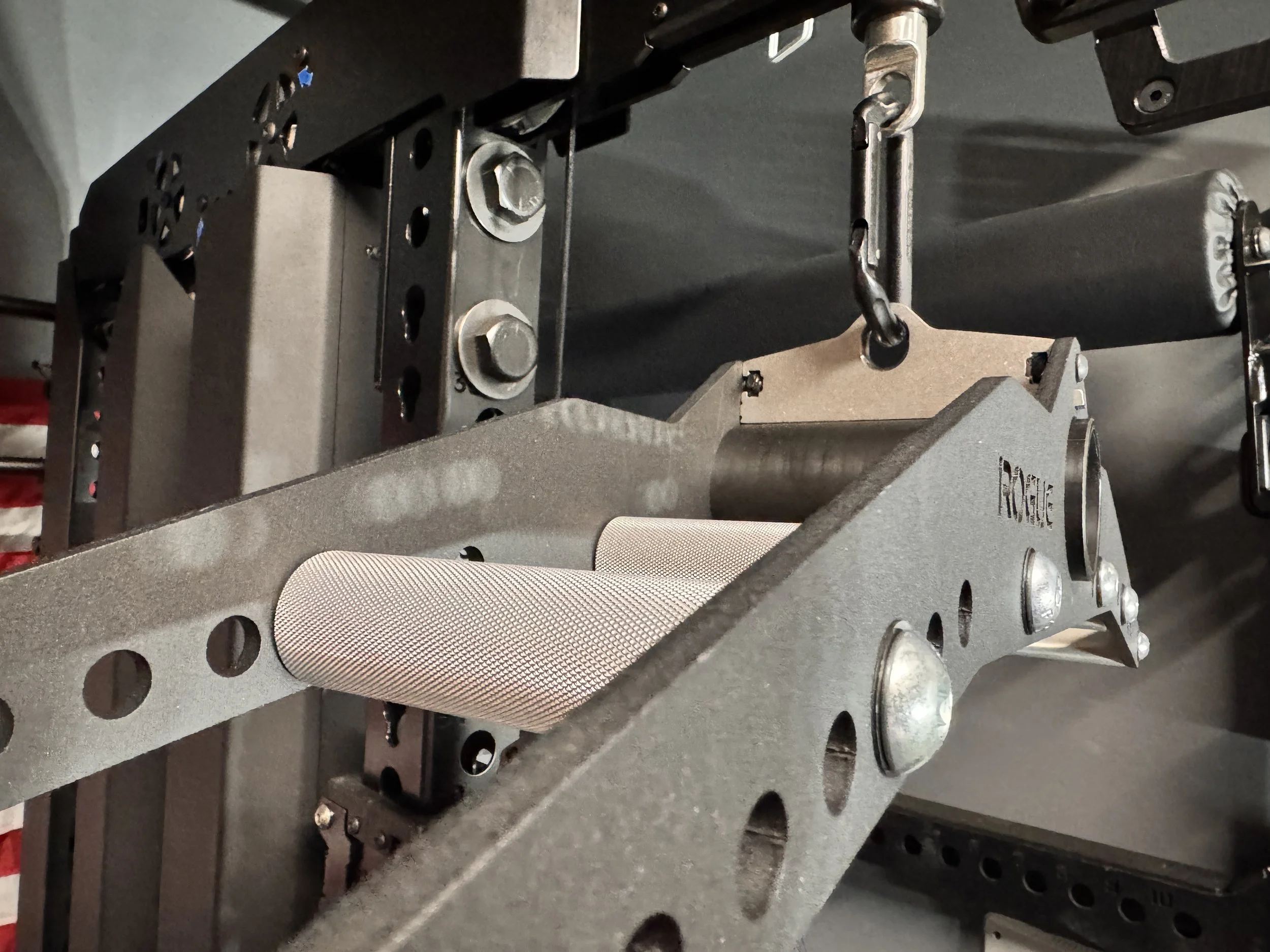
Rogue CG-1 Cable & Landmine Attachment
The Low Row Triangle
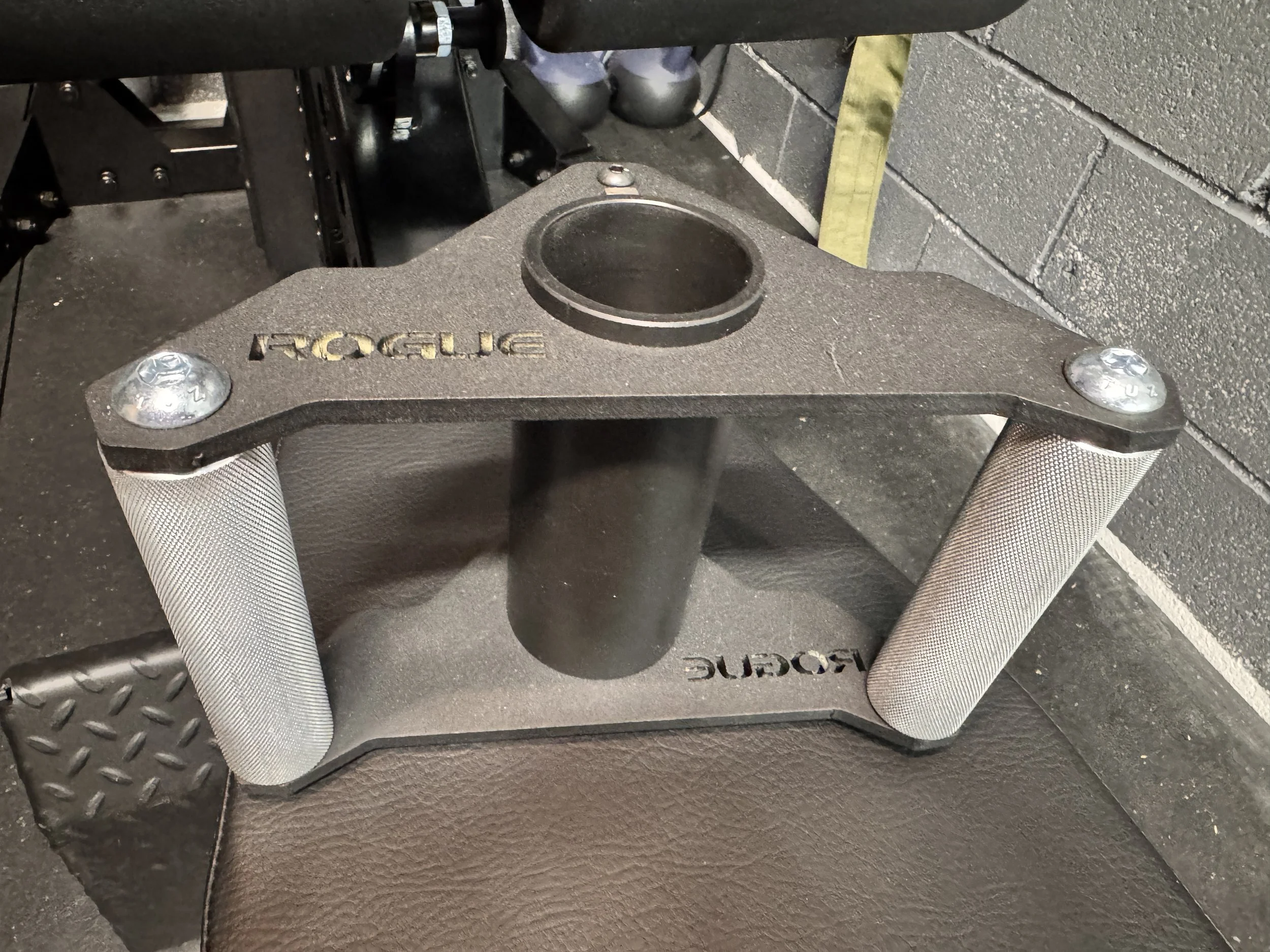
Rogue CG-1T Triangle Cable & Landmine Attachment
Absolutely fantastic, the official name is Rogue CG-1T Triangle Cable & Landmine Attachment. Light, solid, and you can do landmine pulls with it.
The Tricep Cable Pull
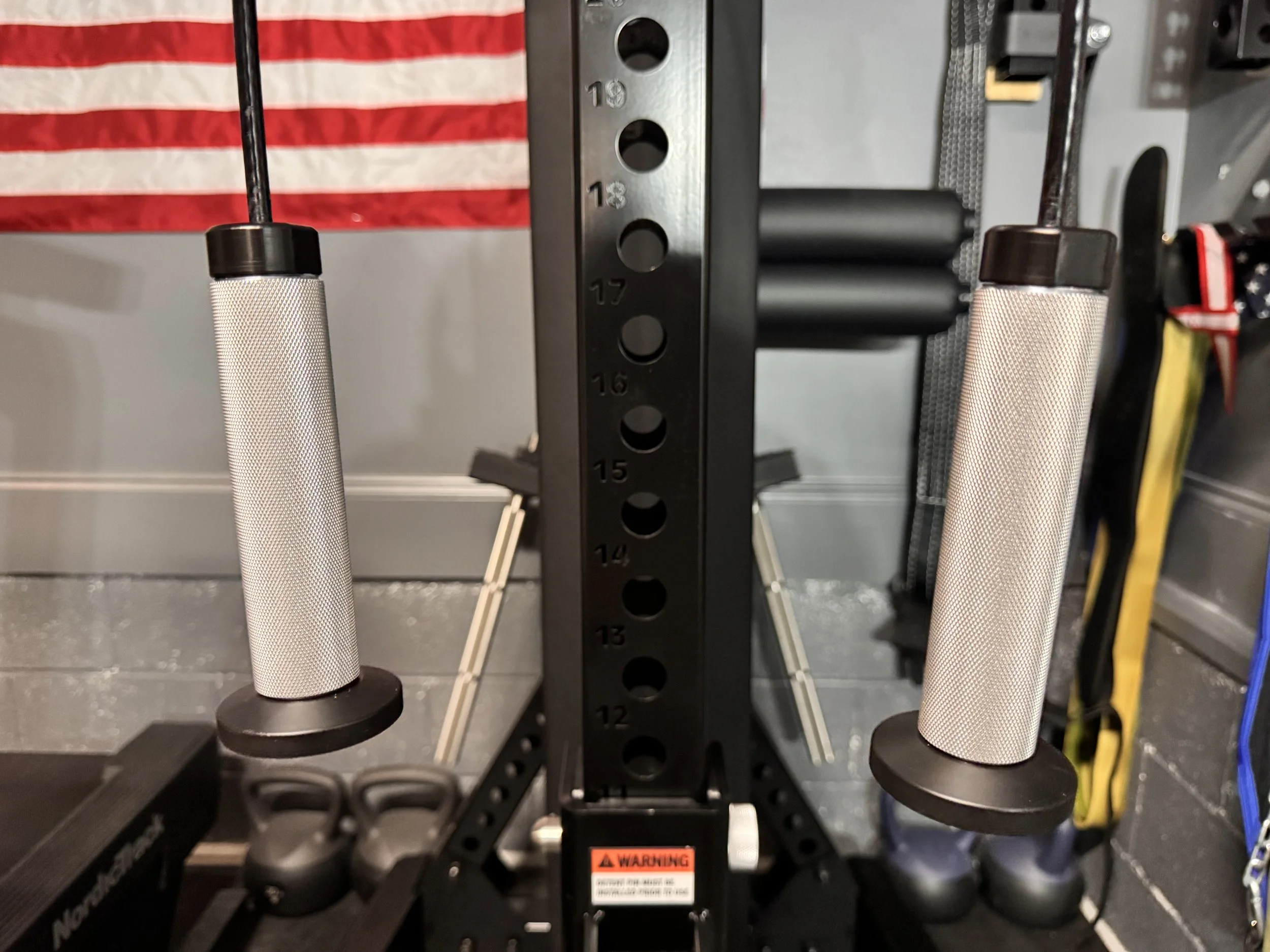
Rogue TR-2D Tricep Dual Cable Attachment
The official name is the Rogue TR-2D Tricep Dual Cable Attachment. This is the one I probably wouldn’t get again, it’s slightly too long and I really don’t think it’s as useful as I thought it would be. For the money, I would probably skip it and just go with a regular tricep rope or D-handles if you don’t have a separate functional trainer with the D-handles.
What Rogue Got Right
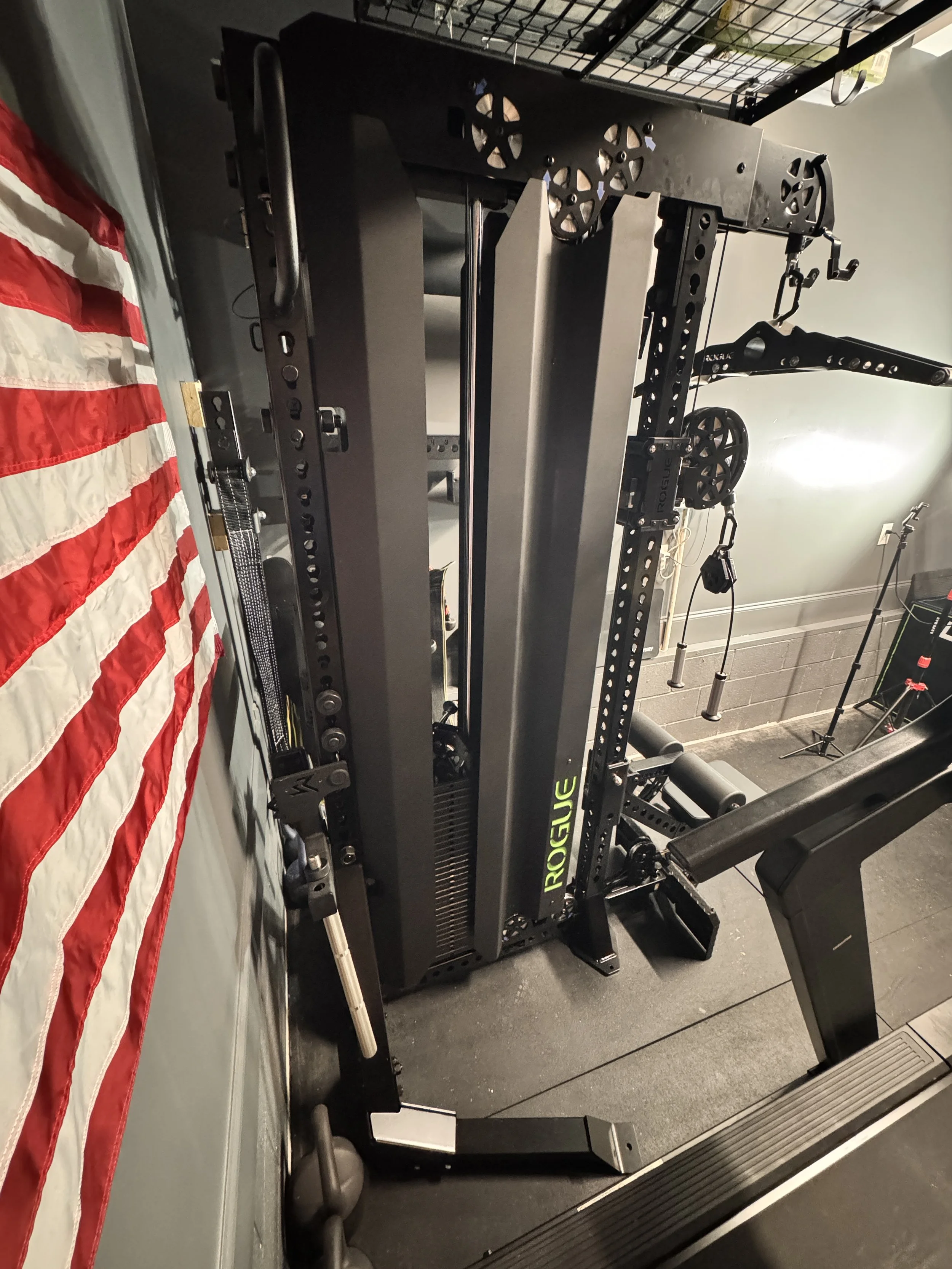
The back of the CTM-1 is great for storage
First and foremost, build quality. The CTM-1 feels overbuilt. Thick steel. Clean welds. High-quality pulleys. Smooth cable travel. Durable finish. It feels like it will age well, not rattle apart after a year. Second, transition simplicity. You don’t reconfigure anything to move between functional trainer mode, lat pulldown, and low row. No mental gymnastics. No unclip-reclip routine. You train, you move on. Third, customization. You can choose stack size, height, rack integration, and attachments. Rogue doesn’t force you into a bloated bundle full of pieces you’ll never use. That’s appreciated.
Where It Falls Short
No machine is perfect. There’s no integrated microloading. The stack moves in 10-pound increments. For bigger movements, that’s fine. For smaller isolation work (especially for lighter lifters) that can be limiting. You’ll need a workaround if you want smaller jumps. Storage is another missed opportunity. No built-in attachment storage. No refined seat storage solution. In an otherwise polished piece, that feels like an oversight.
And then there’s the single-trolley limitation. I would also be remiss if I didn’t mention the floating plate issue I seem to have with my Rogue stuff. I am curious to see if the Rogue Indy dual functional trainer does the same thing.
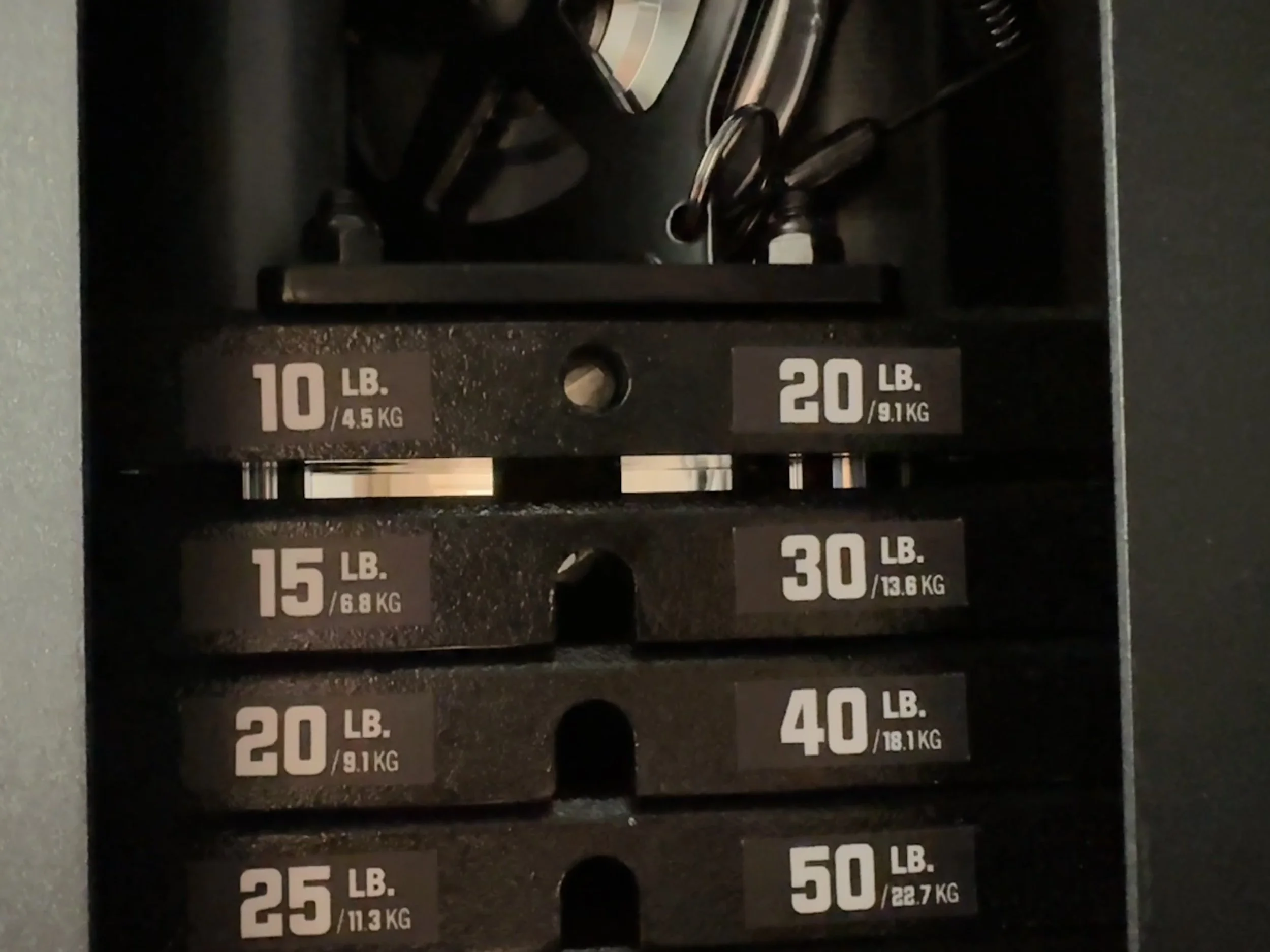
I’m the floating plate guy, trademarked
This is not a dual adjustable functional trainer. You have one working exit point. It’s excellent for unilateral work and accessory movements. It’s limited for wide cable crossovers or symmetrical dual-arm pressing. If you want a traditional two-arm commercial functional trainer experience, this isn’t that. It’s a refined single-stack tower. It’s just important to know what you’re buying.
Who Should Buy the Rogue CTM-1
Buy this if you want true 1:1 lat pulldown and low row performance combined with 2:1 cable versatility in the same footprint. Buy it if you value made-in-USA manufacturing and Rogue-level durability. Buy it if you want commercial feel without dedicating half your garage to it. This is a serious piece for a serious garage gym. My honest answer is anyone who can afford the space and the price tag (which is a bit brutal)
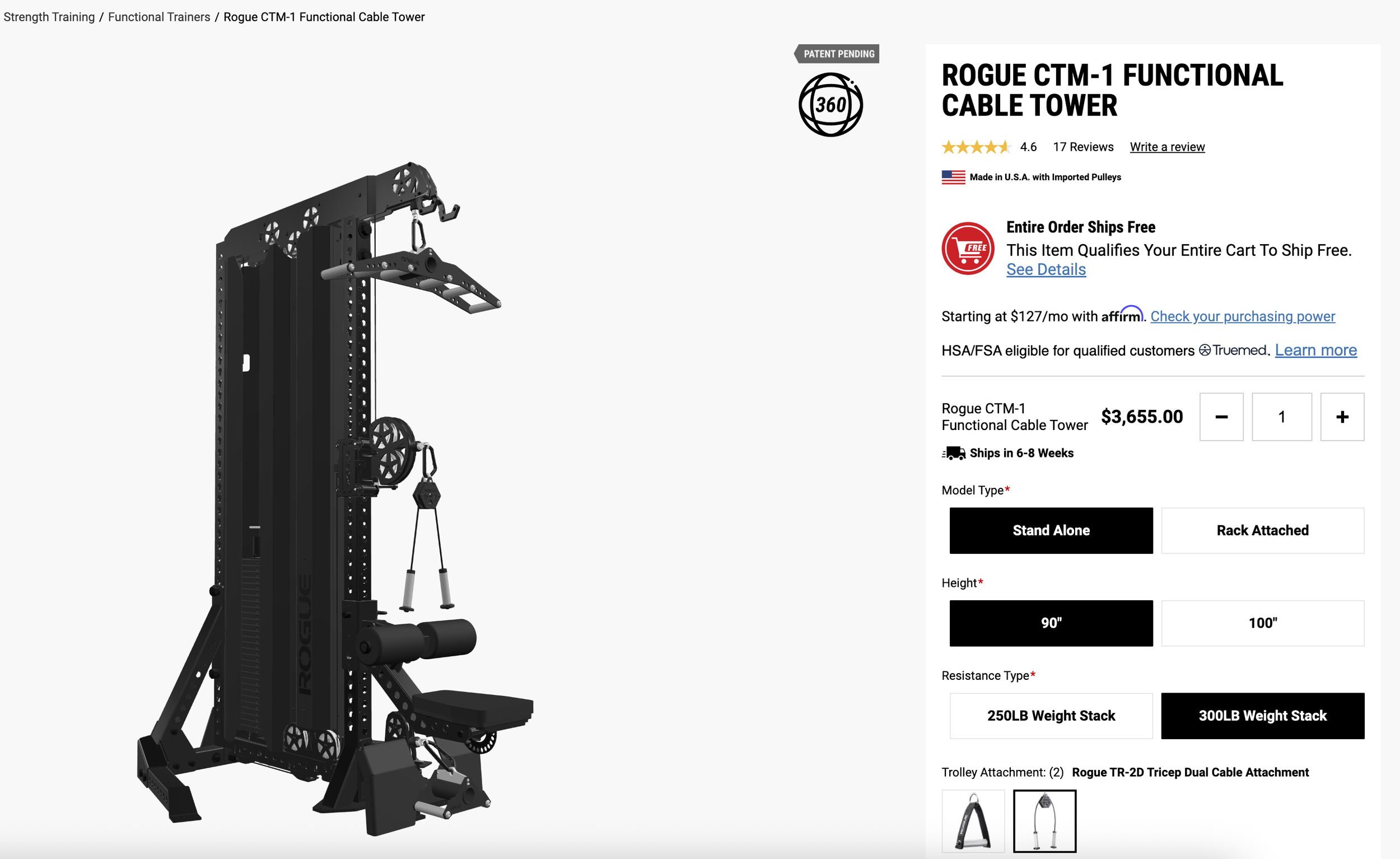
Not a cheap purchase
Who Should Skip It
Skip it if you already have rack-integrated cables that cover the same ground. Skip it if you need dual adjustable arms. Skip it if you hate dealing with attachment logistics or you’re working with tight ceiling height. This machine is excellent. It is not universally necessary, but if your wife is asking for proof, it’s necessary. I have your back.
Final Verdict
The Rogue CTM-1 is one of the most polished single-stack cable towers available right now. It’s not revolutionary but it’s refined. It’s not cheap, so you won’t save money, but the old adage of getting what you pay for does apply here and it’s executed extremely well. In a garage gym, every piece of equipment has to earn its footprint. The CTM-1 earns it, for the right lifter. If you want a compact command center for pulldowns, rows, and cable accessories that feels like commercial equipment, this is a top-tier choice. If you want maximal cable versatility with dual independent arms, you should look elsewhere.
Be honest about how you train.
Then choose accordingly.
I appreciate everyone that reads this and watches the videos.
- Drew
Iron & Lime Fitness
Let's Talk
If you've got questions about fitness, being a dad, the Army, or if the Rogue CTM-1 makes sense for your situation, drop a comment below or message me on Instagram (@ironandlimefitness) or Facebook. I reply to everyone because this stuff matters-your money, your training, your goals.
Support the Garage Grind:
This is a family-run operation. I do the videos, the editing, the writing, the filming, the socials, the marketing, the blogging, the website, and obviously the training-all while balancing a full-time job and three kids who just want to hang out.
If this review helped you make a decision or gave you information you couldn't find anywhere else, hitting Like and Subscribe is the best way to keep this thing going. No ads, no sponsors, no BS-just real reviews from a real gym.
If you want to shop my Rogue link and support the shop, head to the Rogue Fitness site.
Let's train hard and stay consistent.
Strength for Life. Fitness for All.
Barbells and Balance Things:
Watch the full video review on our YouTube channel
Rogue Fitness CTM-1 Review: Is it better than the Rep Adonis Cable Tower for Garage Gyms?
More Articles here:
Moving the FM-6: Why Garage Gyms Must Evolve (And How to Survive the Move)
American Barbell 10-Sided Urethane Dumbbells Review: Commercial Luxury or Financial Mistake?
Here's Why I Wouldn't Buy The Rogue FM-6 Again: Rogue FM-6 Long-Term Review
Rogue Mutant Metals Ultimate Dip Attachment Review (1 Year Later): Is It Really Worth $365?
Rogue Kabuki Transformer Bar Review
Rogue Manta Ray Adjustable Bench Review
Rogue FM-6 Twin Functional Trainer Review
American Barbell Dumbbell Set and Rack Review
“Best Budget Gear for Building a Garage Gym”
Bells of Steel Safety Straps Review: A Perfect Fit for the Rogue FM-6
Train hard. Live bold. Stay lime.