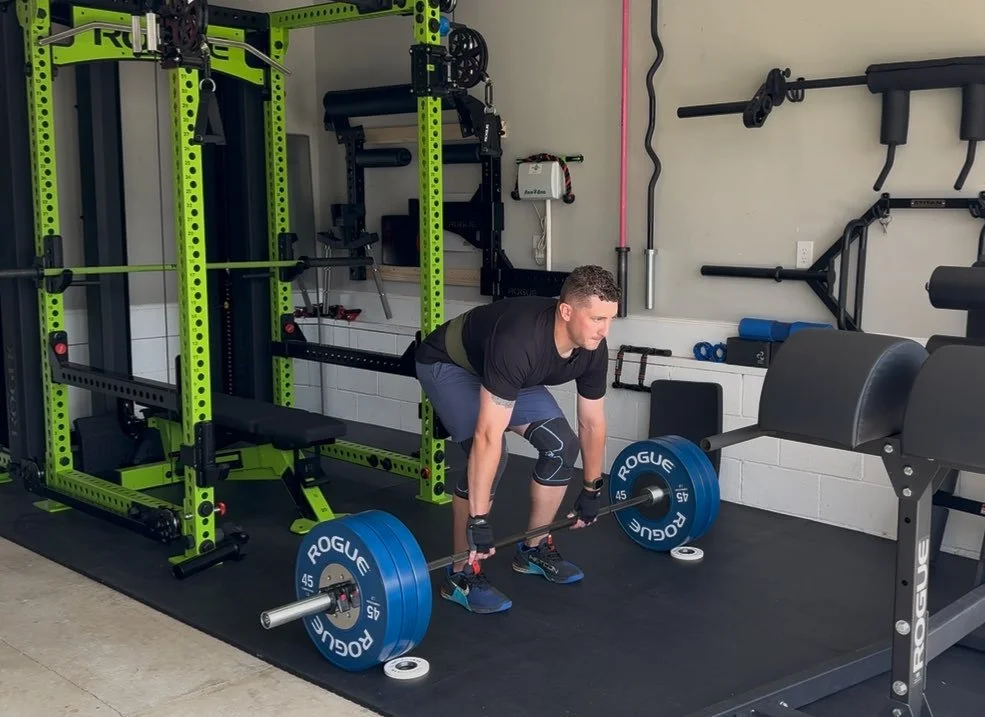

Rogue Dual Indy Functional Trainer Review: The Honest Breakdown After Daily Use
By Drew
Iron and Lime | Gear Help
Last Updated: May 2026
Iron and Lime Fitness is independent and supported by readers. We may earn a small commission at no cost to you if you buy through an affiliate link.
The Rogue Dual Indy Functional Trainer is the centerpiece of this gym. Not because it was the most convenient purchase or the easiest machine to install. Because it earned that position. This is a full breakdown of what it is, how it performs, where it falls short, and what you need to know before you spend the money.
What Is the Rogue Dual Indy Functional Trainer?
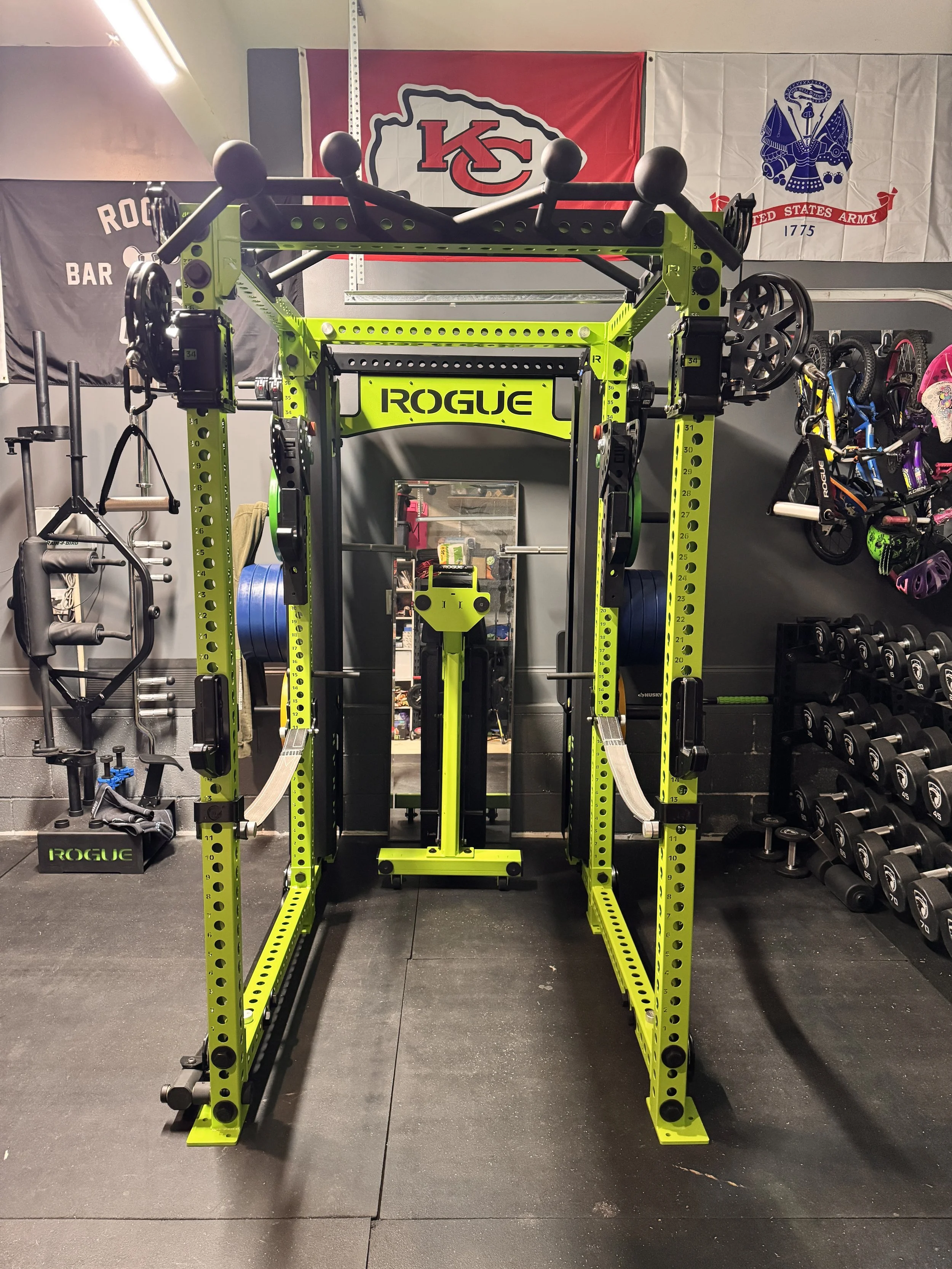
The Rogue Dual Indy
The Dual Indy is a rack-mounted functional trainer built for Rogue's Monster line ecosystem, true 3x3 inch with 1-inch holes every 2 inches. It is not a standalone cable tower. It integrates directly into your rack uprights, which means it does not add to your floor footprint but does make the rack wider overall. The frame, the weight stacks, and the pulleys all live within the space your rack already occupies.
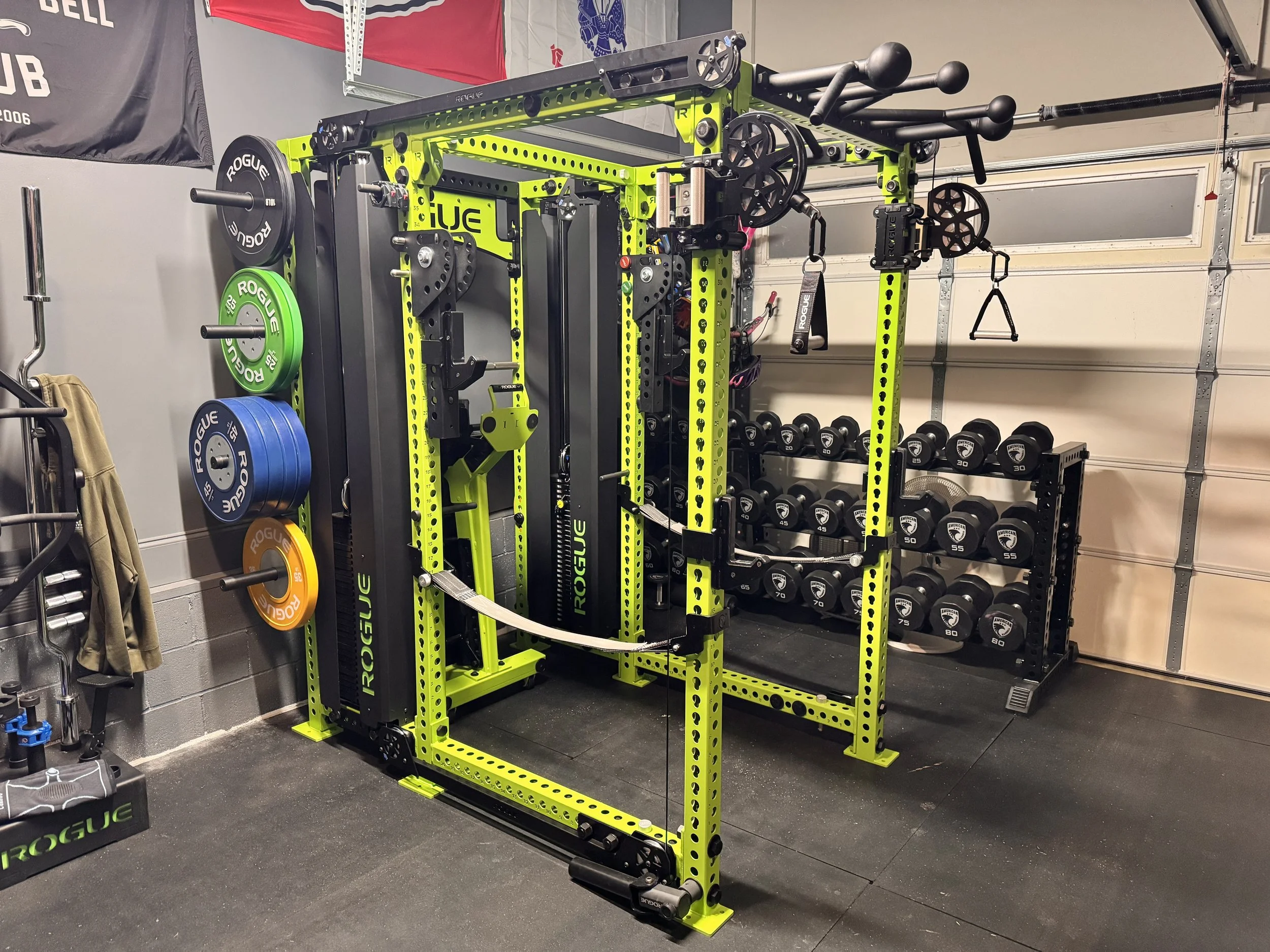
Rogue Dual Indy
Why I Made the Switch from the FM-6
The real reason the Dual Indy is in this gym is the Rogue FM-6 is not. I sold it. The reason was friction with the lat pull and low row column, specifically the 1:1 column in the middle of the rack. Certain movements took too long to set up for, and over time I stopped doing exercises I actually love. The lat pulldown was one of them. That is not a problem I was willing to accept long term.
The Dual Indy paired with a standalone Rogue CTM-1 tower solved it. No interior column obstruction. Full usable space inside the rack. I also ordered an additional crossmember when placing the order so I could move the Rogue banner to the back of the rack and leave the inside uprights completely clear. The difference that made for movements like the jammer press setup with the Straydog Strength GOATs was immediate. Those GOATs now sit high enough on the middle uprights to actually function as short jammer arms, something that was not possible before.
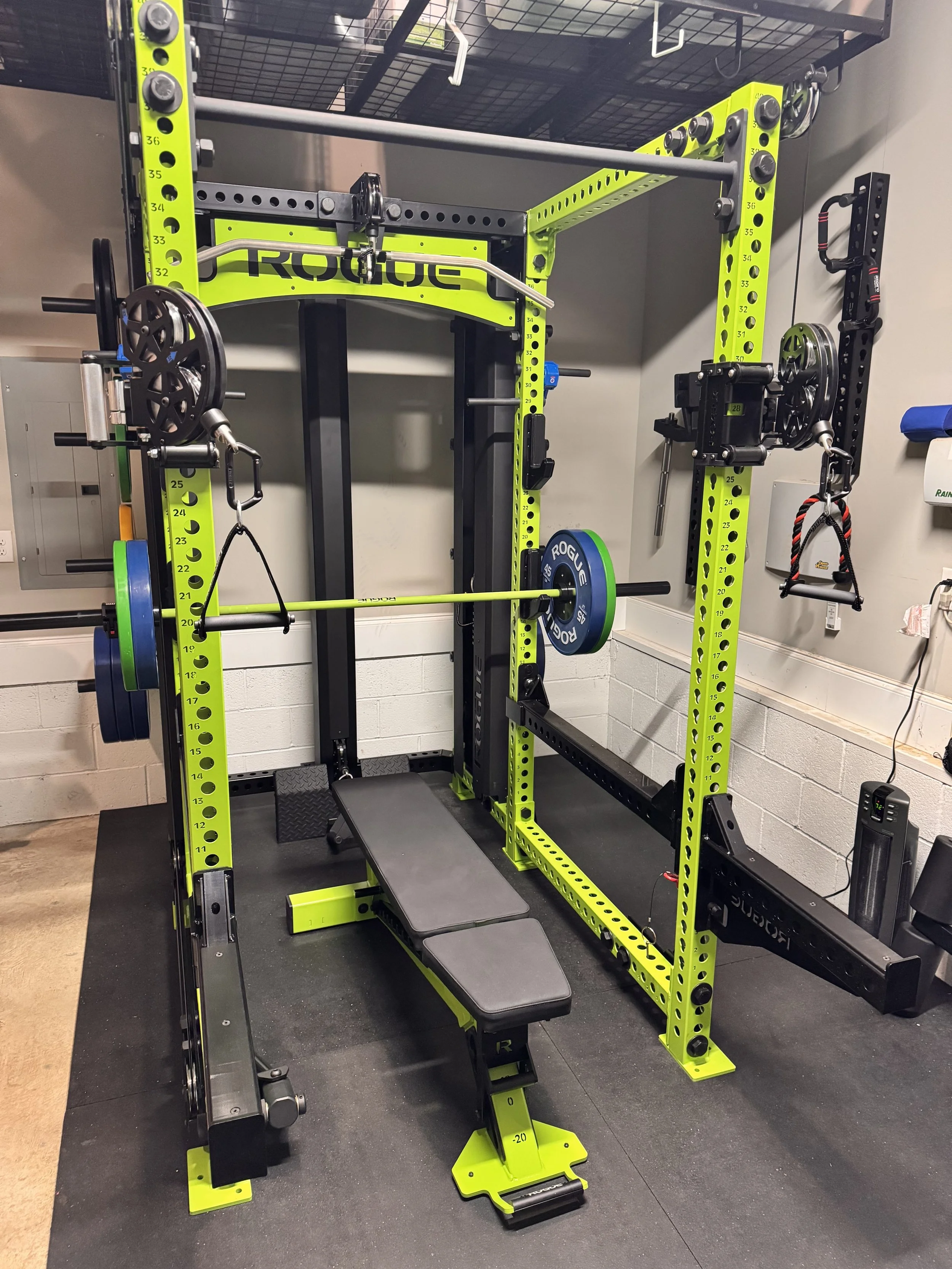
Rogue FM-6
Build Quality
Rogue builds this the same way they build their top-tier power racks. The frame is 3x3 inch, 11-gauge steel and the welds are clean. The cables are fantastic and smooth. The pulley swivels are machined steel and overbuilt by design. They hold up under odd pulling angles without binding, which matters more than it sounds during actual training. A swivel that binds under load changes the feel of the movement in a way you do not want and anyone that has used a cheap functional trainer can attest.
The trolley system that anchors the cable to the upright adjusts across the full height of the uprights, floor to top. Movement is smooth. There is no notching sensation, no grinding, no wobble as you transition between heights. It locks where you set it and stays there. One thing worth knowing before you use it for the first time: when you get the trolley where you want it, you need to give it a slight push upward to get the secondary pin to snap into place. It is not obvious the first time. It becomes second nature quickly, but I would rather tell you now than have you fight it on your first session.
One thing I want to be precise about. Rogue is transparent on their product page: the pulleys on the Indy are imported. The cables, the frame, and the major structural components are US-made. If total domestic manufacturing is a hard requirement for you, that is the honest caveat. For me, the function is excellent and the build quality is not in question. But you deserve to know what you are actually buying.
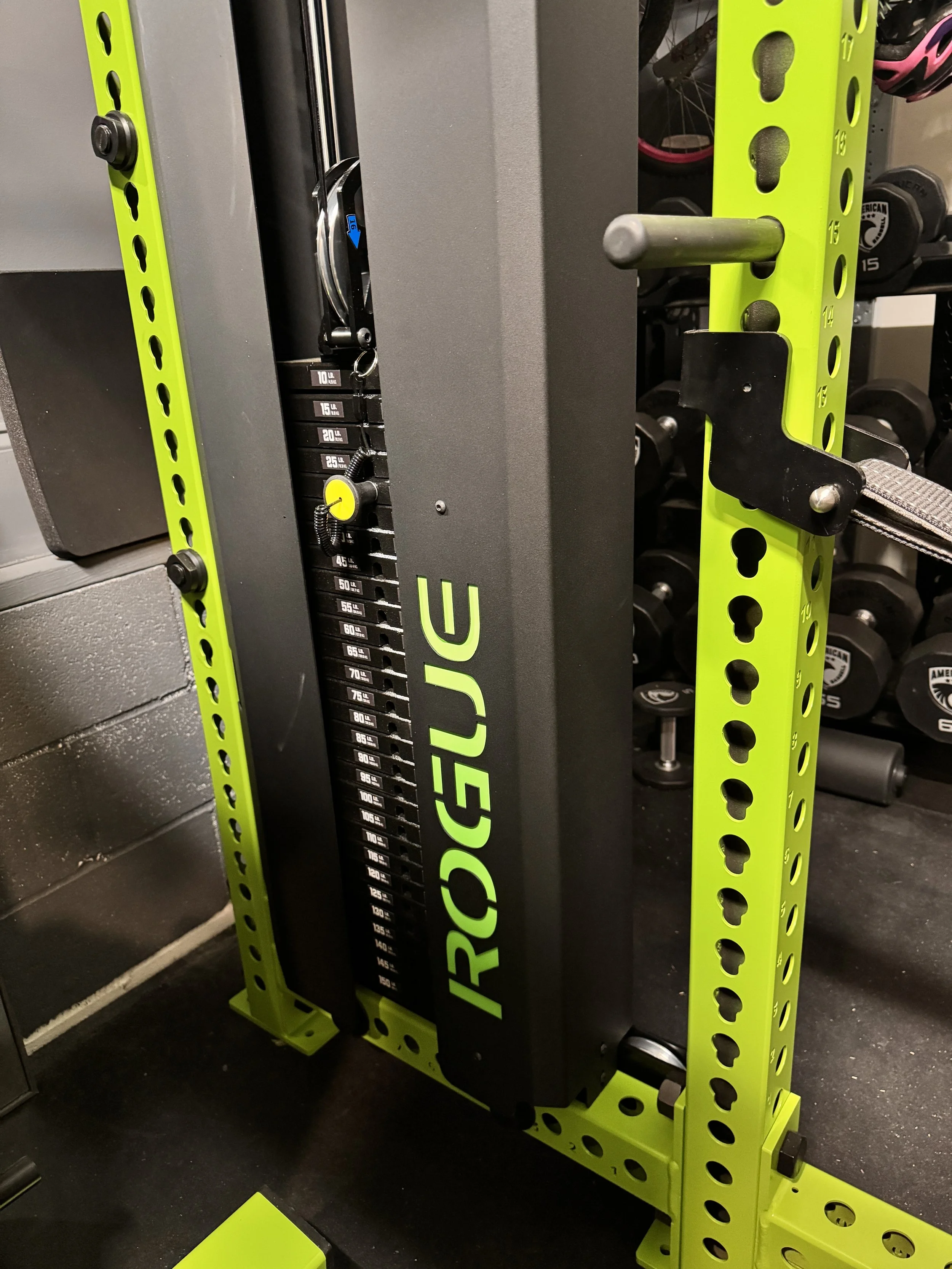
Rogue 300 lb Dual Weight Stacks
The 2:1 Pulley Ratio: Read This Before You Buy
Every functional trainer uses a pulley ratio to create mechanical advantage. The Dual Indy runs a 2:1 ratio. That means for every 10 pounds loaded on the weight stack, you feel 5 pounds at the handle. If you opt for the 300 pound stack, the effective working weight at the handle is 150 pounds per side.
This is the single most common point of confusion I see when people research this machine. The 300 pound number is the stack weight. The handle weight is 150. Those are not the same thing, and the distinction matters. I actually measured it out and 100 lbs at the stack was 55 lbs at the pull.
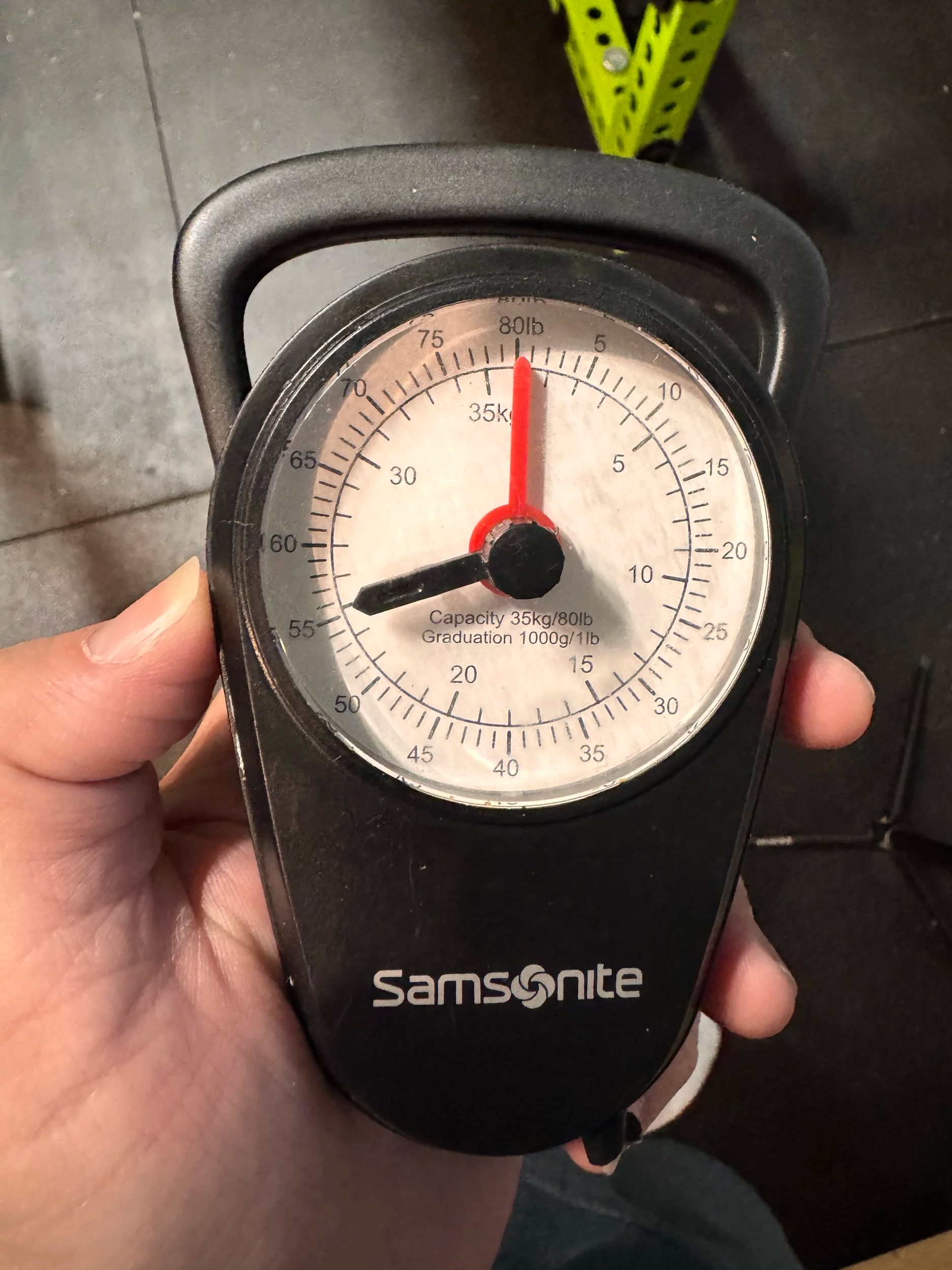
Rogue Dual Indy Pull Weight
The weight increments are also worth knowing before you buy. The stack starts at 10 pounds and goes up in 5-pound jumps to 150. For most cable movements those increments are exactly right. If you or someone you train with needs to go below 10 pounds, this machine does not do that. For reference, Jess and the kids have no trouble with the starting weight, so the floor is genuinely accessible.
For most cable-based training, 150 pounds per side is more than sufficient. Face pulls, cable rows, lat pulldowns, flyes, tricep work, rotational movements, unilateral pressing variations. None of those typically require more than 100 pounds at the handle. If your cable training lives in that range, you will never feel limited by this machine.
Where it becomes relevant is heavy bilateral cable rows or any movement where you are genuinely trying to approach the top of the stack. If you are a strong lifter accustomed to loading a plate-loaded cable station, understand that the ceiling here is 150 pounds of felt resistance per side. That ceiling is real. It is plenty for most people. It is not unlimited.
I say this plainly because I do not want anyone to buy a $5,000-$7,000 machine and be surprised by something that is clearly documented. Know the ratio. Buy accordingly.
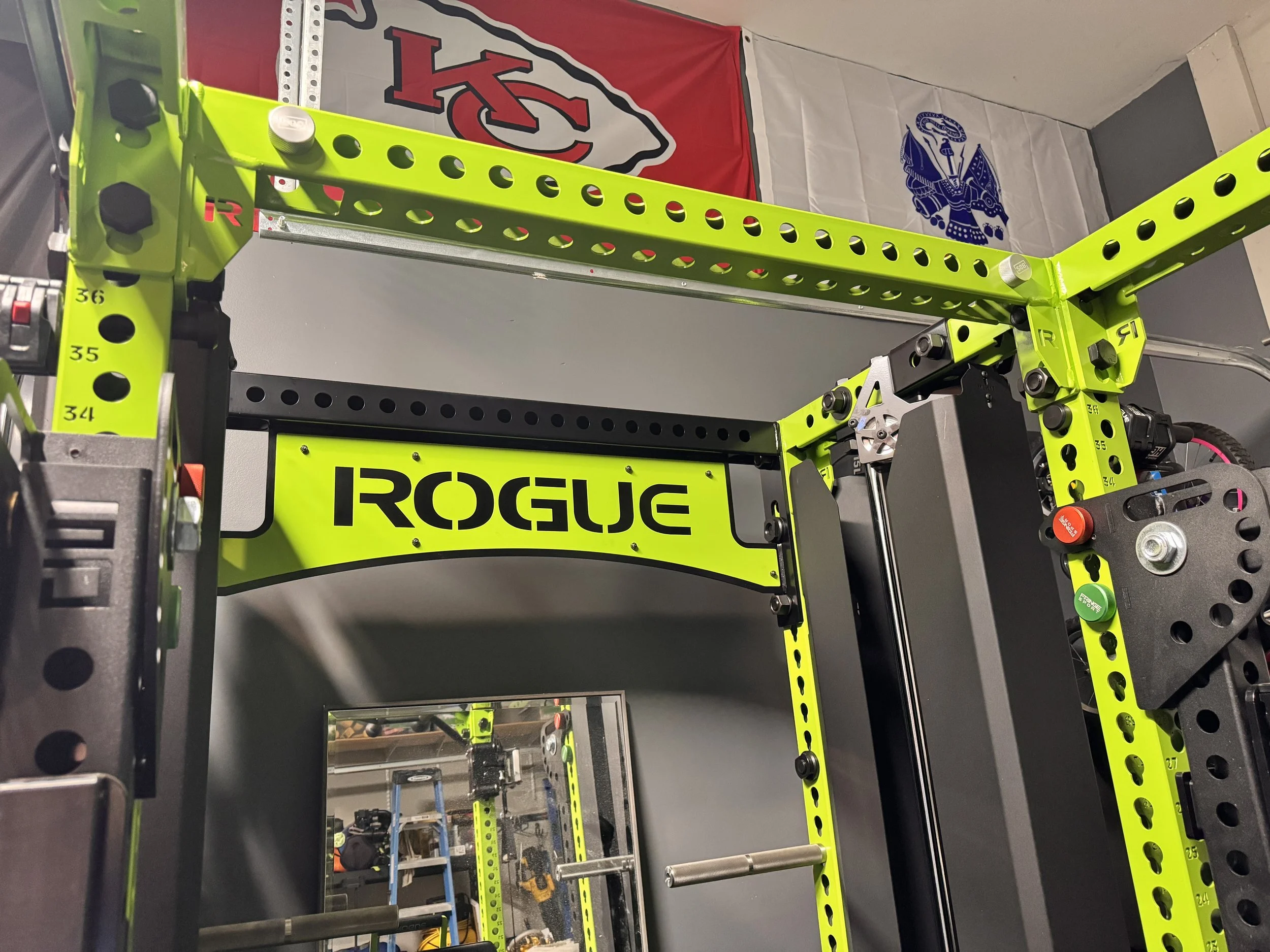
Rogue Rack Banner
Rack Width and Adjustability
The pulleys adjust across the uprights bolt to bolt, independently on each side. The mechanism is smooth throughout the entire range. No hitching, no resistance spikes, nothing that feels cheap or under-built.
Rack width is something you need to factor into the purchase decision, especially if you plan to run crossovers and cable flyes regularly. The Rogue Monster system runs 49 inches outside to outside. Rep Fitness, Sorinex, Hammer Strength, and Irwin Fitness all run 47 inches. Those two extra inches make a real difference on dual-arm pulling movements. They can also work against you on exercises where a narrower stance is preferred, like cable curls. Neither is universally better. It depends on your programming. Just know the tradeoff before you commit.
Space and Installation
The floor footprint of the Dual Indy is the footprint of your rack. If you already have a Rogue Monster setup, adding the Indy does not change your floor plan. That is a meaningful advantage in a garage gym where every square foot is accounted for.
What it does require is vertical space. The uprights need room and the weight stacks sit outside the uprights. Measure your width clearance before you order, particularly if you have a narrow bay or walls close to the rack. If you are not sure where you want it to live permanently, tape the footprint out on the floor first. Nothing is worse than finishing a two-day build and realizing the machine is in the wrong spot.
Assembly will take longer than you expect. Plan two full days. Get a second person. This is not a weekend-afternoon project, and trying to treat it as one is how you end up frustrated with misaligned hardware. One practical tip: pick up an impact driver and an inch-and-a-half socket. Rogue includes the necessary wrenches, and the hardware is organized well once you find the right box on the pallet. The impact driver is not required, but it makes a real difference on the bolts that can be driven from one side. Rogue ships quality. The process is just involved.
Freight shipping is also part of the reality here. Pallet delivery. Weeks of lead time from order to arrival. This is not a machine you order on Friday and install on Sunday. Order early and do not sell your current setup until this thing is in your driveway.
Performance and Versatility
The Dual Indy handles the full range of cable-based training. Lat pulldowns, cable rows, face pulls, cable flies, crossovers, tricep pushdowns, bicep curls, woodchops, cable crunches, low-to-high and high-to-low rotational movements. The adjustable pulley system covers every angle you need for upper body isolation and accessory work.
Unilateral training is where the machine genuinely stands out. Having two independent stations means you can load each side based on your actual strength output per arm, not a shared midpoint. If you have a meaningful left-right imbalance, this is the setup to address it. You are not compromising by matching the weaker side on every set. Both sides run their own weight entirely.
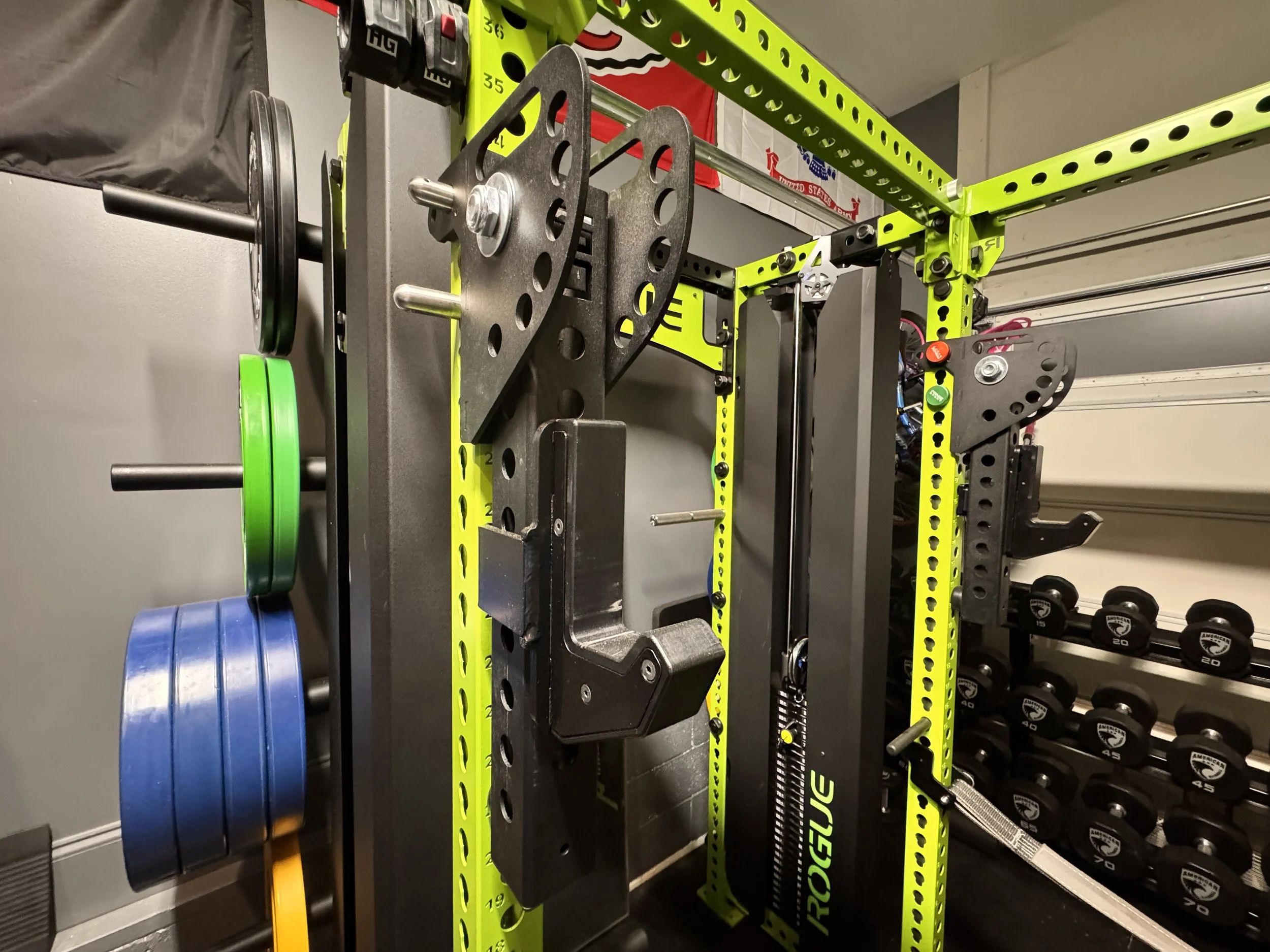
Straydog Strength GOAT
I have also been running jammer presses on this setup. The configuration is the Straydog Strength GOAT attachment, Mutant Metals SS 12-inch handles, a Rogue weight pin, and collars for spacing. It is not a traditional jammer arm, but the press angle is legitimate and it earns its place in the rotation. That movement was not possible with the FM-6 due to where the banner sat on the middle uprights, taking up the first six or seven holes and preventing the GOATs from sitting high enough. With the crossmember moved and the uprights clear, it works cleanly.
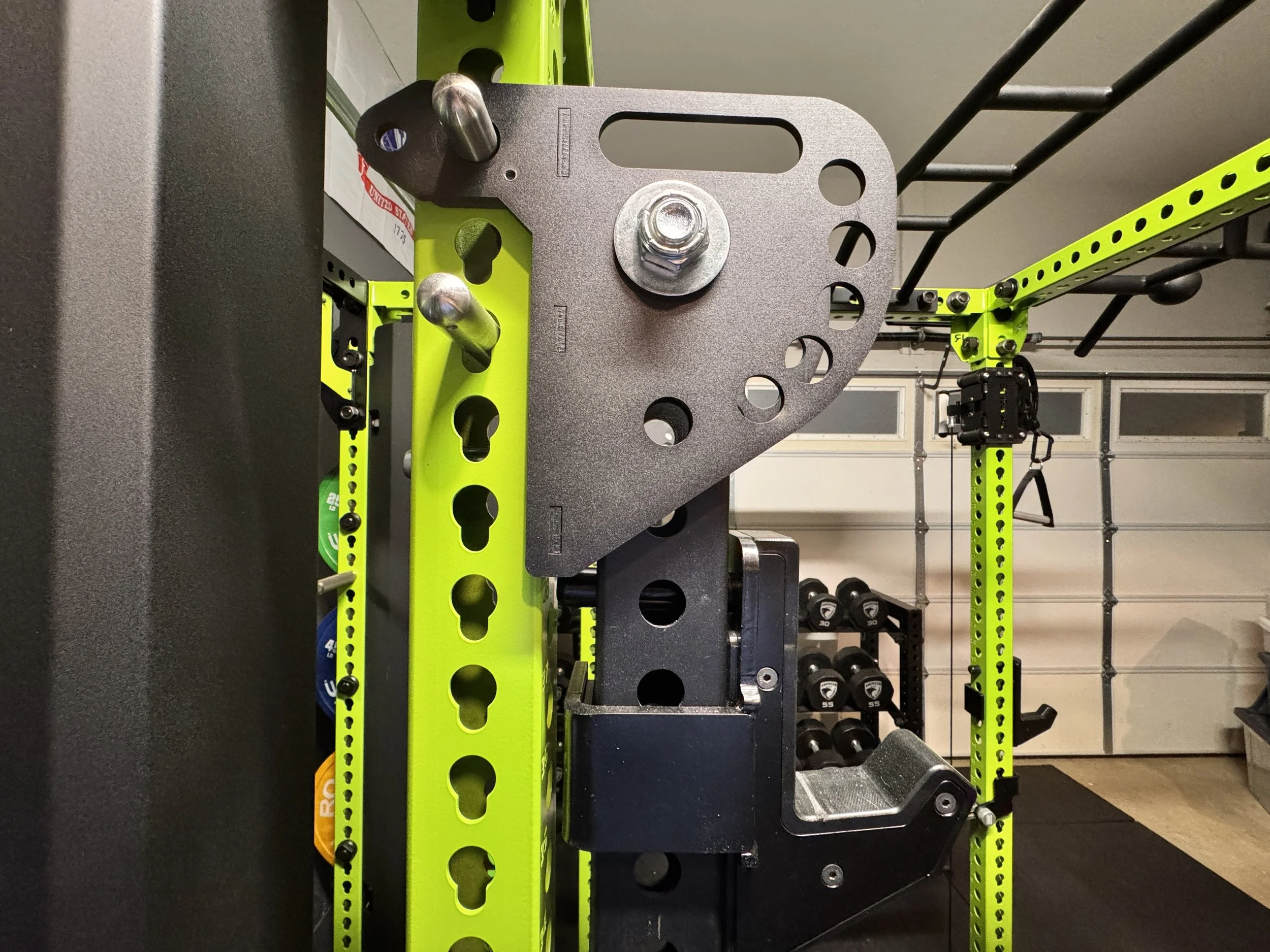
I Use the Straydog Strength GOAT as Uprights
One thing I want to address directly: the Dual Indy and the Rogue CTM-1 in Jess's corner of the gym are not redundant. They are not doing the same job. The Indy handles adjustable-height work, rotational movements, fly variations, and asymmetrical setups. The CTM-1 is my primary lat pull and low row machine. They complement each other. If you are running both in your space, you are not doubling up. You are building a complete cable training system.
If you are going with the Indy alone, you need a plan for lat pulls and low rows. The Indy is not that machine. Figure out your solution before the pallet shows up.
Honest Cons
Price is the most significant barrier. The bare bones 24-inch base starts at $4,200. The stainless steel top-end build hits $10,487 shipped. Once you add the weight stack upgrade, the attachments you will actually use, and any compatibility requirements with your existing rack setup, you are realistically looking at $5,000 to $7,000 or more. That is not a number to minimize or rationalize away. It is a substantial investment and it deserves to be evaluated as one.
Assembly time and freight lead time are inconveniences, not dealbreakers, but they require realistic expectations. If you are used to Amazon delivery timelines and flat-pack assembly, this will feel like a different category of purchase. It is.
And the 2:1 ratio again. I covered it in detail above, but it belongs in the cons list. Not because 150 pounds at the handle is insufficient for most people. Because it is a constraint that needs to be understood before purchase, not discovered after.
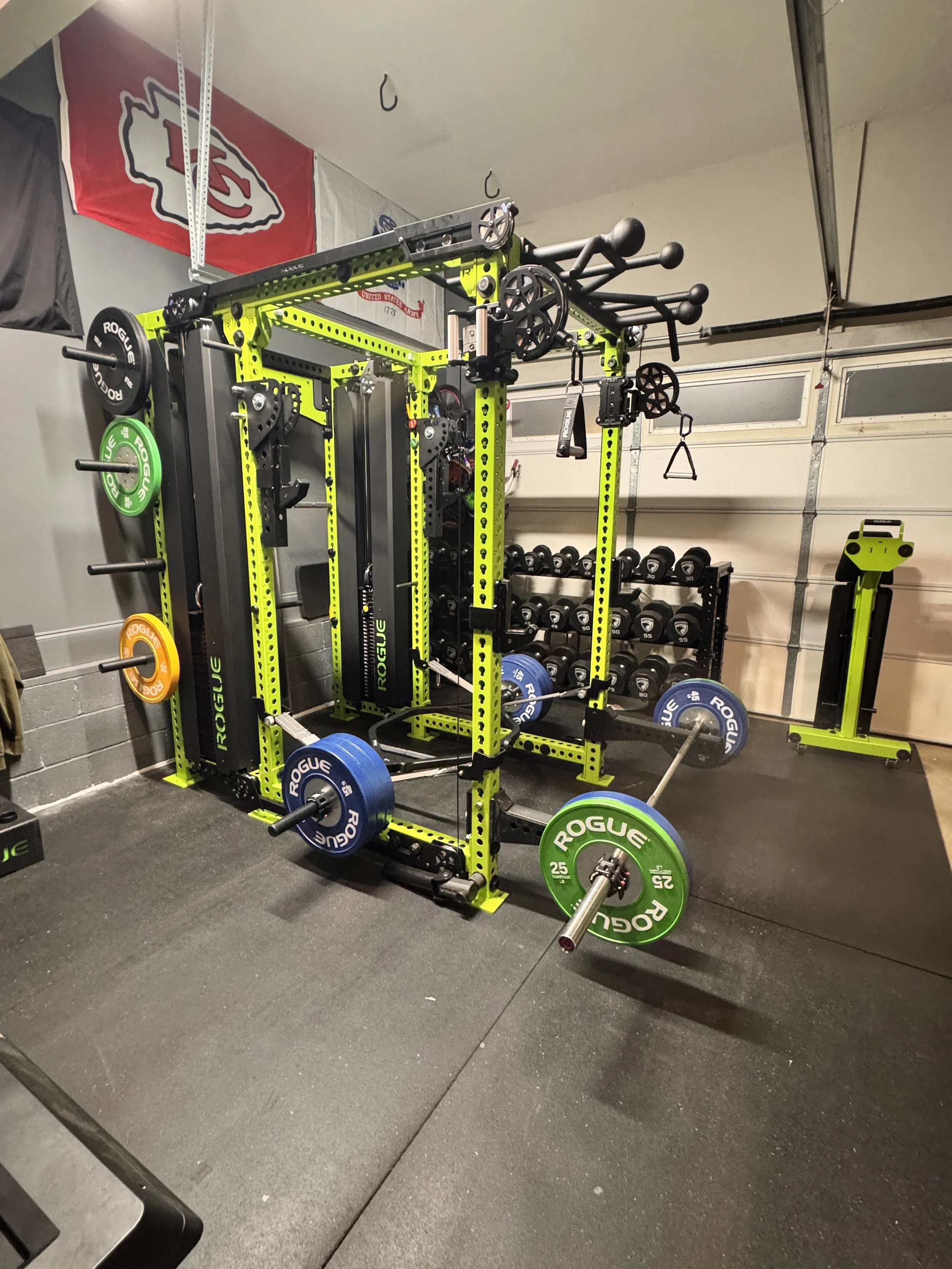
Rogue Dual Indy with Surplus Strength Stealth Spotter Arms for Supersets
Warranty
Rogue backs the frame and welds with a lifetime warranty. Moving parts, pulleys, cables, and guide rods carry a five-year warranty.
That warranty structure tells you how Rogue expects this machine to perform over time. They are not hedging on the frame. I did not buy the Dual Indy expecting to replace it in five years. I bought it expecting it to outlast my training in this gym.
The Verdict
The Rogue Dual Indy Functional Trainer is the best rack-integrated cable machine I have used. That does not mean it is the best choice for every setup or every programming style. Some people want the FM-6 for the all-in-one solution it provides. That is a legitimate call. For me, the friction with the FM-6 column was a real problem and a standalone lat pull and low row was the answer. The Dual Indy with the 300 pound stacks fits how I actually train.
The cons are real and worth saying clearly. This machine is expensive, the installation is a commitment, the freight process requires patience, and the 2:1 pulley ratio means 150 pounds at the handle is your working ceiling, not 300.
For the right buyer in the right setup, those tradeoffs are worth making. I made them. I would make them again.
If you have questions about the setup, drop them in the comments on the video. I read all of them.
- Drew
Iron & Lime Fitness
Support the Garage Grind:
If this helped you make a decision or gave you something you could not find anywhere else, hitting like and subscribing is the best way to keep this thing going. No fluff, No BS. Just real reviews from a real gym.
If you have questions about any piece of equipment in here, drop those too. I read and reply to everything because this stuff matters. Your money, your training, your goals. You can also reach me directly on Instagram or Facebook at @IronAndLimeFitness.
A quick note on what it takes to keep this channel running. I do the filming, the editing, the writing, the blogging, the website, the socials, and the marketing, all while working a full-time job and keeping up with three kids who just want to hang out in the gym. It is a family operation in every sense. If you are shopping Rogue anyway, using the Rogue affiliate link supports the channel at no extra cost to you, and it genuinely makes a difference in keeping the content coming.
If you want to hit Rogue, Bells of Steel, or Kensui to support the channel with your purchase at no cost to you, please use the below links.
Strength for Life. Fitness for All.
Barbells and Balance Things:
Watch the full video review on our YouTube channel
Rogue Dual Indy Functional Trainer Review | I Sold My FM-6 For This - Would I Do It Again?
More Articles here:
Everything in This Gym Has a Reason to Be Here: A Complete Home Gym Tour
Rogue Sandwich J-Cup Too Tight? Here's How to Fix It (Calibration Kit Explained)
Home Gym Makeover: How We Transformed Our Home Gym - Paint, Layout, and a Long-Awaited Delivery
Kensui Sapporo Swiss Bar & Calibrated Gold Plates Review: Worth It for Home Gyms?
Rogue Fitness CTM-1 Review: Is it better than the Rep Adonis Cable Tower for Home Gyms?
Moving the FM-6: Why Garage Gyms Must Evolve (And How to Survive the Move)
American Barbell 10-Sided Urethane Dumbbells Review: Commercial Luxury or Financial Mistake?
Here's Why I Wouldn't Buy The Rogue FM-6 Again: Rogue FM-6 Long-Term Review
Rogue Mutant Metals Ultimate Dip Attachment Review (1 Year Later): Is It Really Worth $365?
Rogue Kabuki Transformer Bar Review
Rogue Manta Ray Adjustable Bench Review
Rogue FM-6 Twin Functional Trainer Review
American Barbell Dumbbell Set and Rack Review
“Best Budget Gear for Building a Garage Gym”
Bells of Steel Safety Straps Review: A Perfect Fit for the Rogue FM-6
Train hard. Live bold. Stay lime.