
Straydog Strength GOAT Attachment Review: What Nobody Tells You Before You Buy
By Drew
Iron and Lime | Gear Help
Last Updated: May 2026
Iron and Lime Fitness is independent and supported by readers. We may earn a small commission at no cost to you if you buy through an affiliate link. I am not a Straydog Strength affilate.
When I started researching the Straydog Strength GOAT Attachment, I ran into the same problem every time. There were a couple of older reviews out there, and a handful of quick takes, but nothing that really dug into the questions that mattered for a home gym decision. What does inline versus offset hole spacing actually mean, and which version do you need for your rack? What does a full accessory setup actually cost when you add it all up? And after months of real use, does the GOAT deliver on what it promises?
I bought two of them, put them on the Rogue Dual Indy Functional Trainer, and ran them through everything I could think of. This is what I found.
What Is the GOAT Attachment?
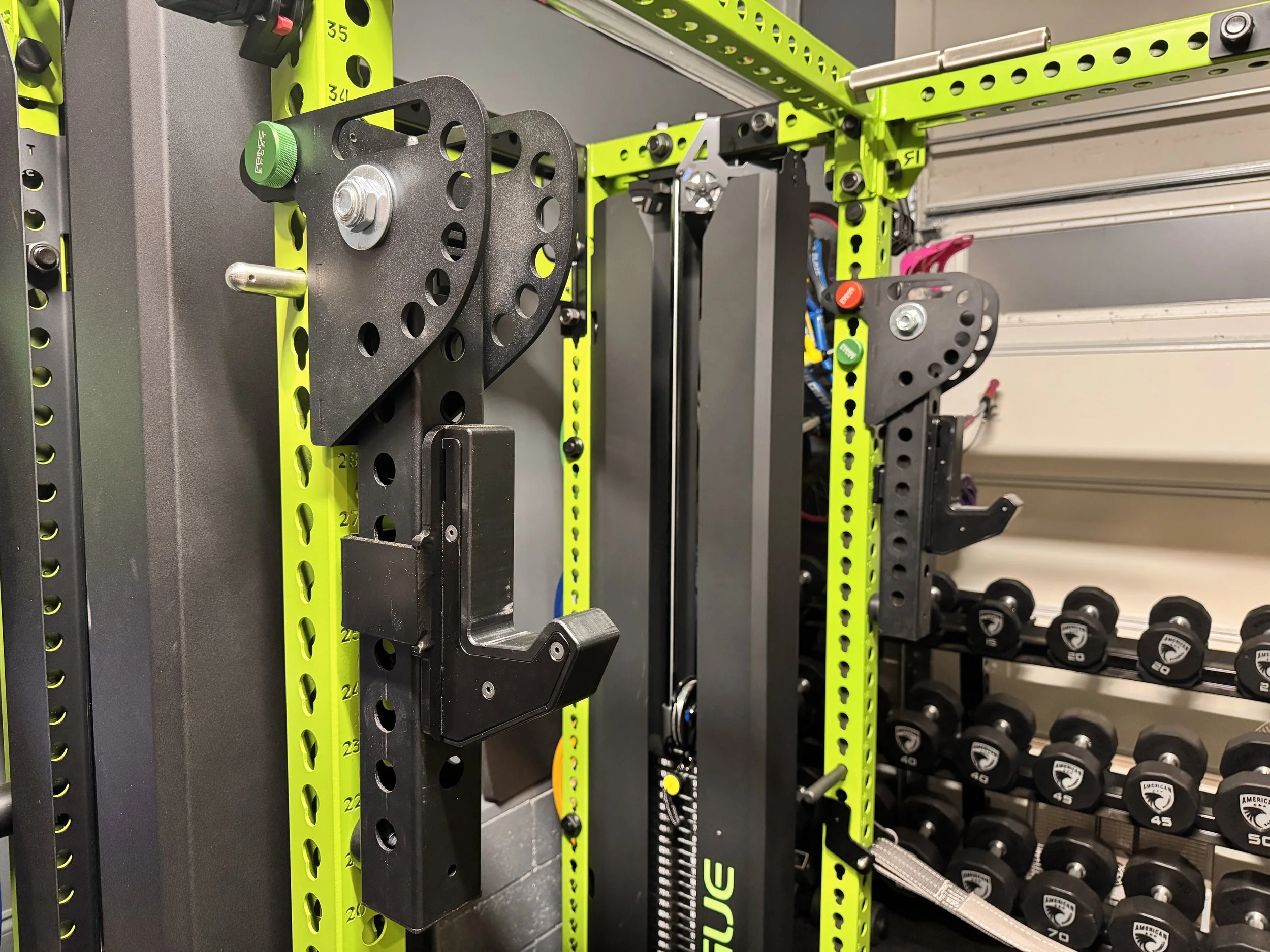
Straydog Strength GOAT
The GOAT stands for Greatest of All Time. Straydog Strength is not shy about the name, and the product is built to back it up. At its core, the GOAT is a single-sided lever arm that mounts to any standard 3x3 rack upright. A bracket with 1-inch pin holes clamps to the upright and holds a rotating 24-inch tube made from 3x3 11-gauge steel. Bronze bushings at the hinge point allow the tube to rotate smoothly through the full range of a movement, and five pin holes let you lock the arm in at different angles depending on what you're training. It’s really meant to fill the void before committing to full jammer arms (like the Rogue Trolley Arms), which I would do if I didn’t have trolleys on the front of my Indy.
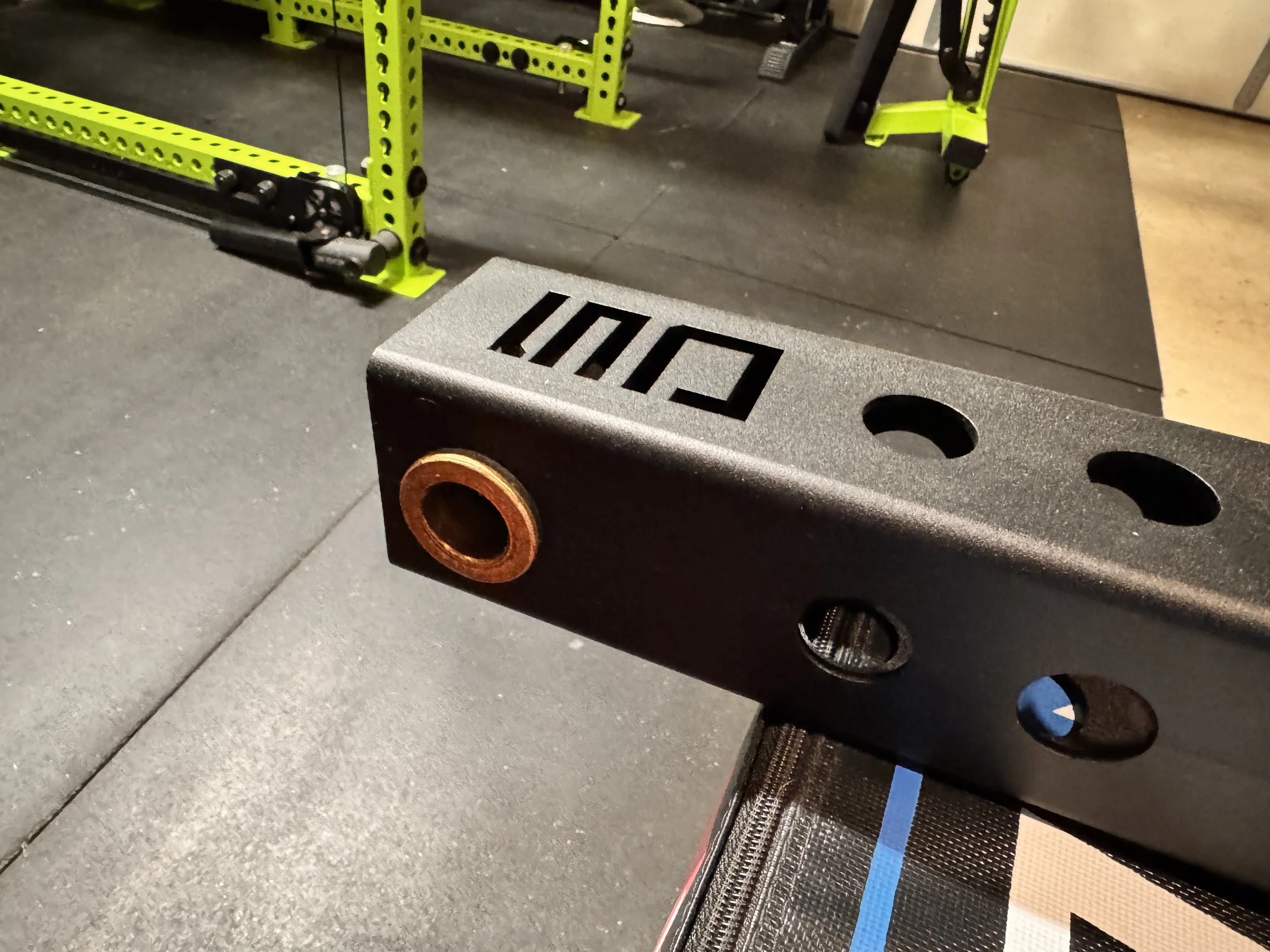
Bronze Bushings
The concept is straightforward: one attachment, multiple machine movements, no additional floor space required. Whether that holds up in practice is what the rest of this review is about.
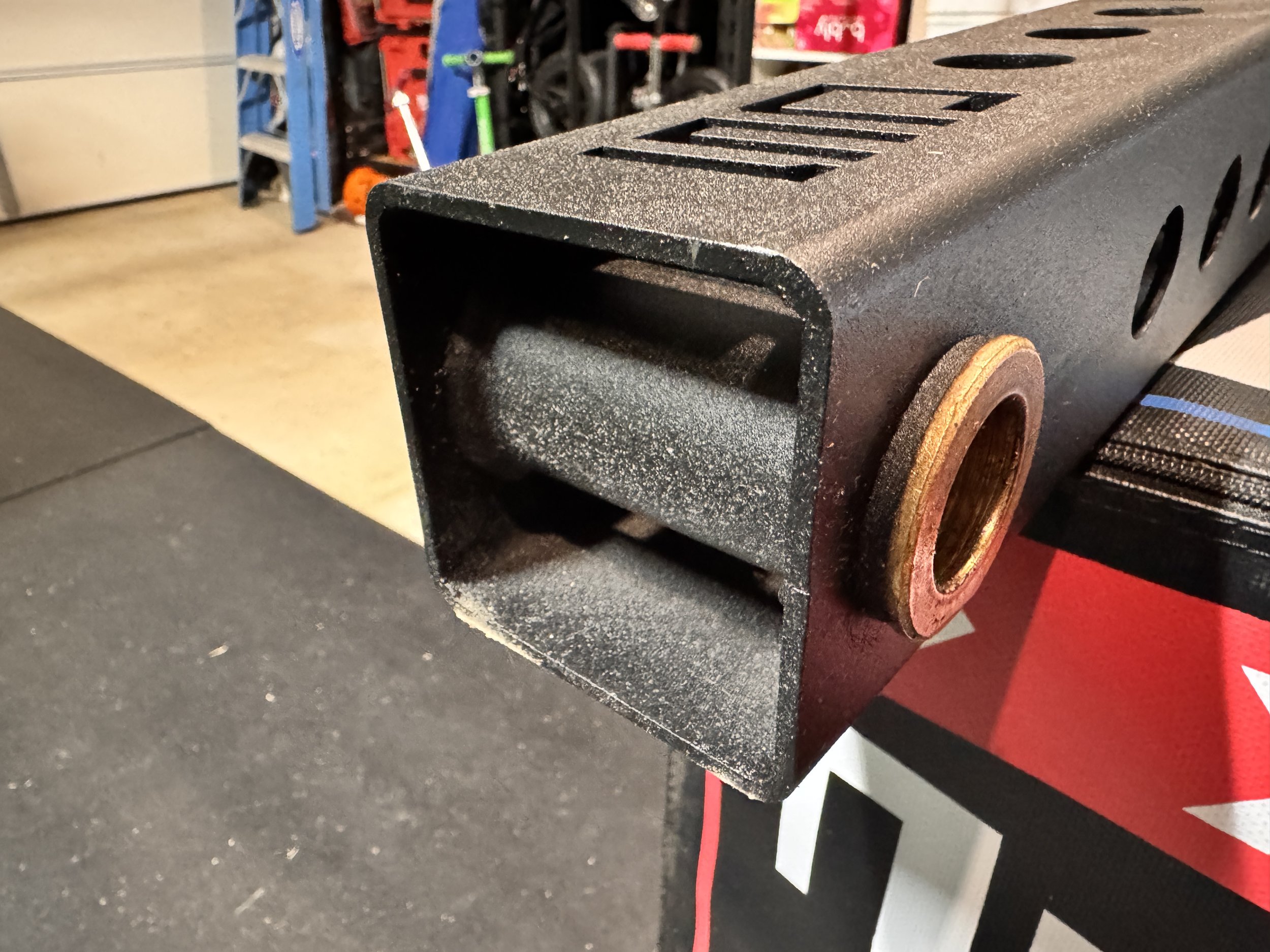
Very solid construction
One thing worth knowing before you order: Straydog Strength is primarily a facility outfitter. Their business is built around schools, universities, and commercial gyms, similar to how Sorinex operates. You can absolutely order as a home gym consumer, and plenty of people do. But understanding that context matters, because it affects everything from their customer service expectations to their packaging standards, and I'll get into both.
Build Quality
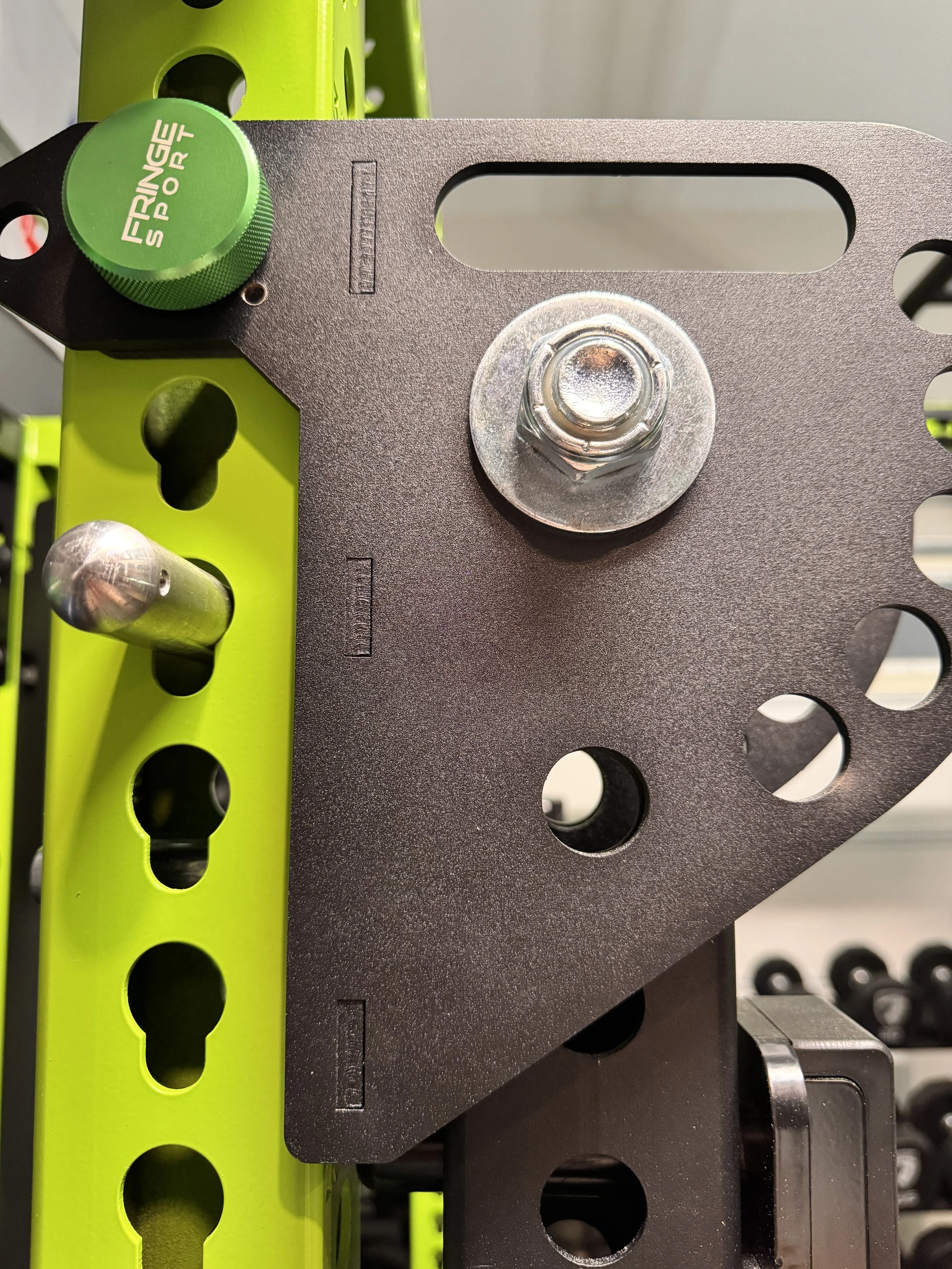
Tabbed Construction
The build quality is serious. This is not import steel dressed up with a clean website. The tube is heavy, the bracket is thick, and the bronze bushings at the pivot point give the rotation a smooth, controlled feel that holds up over repeated use. At 24 pounds, the GOAT has real weight to it. Once it's locked into position on the upright, it's not going anywhere. Be mindful of this, because the weight does contribute to the lack of motivation to move the GOAT around often. The BoS Magpins or Fringe Sport Magpins are also fantastic to hold it in.
The construction uses a tab design, where sections of steel are cut and folded rather than welded from separate pieces. This keeps the build consistent from unit to unit and adds to the overall impression of something made with care. All the holes are clean and free of burrs. The laser-cut logo on the tube is a small detail, but it reflects the level of attention that went into the product.
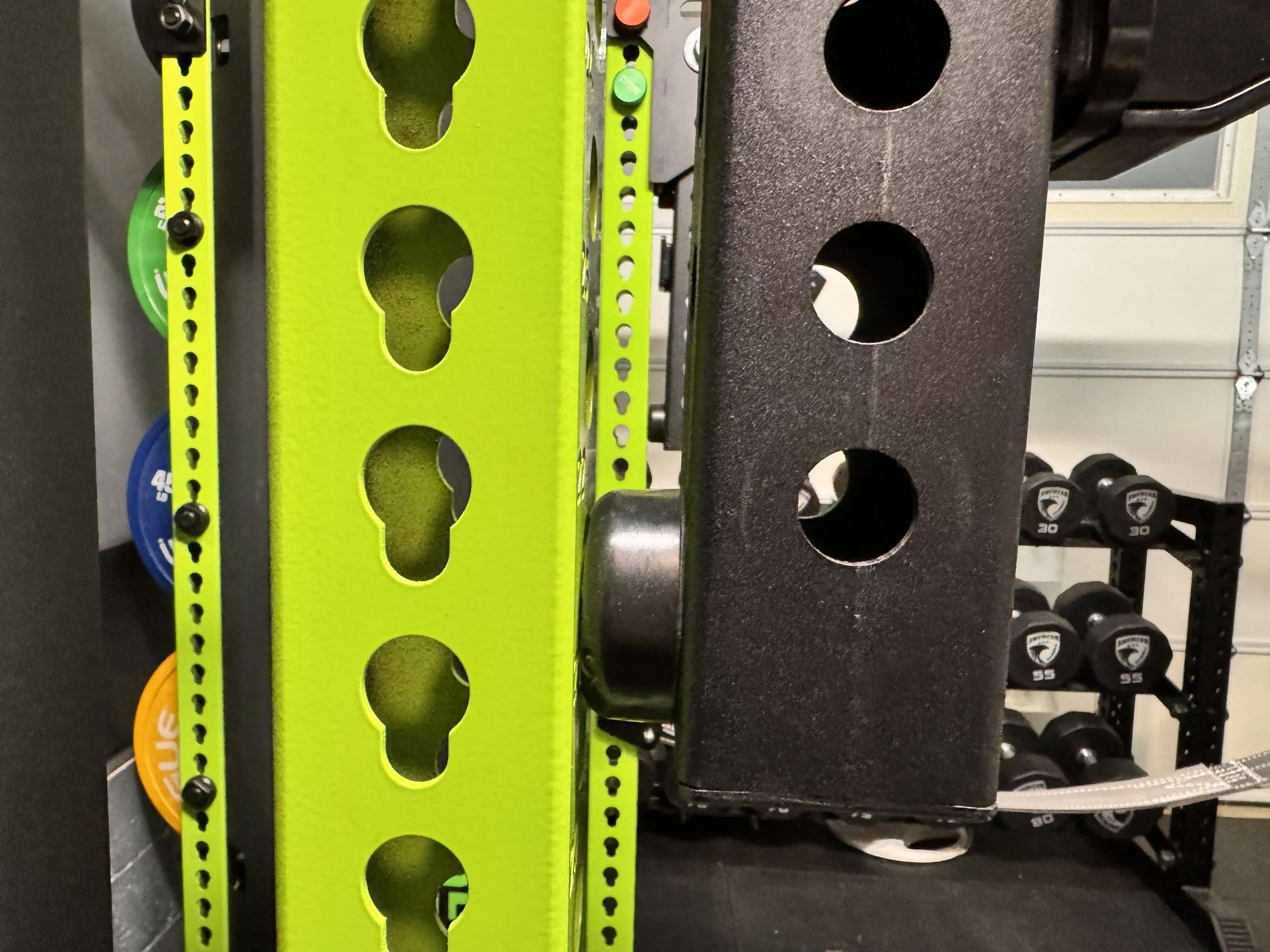
Rough powder coat versus smooth from Rogue
One thing I'll say plainly, though: it is not as polished as Rogue or Sorinex. The powder coat is rough rather than smooth, and there is a small amount of wiggle when the GOAT is installed on the upright. Neither of these is a structural concern. The unit is solid and will not fail under load. But if you're used to the finish quality on Rogue trolley arms or Sorinex attachments, the GOAT sits a step below that standard. Know that going in.
Straydog backs the welds and frame with a lifetime warranty and covers moving parts for one year. It's made in the USA, out of Ohio. For an attachment at this price point from an American manufacturer, those are the right commitments.
Compatibility and Install: The Inline vs. Offset Question Answered
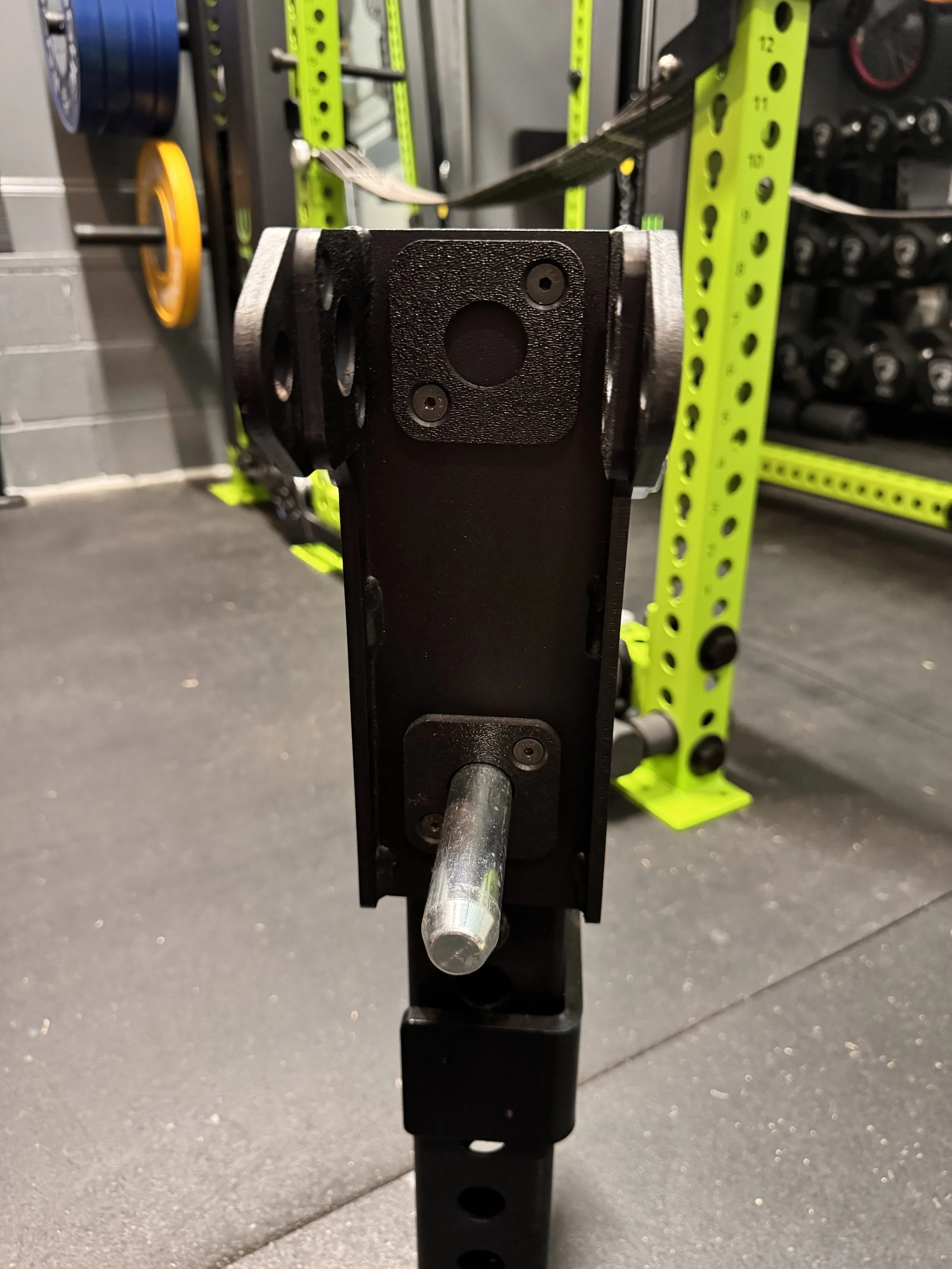
Straydog Strength GOAT can do both inline holes (Sorinex/Straydog) and alternating (Rogue/Rep)
This is the section I couldn't find a straight answer to before I bought, so I'm going to be thorough here.
The GOAT comes in two pin versions: 1-inch and 5/8-inch. This refers to the diameter of the pin that secures the GOAT to your upright and corresponds to the hole size on your rack. The Rogue Monster series racks, including the RM-6, use 1-inch holes. Same frame either way, just a different pin.
The more confusing question is inline versus offset hole spacing. Rogue Monster series racks use offset hole spacing, meaning the holes on the front face of the upright are staggered relative to the holes on the side face. Some racks, particularly older designs and certain import racks, use inline spacing where the holes line up consistently across all faces.
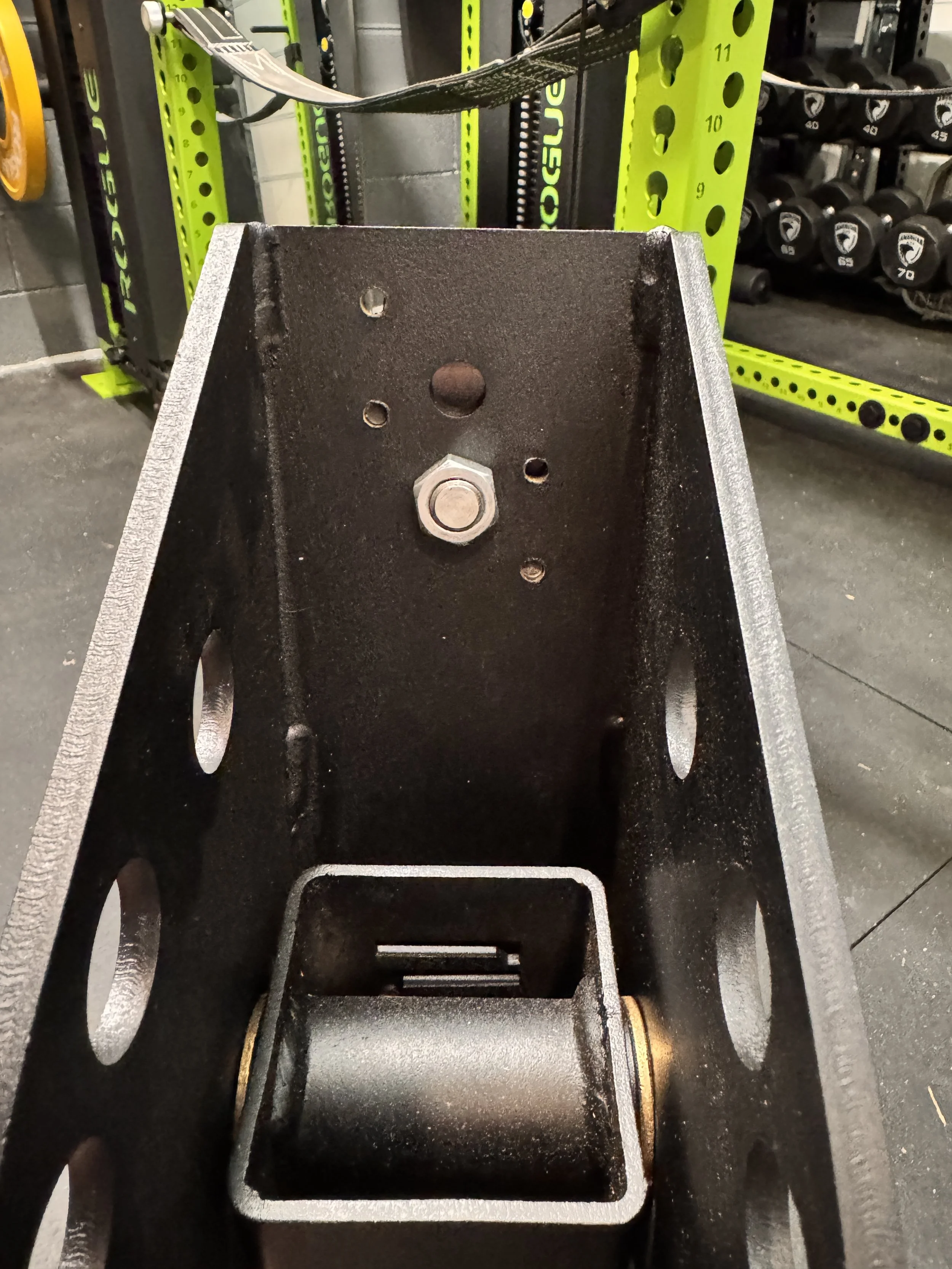
Both pin and uhmw options
Here is the answer I couldn't find anywhere: the GOAT handles both. The bracket has two UHMW pad positions and two pin positions built into it. Depending on where you place the pin and the UHMW pads during installation, you configure the GOAT for either inline or offset spacing. You don't need to specify at checkout. You figure it out when it arrives and set it up accordingly. On my RM-6 with offset holes, I placed the bracket pin in the offset position, seated the UHMW pads in the corresponding slots, and it installed cleanly with no play or misalignment.
Once installed, the GOAT takes up about 10.5 inches of vertical real estate on the upright, or roughly six holes. It self-supports in position before you insert the hitch pin, which makes one-person installation straightforward. Pull the magpin to remove it, and the whole unit lifts off. Total process is under two minutes once you've done it a few times.
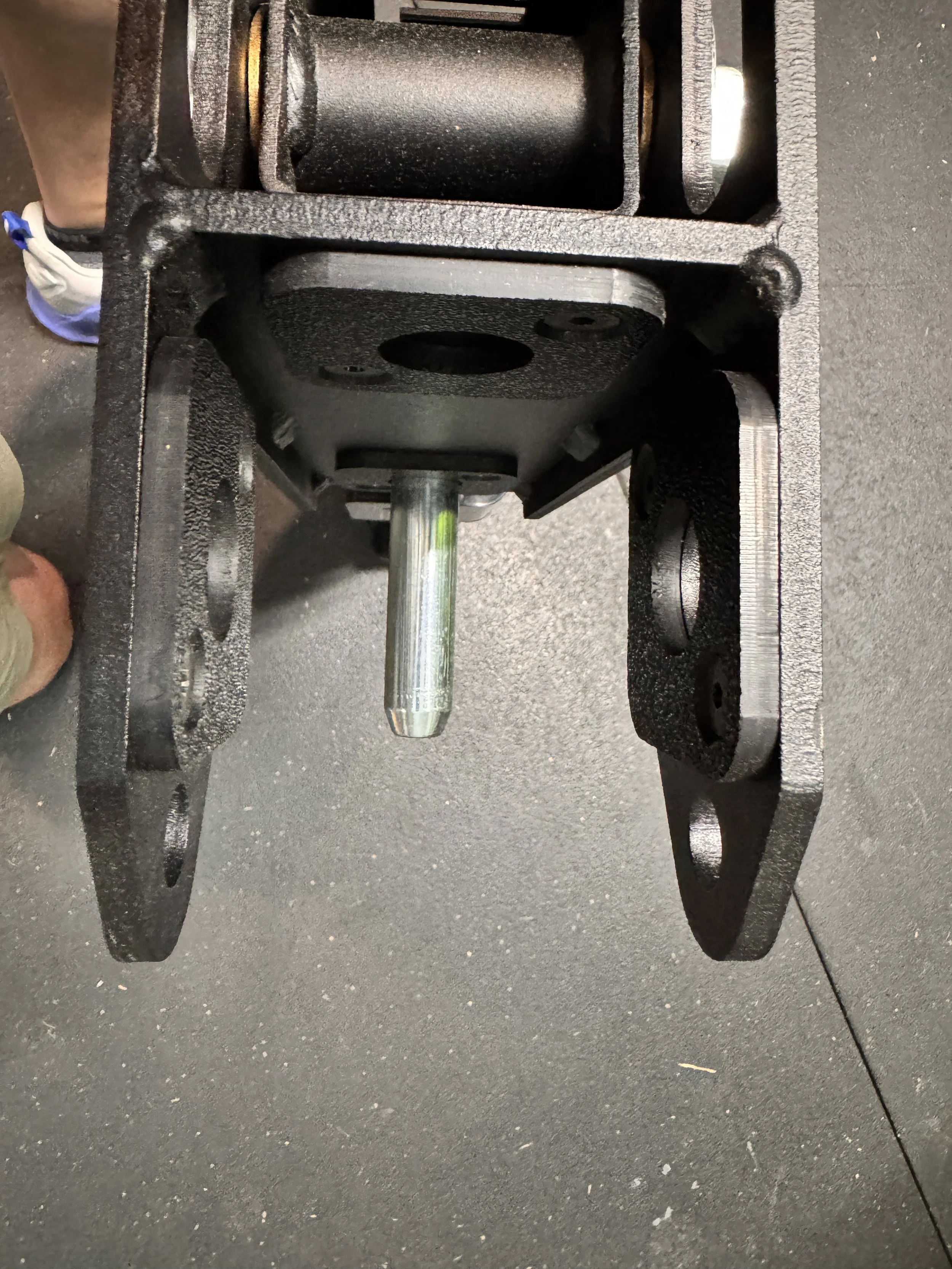
UHMW Coverage is Solid on the Straydog Strength GOAT
One limitation worth being clear about: how low the GOAT can go is determined by your rack's crossmember configuration. This doesn't affect most movements, but for leg extensions especially, you'll want to confirm your lowest usable position before committing to a setup configuration.
Movements
The six lockable angle positions are what separate the GOAT from simpler lever arms. You're not stuck in one orientation, and that flexibility is what makes the accessory footprint worth it.
Leg extensions are the primary use case for most home gym athletes, and they work well. Pin the tube at a forward angle, load roller pads and a weight peg, roll a bench into position, and you have a leg extension machine. I've also found that adding a spotter arm below the tube creates a more realistic leverage curve, closer to what you'd get from a counterweight machine in a commercial gym. Single leg or dual leg, the range of motion is solid and the bronze bushings keep the rotation smooth.
Leg curls work with the same setup and a different body position. You can go prone on the bench or work standing, depending on what you're after. Both are functional and load well, althrough the prone has a tendency to it the rack so be mindful of that.
Calf raises are one of the more underrated applications. Load a roller over your shoulders, add plates to a weight peg, stand on a calf block or even a 2x4, and you have a standing calf raise with a legitimate range of motion and loading capacity. For a home gym that doesn't have a dedicated calf machine, this is a clean solution.
Hip thrusts take some time to dial in. Getting the roller positioned correctly against your hips requires a few attempts to find the right setup for your anatomy. Once you do, though, the movement is smooth and more controlled than the barbell-across-your-lap alternative that most home gym athletes use.
Jammer presses are where the GOAT has become most useful in my actual training. Pin a handle to the tube and use it for explosive pressing movements. This ended up being my most consistent use case after a few months, which says something about how the GOAT fits into a real training week.
There's also a legitimate use as a standing j-cup holder on middle uprights. I've had over 400 pounds on them in this configuration and they hold without issue. That's not a primary selling point but it's a real daily-use function in my setup.
One Movement to Avoid
Belt squats come up every time someone sees a lever arm, and I'll be direct: don't do belt squats on the GOAT. The 24-inch arm is too short for the geometry to work in your favor. The loading angle puts significant shear force on your knees throughout the movement. As someone who spent a long time in the Army and has the joint wear to show for it, I can feel exactly what that force is doing, and I can't recommend it. If lever arm belt squats are on your list, you need a longer arm designed specifically for that application.
Accessories and What You're Actually Going to Spend
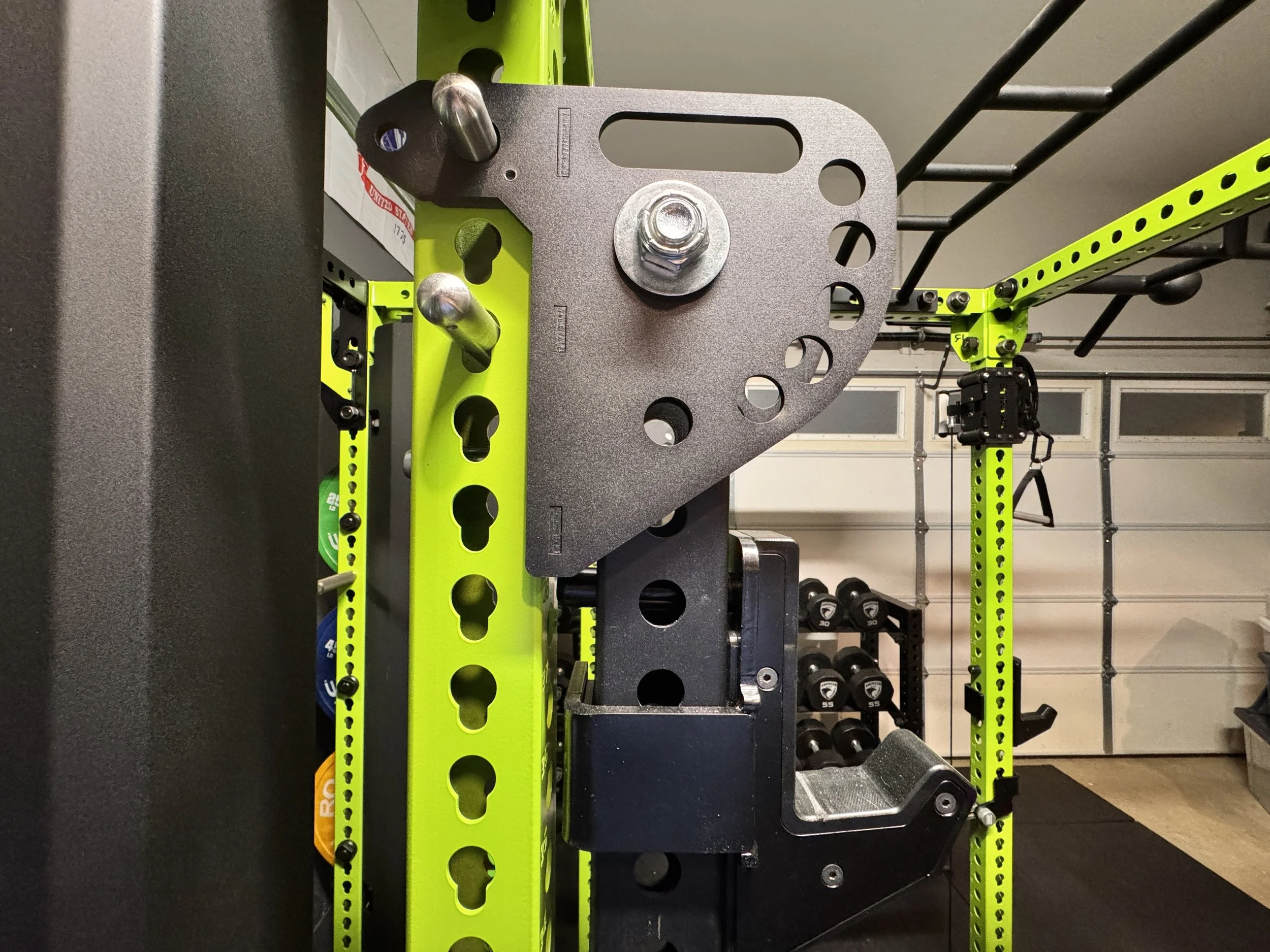
I Use the Straydog Strength GOAT as Uprights
$350 is not your number. I want to be clear about this because the sticker price undersells the real investment, and going in with the wrong expectation leads to frustration.
The GOAT ships with the bracket, the 24-inch tube, two hitch pins, the UHMW pads, and a rubber bumper. That's it. To actually run leg extensions, leg curls, calf raises, and hip thrusts, you need a weight peg, a utility loop or handle, and roller pads. None of these are included.
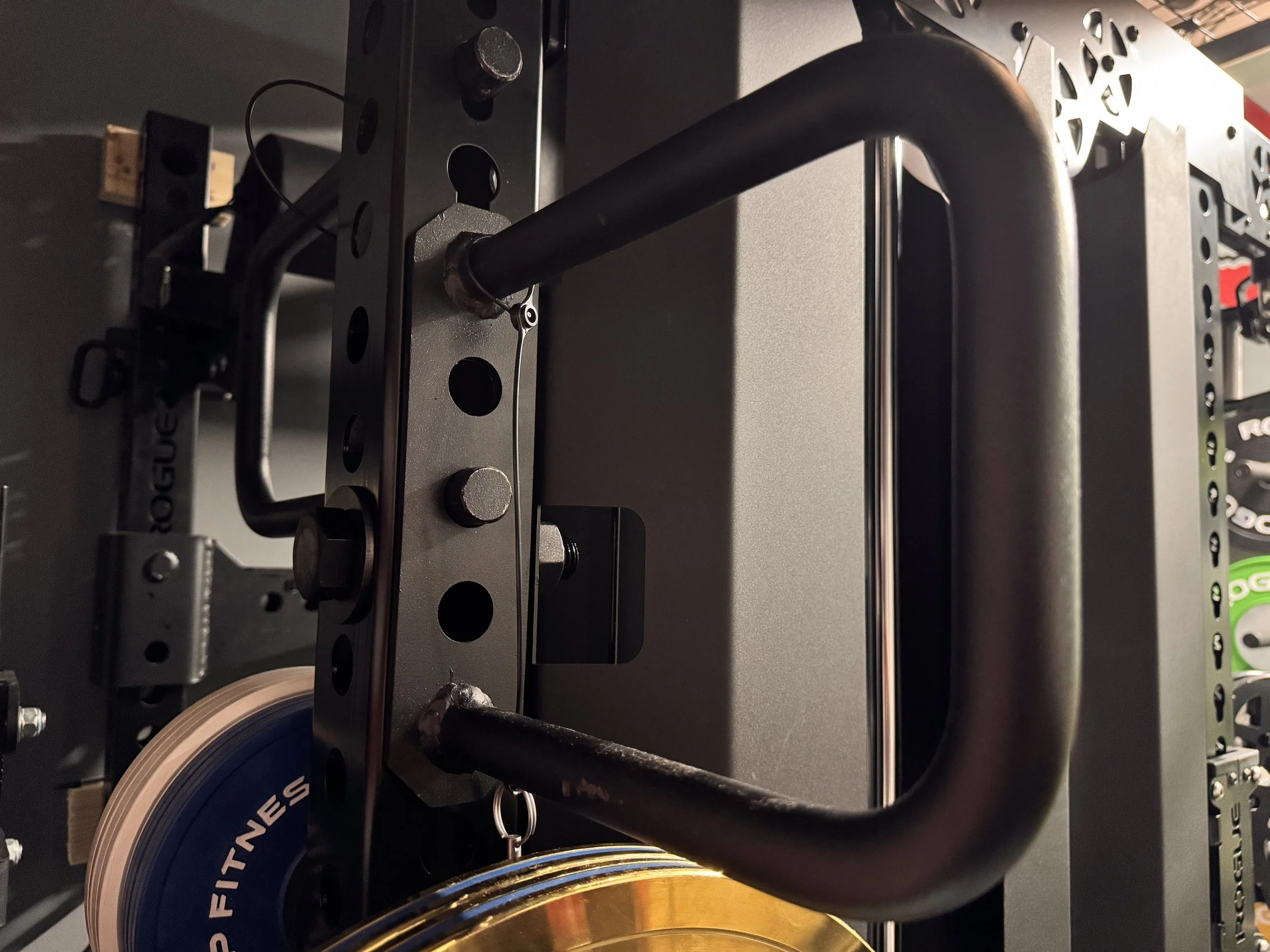
Straydog's adjustable weight peg runs about $70. Their utility loop is around $85. For a single GOAT setup, you're at roughly $530 before shipping, and shipping on steel adds a meaningful amount to that number. Roller pads are additional depending on what you source and whether you already own any.
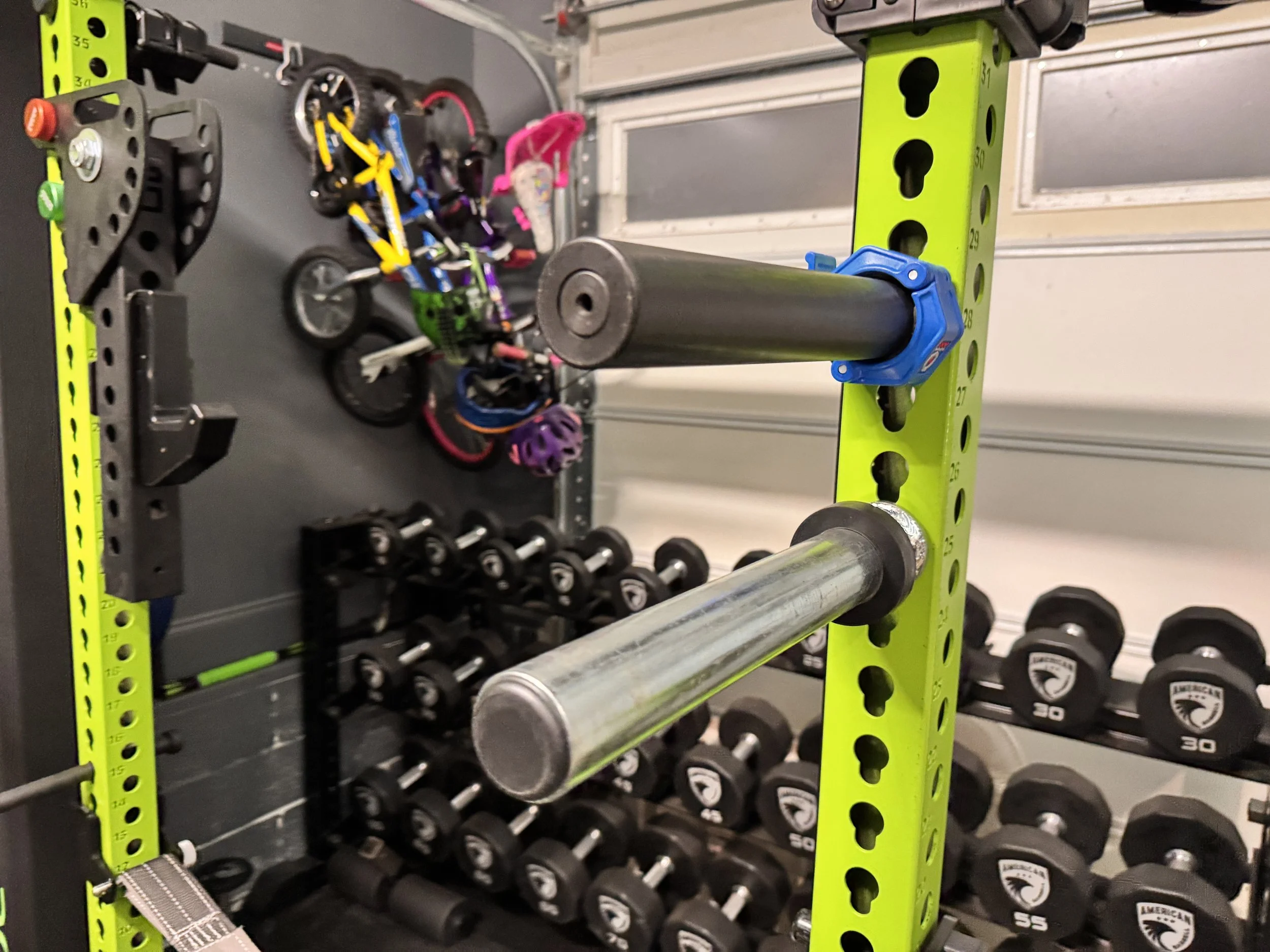
Rogue pins are much higher quality
I ordered the Straydog Strength weight pins along with the GOATs. After handling them, I returned them and ordered Rogue Monster knurled knobs instead. The Straydog pins are functional but they don't feel like a premium product. The Rogue hardware is substantially better, and in my opinion, you should just buy the Rogue pins from the start and skip the extra step. The same goes for roller pads. I've used Rogue single leg rollers throughout and they've been excellent. I haven't tested the Straydog rollers, so I can't tell you to avoid them specifically, but if you already have rollers that work, you don't need to replace them.
My actual spend for the full setup: two GOATs, two weight pegs, two utility loops, shipped to my door came to just over $1,067. Rollers not included because I already had them. That's the honest number for a dual GOAT setup with the accessories you actually need to use it. For a single GOAT with minimum accessories, budget around $600 to $700 before rollers, depending on your shipping costs.
The Customer Service Experience
I don't take pleasure in calling this out, but it needs to be said because it affected my experience and it may affect yours.
My handles arrived scratched on both units, in the same spot on each one. The packaging is not on the level you would expect from Rogue or Sorinex. There is no form-holding foam, no cardboard inserts, no protective layering. The product goes in a box and ships. On my original order, the hardware wasn't even in the box when it arrived. It had apparently been set inside loose and fell out during shipping.
Straydog did send a replacement bag of hardware, so the problem was resolved. But when I raised the issue of the scratched handles, the response was that the handles scratch during storage and there wasn't anything they could do about it, and that I could use a pen to fill in the powder coat scratches. That's the response I got after spending over $1,000 on their equipment.
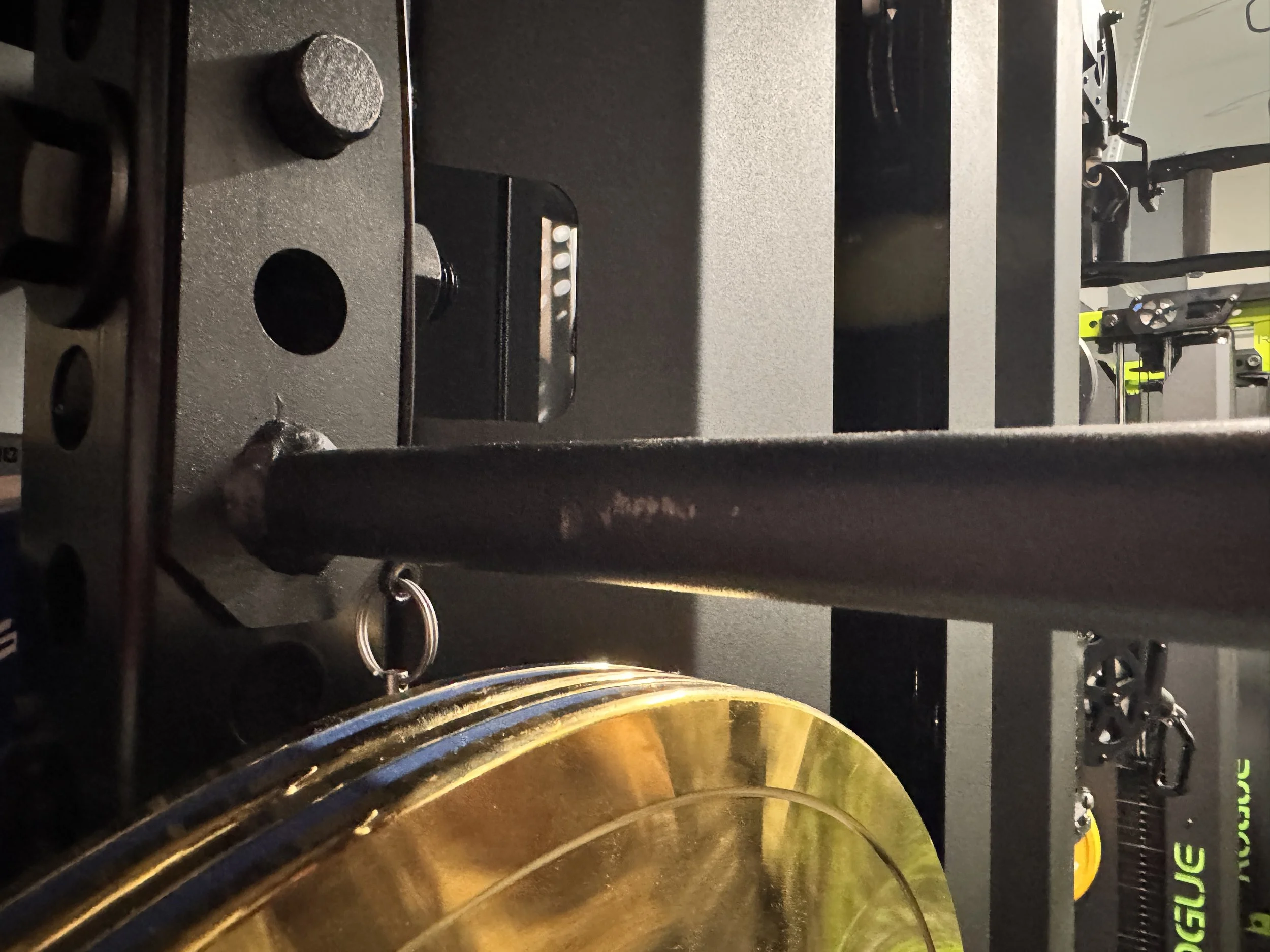
Scratches down to the metal
I understand that Straydog is primarily a facility company. Commercial gym buyers have different expectations and different relationships with vendors than home gym consumers do. But if you're buying as a home gym consumer expecting a Rogue-level experience, the packaging, the QC on finish, and the customer service response are all going to fall short of that expectation.
My recommendation: buy the GOAT itself from Straydog because nothing else does exactly what it does. But source your weight pins, handles, and accessories from Rogue or another vendor that will back up a new product arriving in new condition. You'll take less risk that way.
The Verdict
The GOAT Attachment does what it claims. The build quality is real, the movements work, and the offset loading concern that looks worrying on paper turns out to be a non-issue in practice. For a home gym that needs leg isolation work and doesn't have room or budget for dedicated machines, it is one of the more space-efficient solutions available.
But after months of real use, I have to be honest about where I landed. The setup friction is real. Every movement requires configuring the GOAT differently, positioning the bench, adjusting the angle, loading the right accessories. For leg extensions and leg curls specifically, the setup time ate into the value proposition over time. What started as a versatile machine replacement eventually became, in my day-to-day training, a pair of rack-mounted jammer arms and secondary j-cup holders. That's not a failure of the product. It's a reflection of how setup friction compounds over months of use.
In hindsight, I probably would have spent that $1,067 differently. A dedicated leg curl and leg extension machine, something like the Hammer Strength or Sorinex options I've been looking at, would have served my training better. The dedicated machine doesn't require configuration. You sit down, adjust the pad, and train. The GOAT asks more of you every session, and over time that adds up.
This is an expansion piece, not a foundation piece. If you're still building your gym, the GOAT is not where your money should go first. Get your rack, barbell, plates, bench, and functional trainer squared away. Once that foundation is in place and you're looking to fill in machine movements you can't otherwise replicate in your space, the GOAT is worth considering. Just understand what you're signing up for: a modular system that requires commitment to the setup process to get real value out of it.
If jammer presses are a core part of your training and you're looking for a rack-mounted solution, the GOAT earns its keep. The lever arm is smooth, the handle options work well, and the explosive movement application is genuinely good. That alone may be worth the price of entry for some athletes.
For everyone else, go in with clear eyes on the real cost, the setup demands, and the customer service reality. The GOAT is a well-built product from a company that knows how to make equipment. It just asks more of you than the name implies.
If you have questions about the setup, drop them in the comments on the video. I read all of them.
- Drew
Iron & Lime Fitness
Support the Garage Grind:
If this helped you make a decision or gave you something you could not find anywhere else, hitting like and subscribing is the best way to keep this thing going. No fluff, No BS. Just real reviews from a real gym.
If you have questions about any piece of equipment in here, drop those too. I read and reply to everything because this stuff matters. Your money, your training, your goals. You can also reach me directly on Instagram or Facebook at @IronAndLimeFitness.
A quick note on what it takes to keep this channel running. I do the filming, the editing, the writing, the blogging, the website, the socials, and the marketing, all while working a full-time job and keeping up with three kids who just want to hang out in the gym. It is a family operation in every sense. If you are shopping Rogue anyway, using the Rogue affiliate link supports the channel at no extra cost to you, and it genuinely makes a difference in keeping the content coming.
If you want to hit Rogue, Bells of Steel, or Kensui to support the channel with your purchase at no cost to you, please use the below links.
Strength for Life. Fitness for All.
Barbells and Balance Things:
Watch the full video review on our YouTube channel
Straydog Strength GOAT Review: Great Idea, Real Frustrations, and Why I Wouldn't Recommend It
More Articles here:
Rogue Dual Indy Functional Trainer Review: The Honest Breakdown After Daily Use
Everything in This Gym Has a Reason to Be Here: A Complete Home Gym Tour
Rogue Sandwich J-Cup Too Tight? Here's How to Fix It (Calibration Kit Explained)
Home Gym Makeover: How We Transformed Our Home Gym - Paint, Layout, and a Long-Awaited Delivery
Kensui Sapporo Swiss Bar & Calibrated Gold Plates Review: Worth It for Home Gyms?
Rogue Fitness CTM-1 Review: Is it better than the Rep Adonis Cable Tower for Home Gyms?
Moving the FM-6: Why Garage Gyms Must Evolve (And How to Survive the Move)
American Barbell 10-Sided Urethane Dumbbells Review: Commercial Luxury or Financial Mistake?
Here's Why I Wouldn't Buy The Rogue FM-6 Again: Rogue FM-6 Long-Term Review
Rogue Mutant Metals Ultimate Dip Attachment Review (1 Year Later): Is It Really Worth $365?
Rogue Kabuki Transformer Bar Review
Rogue Manta Ray Adjustable Bench Review
Rogue FM-6 Twin Functional Trainer Review
American Barbell Dumbbell Set and Rack Review
“Best Budget Gear for Building a Garage Gym”
Bells of Steel Safety Straps Review: A Perfect Fit for the Rogue FM-6
Train hard. Live bold. Stay lime.