
Stainless Steel Rogue Ohio Bar vs Stainless Steel Ohio Power Bar: Which Stainless Steel Barbell Should You Buy?
By Drew
Iron and Lime | Gear Help
Last Updated: July 2026
Iron and Lime Fitness is independent and supported by readers. We may earn a small commission at no cost to you if you buy through an affiliate link.
Walk into any serious garage gym and chances are you'll find a Rogue barbell sitting in the rack. For a lot of lifters, the real decision isn't whether to buy a Rogue bar. It's which one. And once you start looking at Rogue's stainless steel lineup, the choice narrows fast to two bars that everyone eventually asks about: the Ohio Bar and the Ohio Power Bar.
On paper, they look almost identical. Both made in Columbus, Ohio. Both American steel. Both backed by Rogue's lifetime warranty. Both rated at 200,000 PSI tensile strength. If all you're doing is reading a spec sheet side by side, it's fair to wonder why anyone spends more than five minutes debating between them. I wondered the same thing before I owned either one.
Here’s what actually matters and which version I’d put my money on.
Let's get into it.
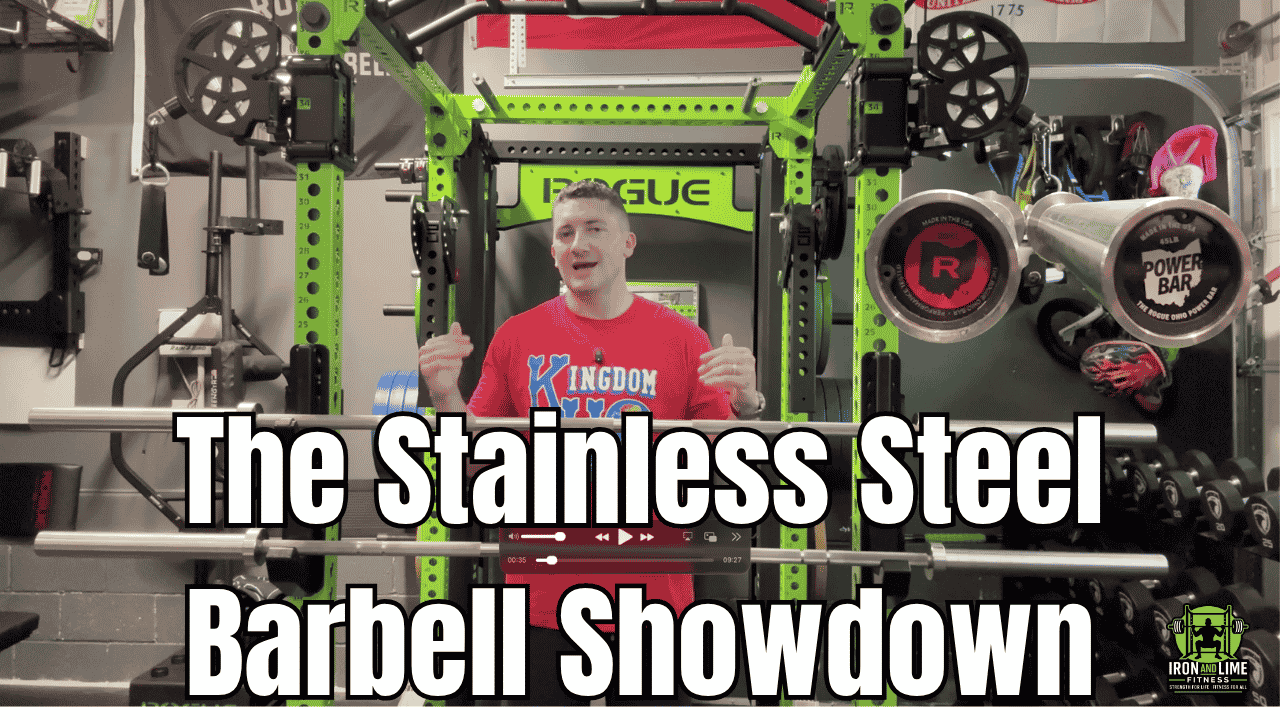
Watch the Youtube Video
Why I Own Both
I've owned and trained with both for over a year now, and I can tell you the answer isn't on the spec sheet. It's under the bar. This isn't another side by side comparison pulled from product pages and stitched together without ever loading a plate. It's what these two bars actually feel like after hundreds of workouts in my own garage, at five in the morning, half asleep, before work and before the rest of the house is even awake.
I'll be honest, owning both wasn't exactly a responsible financial decision. Specialty barbells aren't cheap, and that gets worse the moment you check the stainless steel box instead of chrome. I told myself I only needed one. Then I talked myself into needing both, the same way most of us talk ourselves into most of our garage gym purchases. But months of training with both later, I don't regret it. Each bar earns its place in my rack, and using them side by side, week after week, has made me understand why Rogue keeps selling both instead of trying to merge them into one bar that claims to do everything. A bar that tries to do everything usually ends up doing nothing particularly well, and these two are proof that specialization has a purpose.
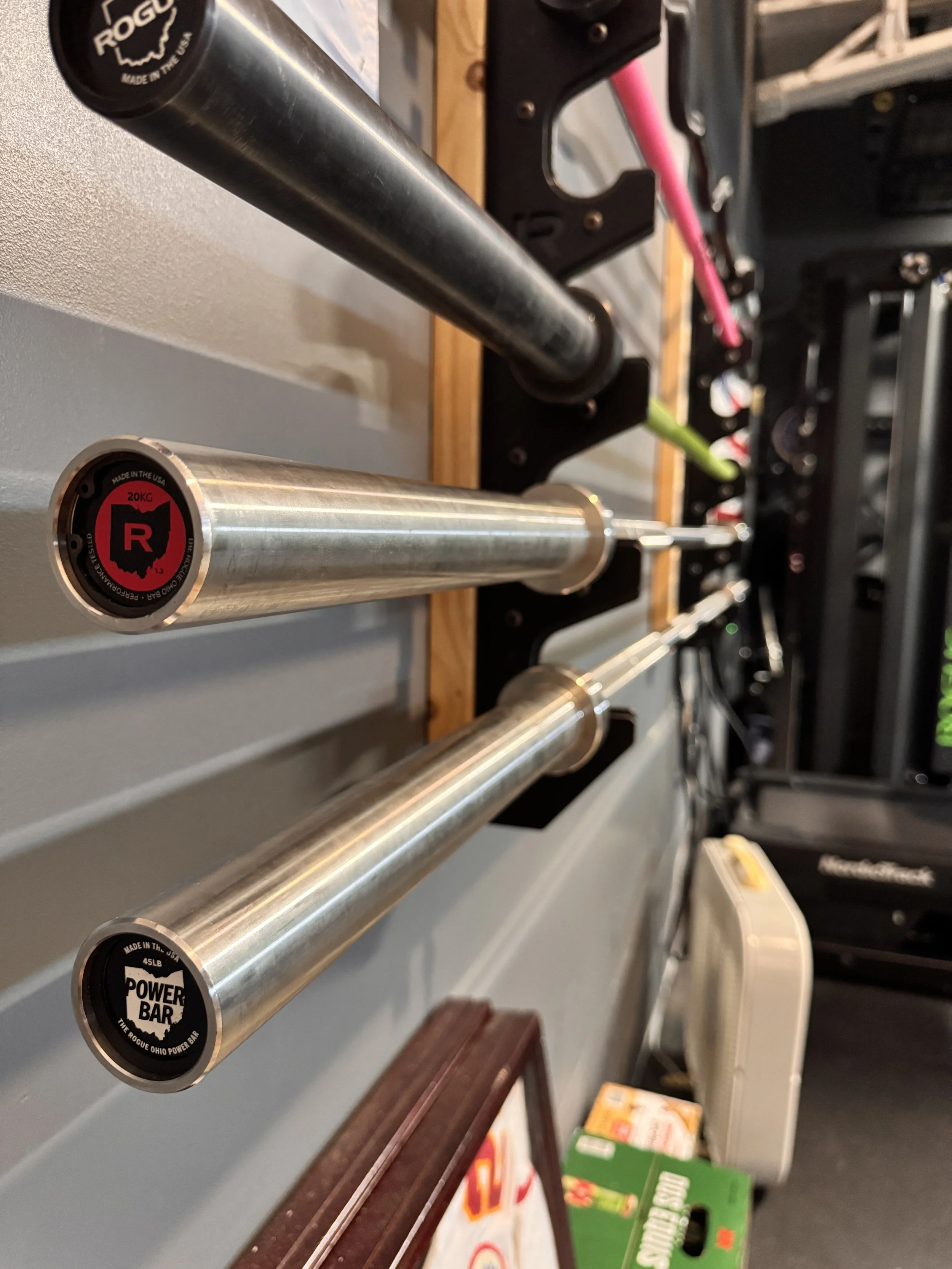
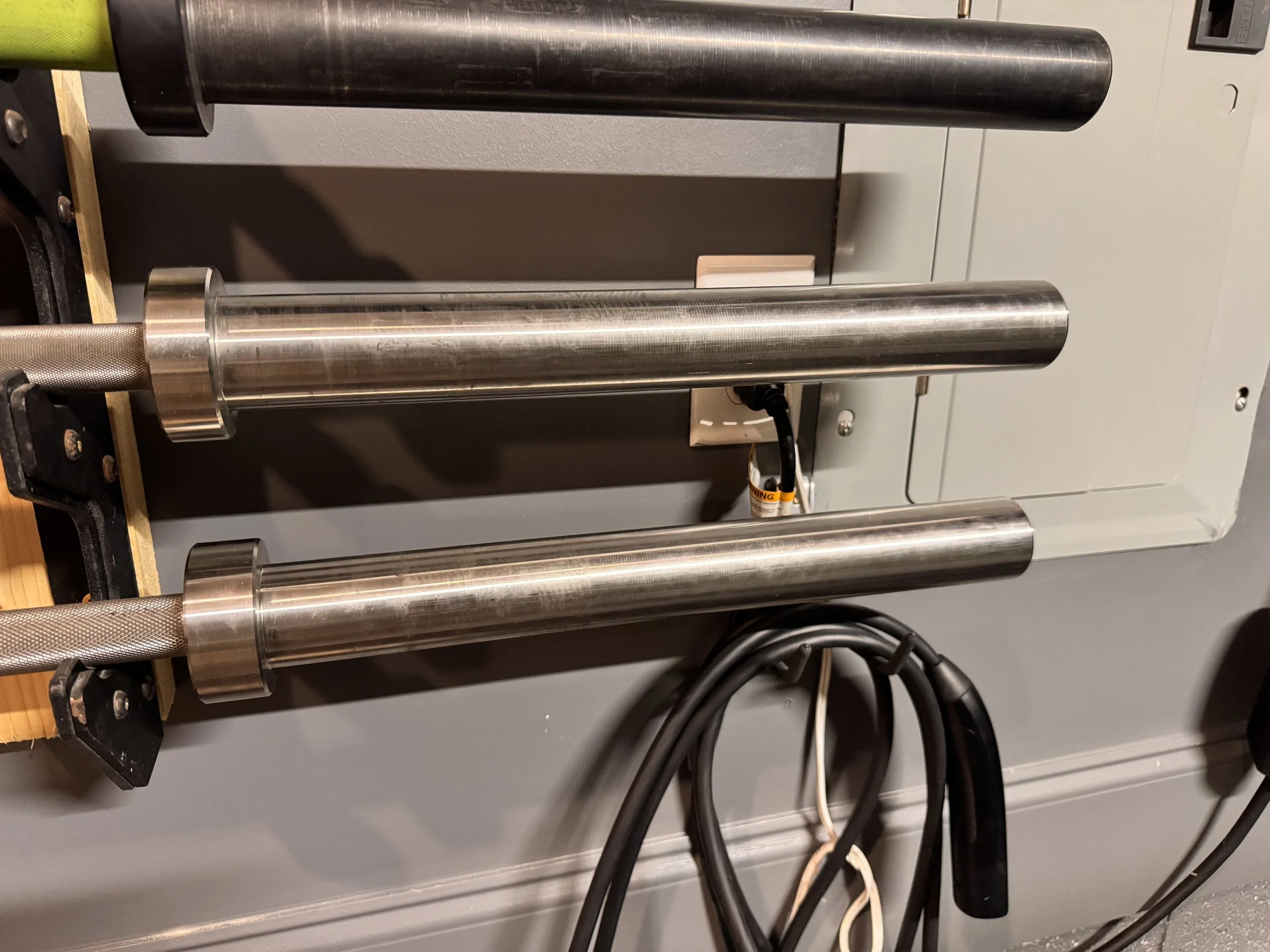
Stainless Steel Rogue Ohio Bar and Stainless Steel Ohio Power Bar are Just as Impressive on the Gun Rack
Shaft Diameter
Start with shaft diameter, because that's the first thing you'll notice the moment you unrack either bar. The Ohio Bar sits at 28.5 mm. The Power Bar is 29 mm. Half a millimeter sounds like nothing until you actually lift with them. The Ohio Bar feels more responsive right away. There's a bit more whip during cleans, high pulls, even deadlifts with bumper plates. When the plates hit the floor or the bar settles onto safety straps, you feel a touch more movement running through it. It's subtle, but it's there, and once you notice it you can't unnotice it. The Power Bar feels like a completely different animal. Everything about it is more rigid. Pull a heavy deadlift or an RDL and the weight feels planted, with almost no oscillation through the lift. Some lifters love that. Others prefer the more athletic feel of the Ohio Bar. Neither one is objectively better. They're just built around different ways of training, and once you understand that, the rest of the comparison starts making a lot more sense.
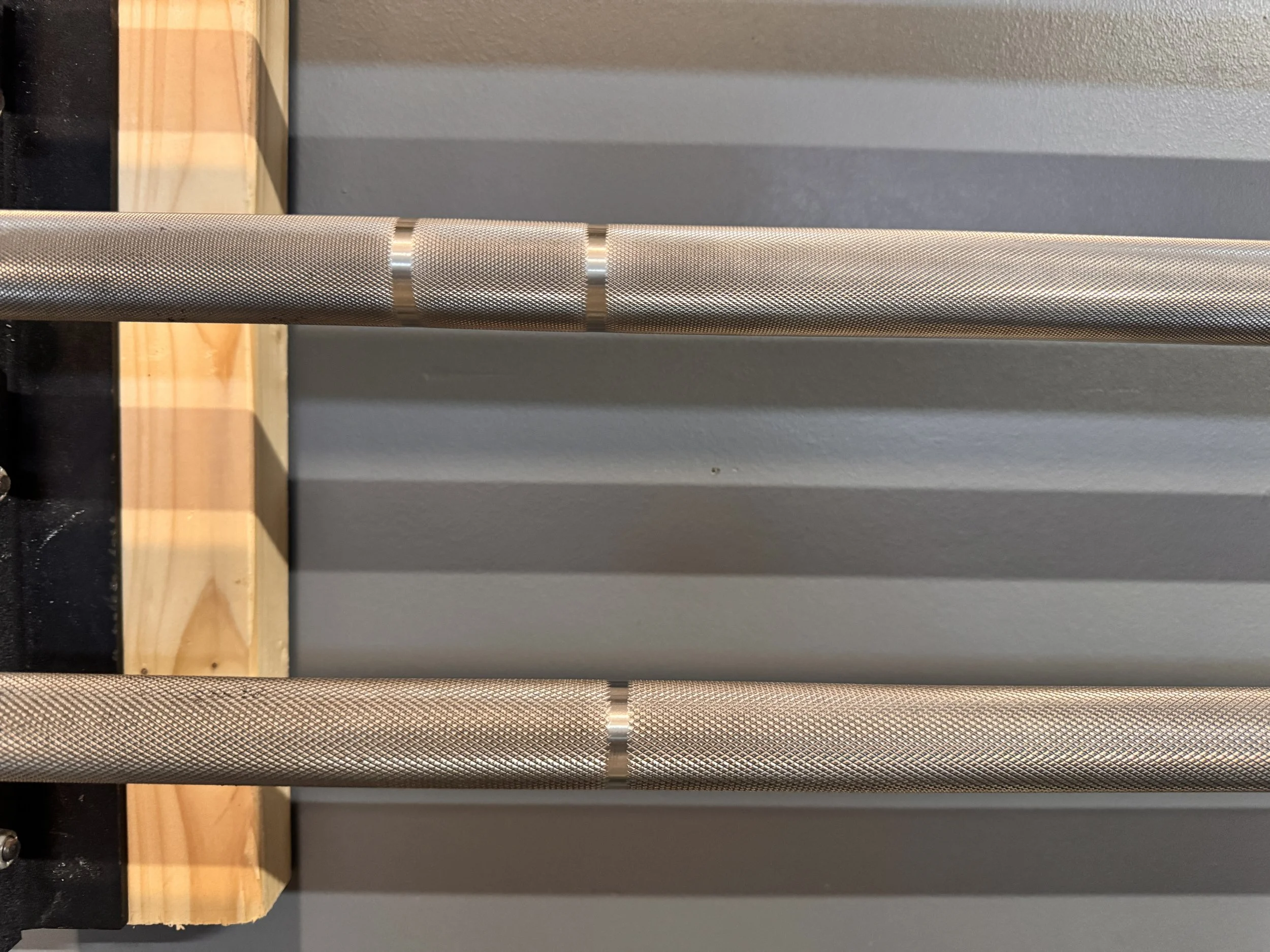
The 28.5mm vs 29mm has a Tangible Difference in Feel
Knurling
Knurling is probably the thing people ask me about most, more than price, more than weight, more than anything else. The Ohio Bar runs Rogue's multi-purpose knurl. The Power Bar uses a more aggressive volcano knurl. Since both of mine are stainless, there's no coating dulling either one, which is a big part of why I push people toward stainless if the budget allows it. You feel the actual machining instead of a finish sitting on top of it, and that changes the entire experience of gripping the bar. The Ohio Bar is noticeably more comfortable through higher volume work, long sessions, pressing, rows, the occasional Olympic lift thrown into a mixed workout. The knurl holds on without ever feeling harsh, even set after set. The Power Bar steps things up, and it is more aggressive, no question. But I think that gets exaggerated online by people who've never actually put their hands on one. I've used bars that feel like a cheese grater the moment you wrap your fingers around them. This isn't one of them. Rogue found a real balance between grip security and comfort here. I notice it most on heavy deadlifts, the kind where your grip is the first thing to go. With the Power Bar, the bar simply isn't going anywhere, and that confidence changes how hard you're willing to pull.
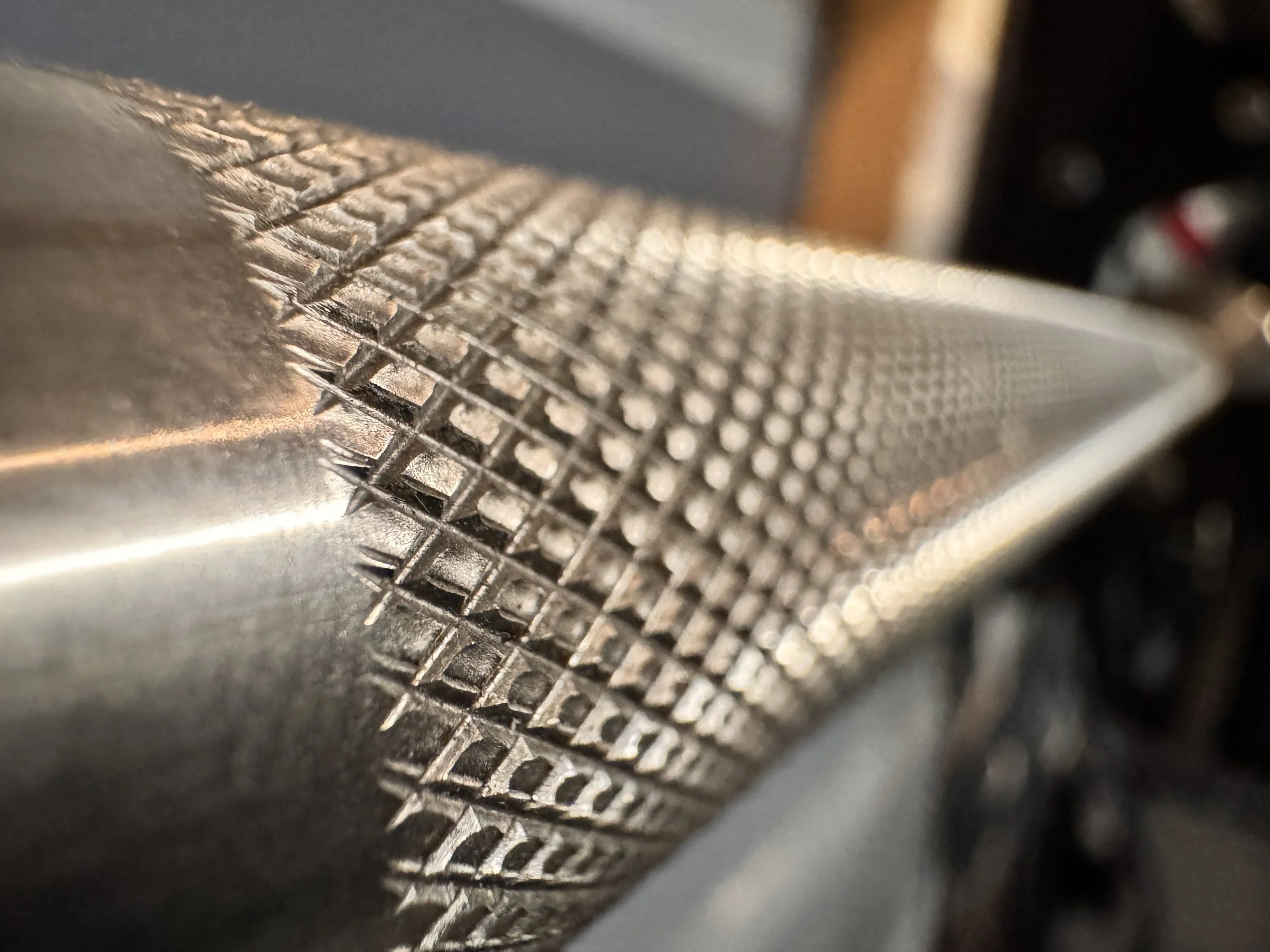
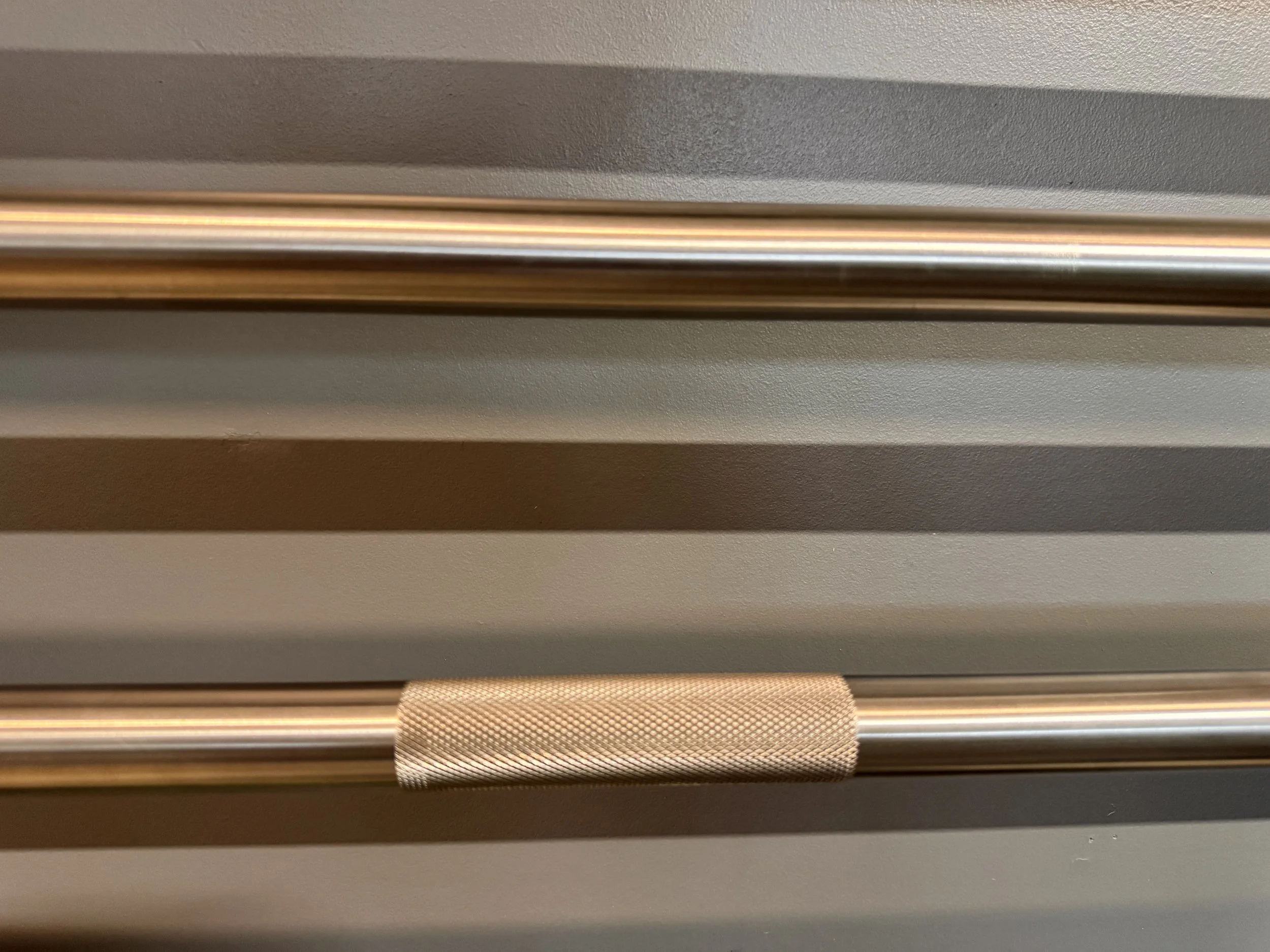
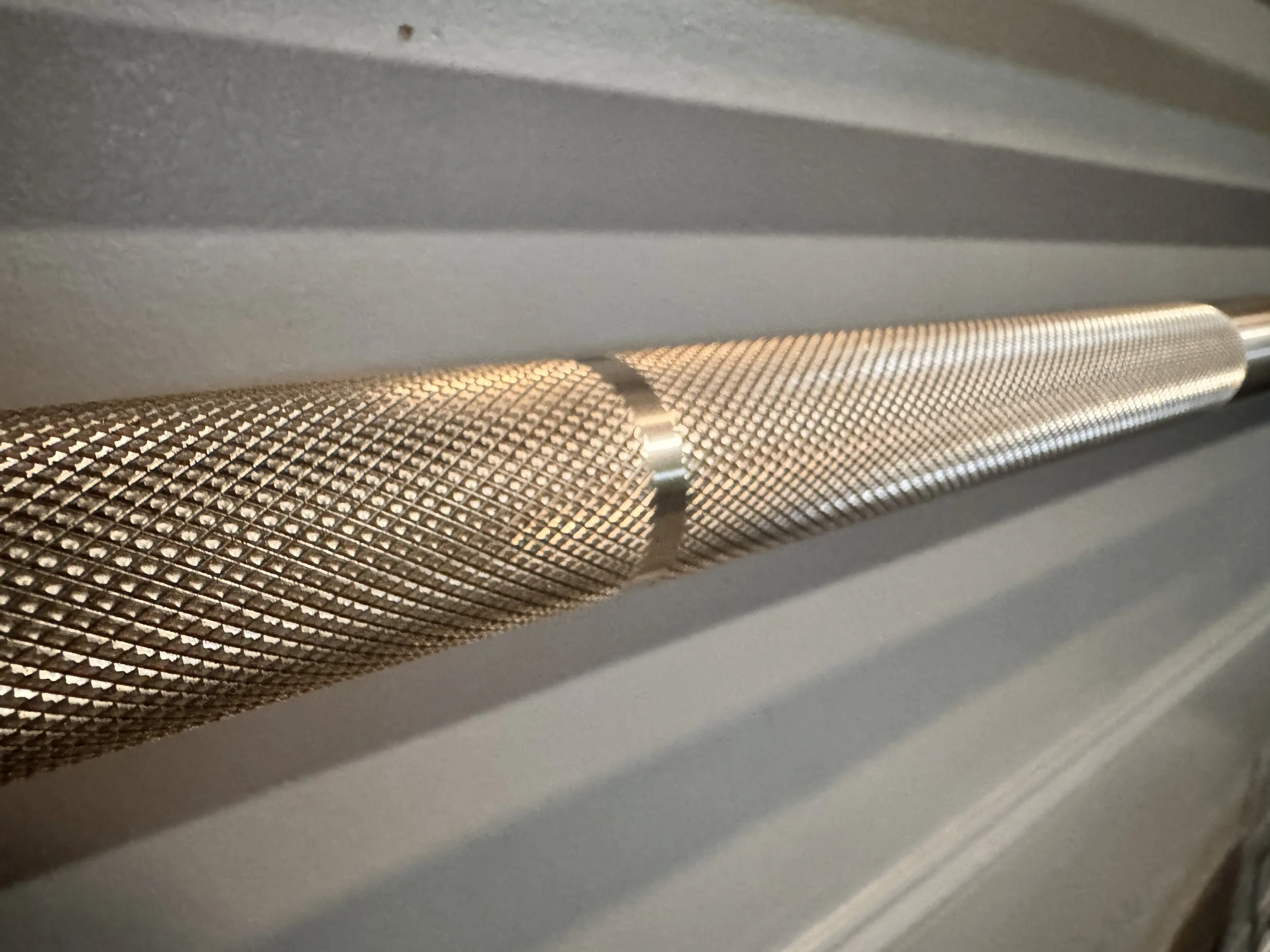
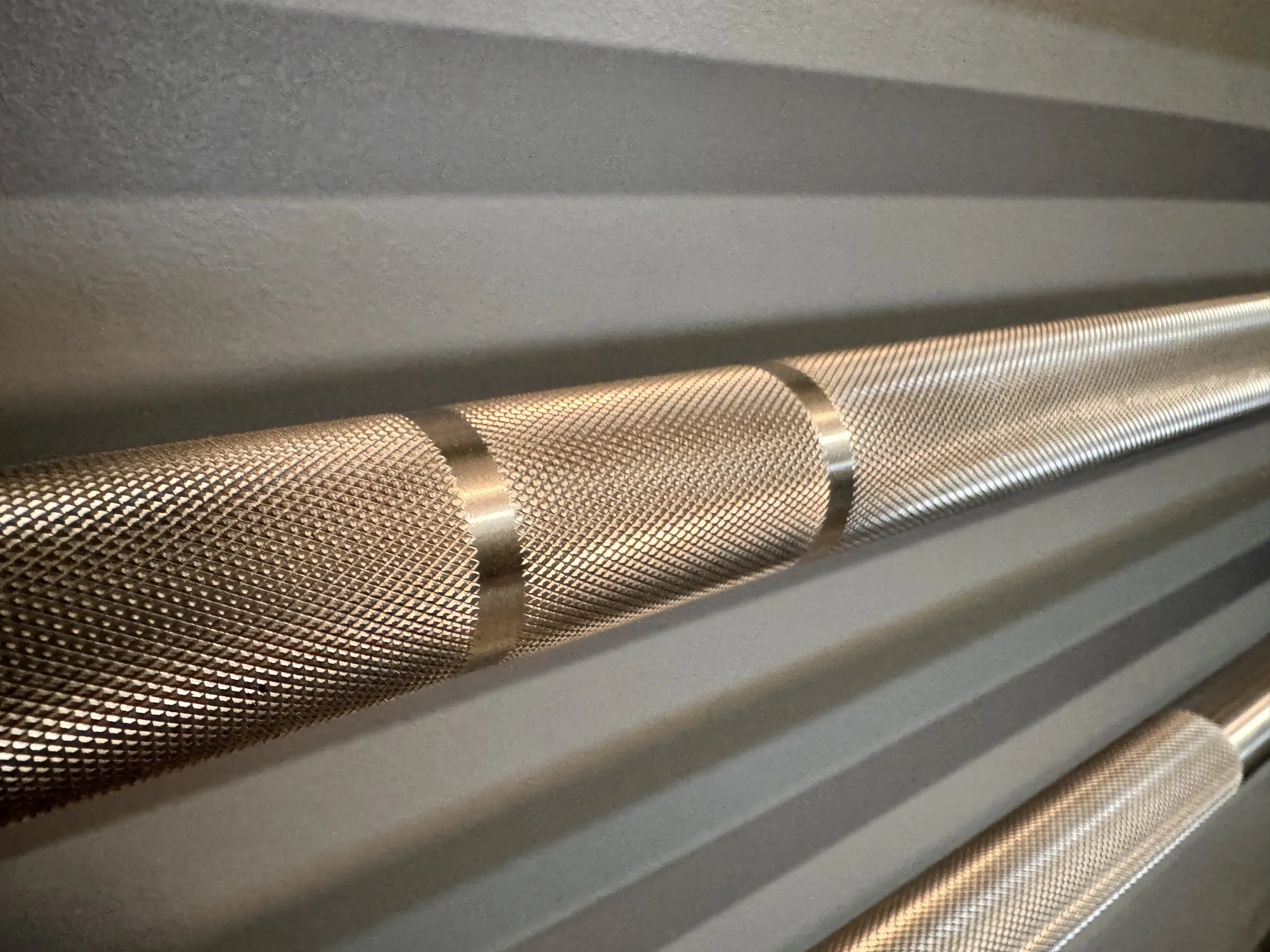
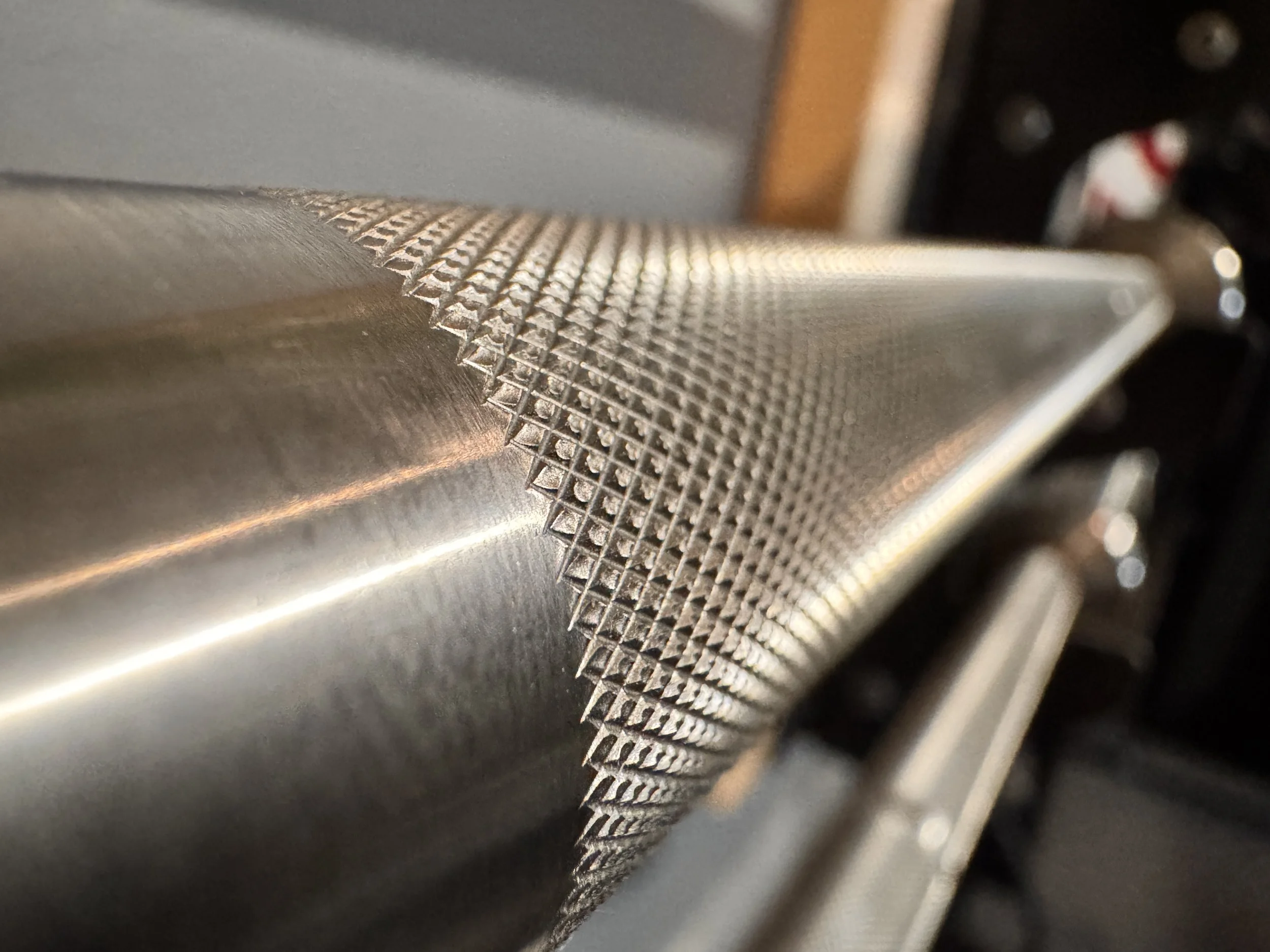
Center Knurl
Then there's the center knurl, and this might be the biggest split between the two bars, bigger than the diameter, bigger than the knurl pattern. The Ohio Bar doesn't have one. The Power Bar does. If most of your training is heavy squats, that center knurl becomes one of your favorite features fast. It locks into your upper back and the bar just sits there, no shifting around under a heavy load, no walking on your traps between reps. But if your training leans toward cleans, front squats, or higher volume Olympic work, that same center knurl gets old quick, rubbing against your body on every single rep until you're actively thinking about it instead of the lift. That's exactly why Rogue left it off the Ohio Bar in the first place. It wasn't an oversight. It was a decision made for a specific kind of lifter. Neither approach is wrong. It just depends on how you train, and being honest with yourself about that is half the battle before you ever open your wallet.
Center Knurl helps grab your back on squats.
Full Spec Comparison
For anyone who wants the numbers laid out plainly, here they are. The Ohio Bar runs a 28.5 mm shaft and weighs 20 kilograms, or 44 pounds. The Power Bar runs 29 mm and weighs the traditional 45 pounds. Both are rated at 200,000 PSI tensile strength, both use bronze bushings with tight tolerances, both carry Rogue's lifetime warranty against bending or manufacturing defects, and both are made in Columbus, Ohio. The Ohio Bar carries dual knurl marks for Olympic lifting and powerlifting, so it works whether you're training for a meet or just following a general program. The Power Bar only has powerlifting marks, because that's the only discipline it's built to serve. The Ohio Bar also runs a touch longer overall, with slightly longer loadable sleeves, which matters if you're loading up bumper plates or training with a wider stance. Looking at those numbers side by side, you'd think these bars are nearly identical. They're not. The way they feel under load is where the real difference lives, and no spec sheet captures that no matter how detailed it gets.
Durability
On durability, Rogue rates both bars on their own F Scale testing, which is basically a measure of how much abuse a bar can take before it fails. The Ohio Bar comes in at F100-R, which according to Rogue's own testing means they essentially couldn't get the bar to fail. The Power Bar is rated F10-R, still an excellent number, just not in the same territory as the Ohio Bar. In practical terms, this doesn't mean much for the average lifter. Both bars are going to outlast your training career. They'll probably outlast you, and whoever inherits your garage gym someday will be the one arguing over who gets which bar. But if you're the type of person who cares about the numbers behind the numbers, it's worth knowing that difference exists.
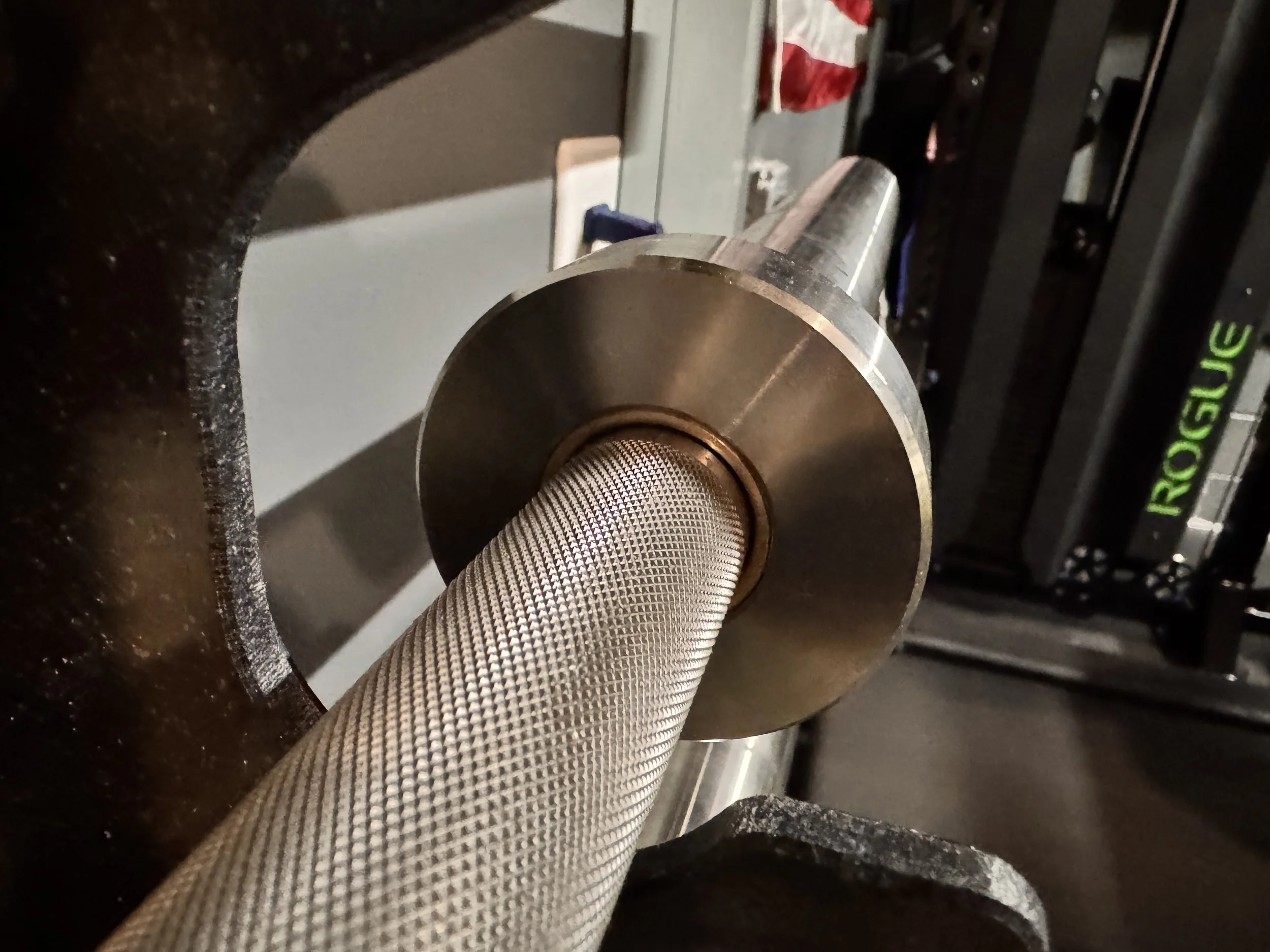
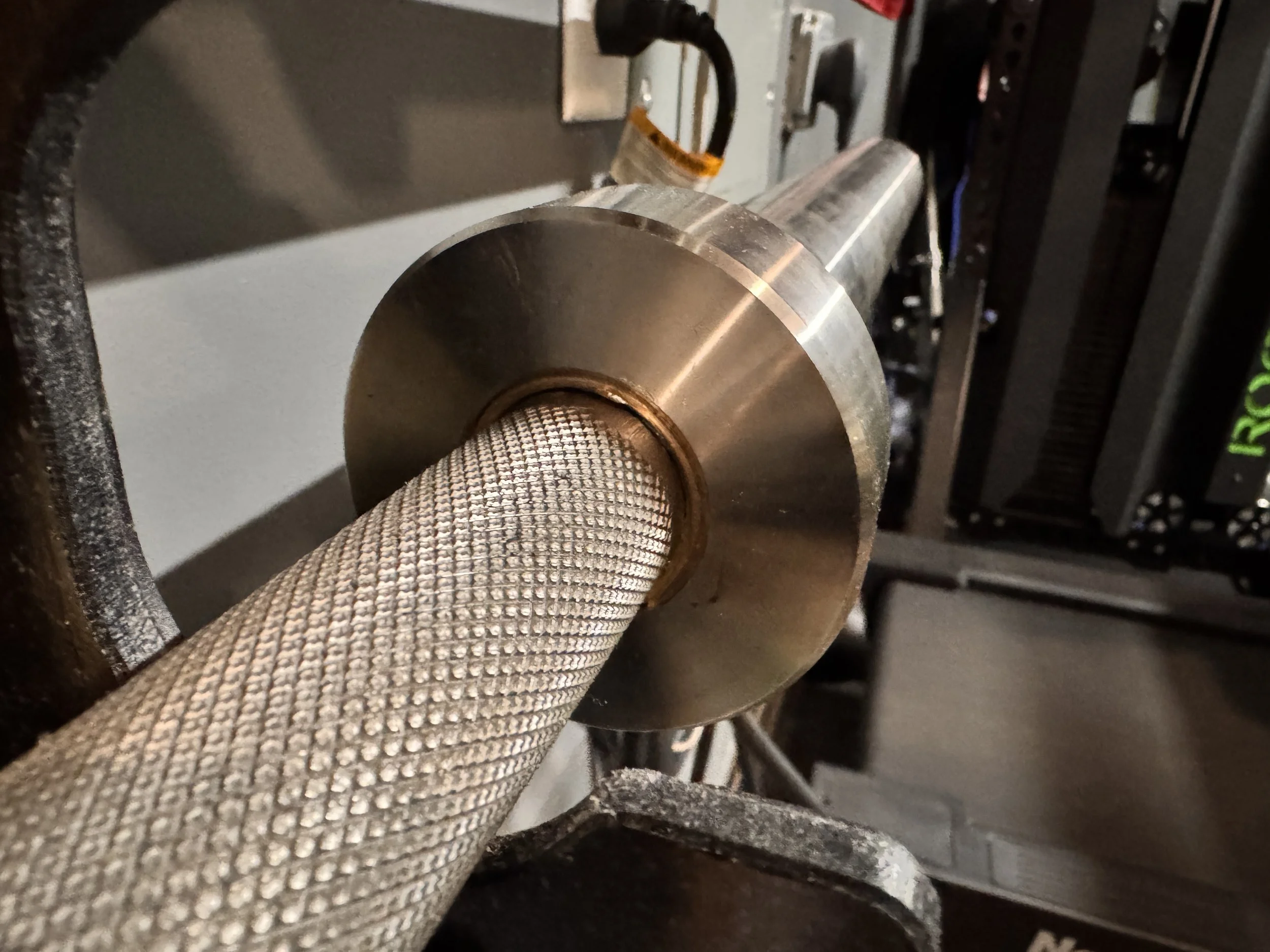
Stainless Steel
Both bars ship standard with chrome sleeves. I upgraded both of mine to full stainless, and that decision alone adds real money to the purchase, roughly a hundred dollars on the Ohio Bar and closer to seventy on the Power Bar. Yes, it costs more. No, I don't regret it. Stainless holds up better against corrosion, especially if you sweat on your bar the way I do at five in the morning with no air conditioning running yet. There's no coating covering up the knurl, so the grip stays consistent year after year instead of wearing down and getting slick the way a coated bar eventually will. If you're buying a bar you plan on owning for decades, and passing down instead of replacing, I think stainless is worth the extra money up front. It's the kind of upgrade that feels expensive on the day you buy it and completely justified five years later.
Pricing
On pricing, the Ohio Bar starts at $385 with chrome sleeves or $485 with stainless. Mine came out to about $540 shipped once everything was added up. The Ohio Power Bar starts at $435 with chrome sleeves or $505 with stainless, and mine landed around $582 shipped. So the real difference between them ended up being about $20. Twenty dollars. When you're already spending over $500 on a barbell, that twenty dollars shouldn't be what makes the decision for you, and honestly it shouldn't even factor into it. The better question, the one that actually matters, is which bar you're going to want to pull off the rack for the next ten years without a second thought.
Which One I Actually Reach For
That question is really what it comes down to for me. When I walk into my garage with no specific plan, just showing up to get the work in before the day starts, I almost always grab the Ohio Bar. Not because it's the better bar. Because it matches how I train most days, which is a mix of pressing, rows, landmine work, and the occasional Olympic movement thrown in to keep things interesting. It handles all of that well without asking me to think about it. But on heavy squat day, heavy deadlift day, or anytime I want the most locked in grip I can get before I load the bar past what feels comfortable, the Power Bar comes off the rack instead. The choice isn't about which one is higher quality. Both of them are excellent. It's about what the workout in front of me actually calls for on that particular day.
Which Bar Fits Your Training
If your training is a mix of strength and more athletic movement, if you want one bar that handles almost everything without complaint, if comfort during longer sessions matters to you, or you occasionally throw Olympic lifts into your programming, the Ohio Bar is going to serve you better as a daily driver. If your training revolves around squat, bench, and deadlift, if you're chasing bigger numbers every training cycle and want maximum grip security and a stiffer feel under load, the Power Bar is built for exactly that job and nothing else, which is precisely why it does that job so well.
My Final Verdict
After more than a year with both, my opinion hasn't really moved. The Ohio Bar is the better all-around training bar. If I could only keep one, that's the one staying in my rack, and it's not particularly close. But if my training was built entirely around chasing squat, bench, and deadlift PRs every cycle, I'd pick the Power Bar without hesitation, because that's exactly the job it was built for and it doesn't try to be anything else.
The good news is there isn't really a wrong answer here. Both bars are built to the same standard, backed by the same lifetime warranty, and both will outlast years of hard use if you take care of them, wipe them down after sweaty sessions, and store them somewhere reasonable instead of leaving them outside. The actual mistake isn't picking the wrong Rogue bar between these two. It's buying a bar that doesn't match how you actually train, just because it looked good in someone else's video or because it's what everyone on the internet says to buy.
Before you add either one to your cart, forget the marketing, forget what looks impressive on camera, and be honest with yourself about what your workouts actually look like week to week. Count your training days. Be honest about how many of them are true max effort squat and deadlift sessions versus a mix of everything else. The best barbell isn't the one somebody else recommends in a video, including this one. It's the one you reach for every single time you walk into your gym without having to talk yourself into it.
Strength for life. Fitness for all.
Support the Garage Grind:
If this helped you make a decision, or gave you something you couldn't find anywhere else, hitting subscribe is the best way to keep this going. No fluff. No BS. Just real reviews from a real gym.
Got questions about any piece of equipment in here? Drop them in the comments. I read and reply to everything because this stuff matters. Your money, your training, your goals. You can also reach me directly on Instagram or Facebook at @IronAndLimeFitness.
Strength for life. Fitness for all.
-Drew, Iron & Lime Fitness
Barbells and Balance Things:
Watch the full video review on our YouTube channel
Stainless Steel Rogue Ohio Bar vs Stainless Steel Ohio Power Bar: The Honest Comparison After 1 Year
More Articles here:
Rogue Ohio Bar: Cerakote vs. Stainless Steel
Bumper Plate Showdown: Rogue Competition vs Training Bumpers | Which Rogue Plates Are Best?
Rogue Monster vs. Bells of Steel Manticore Safety Straps: An Honest Home Gym Comparison
Straydog Strength GOAT Attachment Review: What Nobody Tells You Before You Buy
Rogue Dual Indy Functional Trainer Review: The Honest Breakdown After Daily Use
Everything in This Gym Has a Reason to Be Here: A Complete Home Gym Tour
Rogue Sandwich J-Cup Too Tight? Here's How to Fix It (Calibration Kit Explained)
Home Gym Makeover: How We Transformed Our Home Gym - Paint, Layout, and a Long-Awaited Delivery
Kensui Sapporo Swiss Bar & Calibrated Gold Plates Review: Worth It for Home Gyms?
Rogue Fitness CTM-1 Review: Is it better than the Rep Adonis Cable Tower for Home Gyms?
Moving the FM-6: Why Garage Gyms Must Evolve (And How to Survive the Move)
American Barbell 10-Sided Urethane Dumbbells Review: Commercial Luxury or Financial Mistake?
Here's Why I Wouldn't Buy The Rogue FM-6 Again: Rogue FM-6 Long-Term Review
Rogue Mutant Metals Ultimate Dip Attachment Review (1 Year Later): Is It Really Worth $365?
Rogue Kabuki Transformer Bar Review
Rogue Manta Ray Adjustable Bench Review
Rogue FM-6 Twin Functional Trainer Review
American Barbell Dumbbell Set and Rack Review
“Best Budget Gear for Building a Garage Gym”
Bells of Steel Safety Straps Review: A Perfect Fit for the Rogue FM-6
Train hard. Live bold. Stay lime.