
Rogue Competition Plates vs. Rogue Training 2.0 Plates: An Honest Comparison After Two Years of Use
By Drew
Iron and Lime | Gear Help
Last Updated: May 2026
Iron and Lime Fitness is independent and supported by readers. We may earn a small commission at no cost to you if you buy through an affiliate link.
When I was building out my garage gym, one of the decisions I kept coming back to was bumper plates. Specifically, I wanted to know whether the Rogue Competition Bumper Plates were actually worth the premium over the Rogue Color Training 2.0 Bumper Plates.
I spent a serious amount of time trying to find a direct comparison. There was not much out there. So I bought both, trained on both for close to two years, and now I am in a position to give you a real-world answer.
Let's get into it.
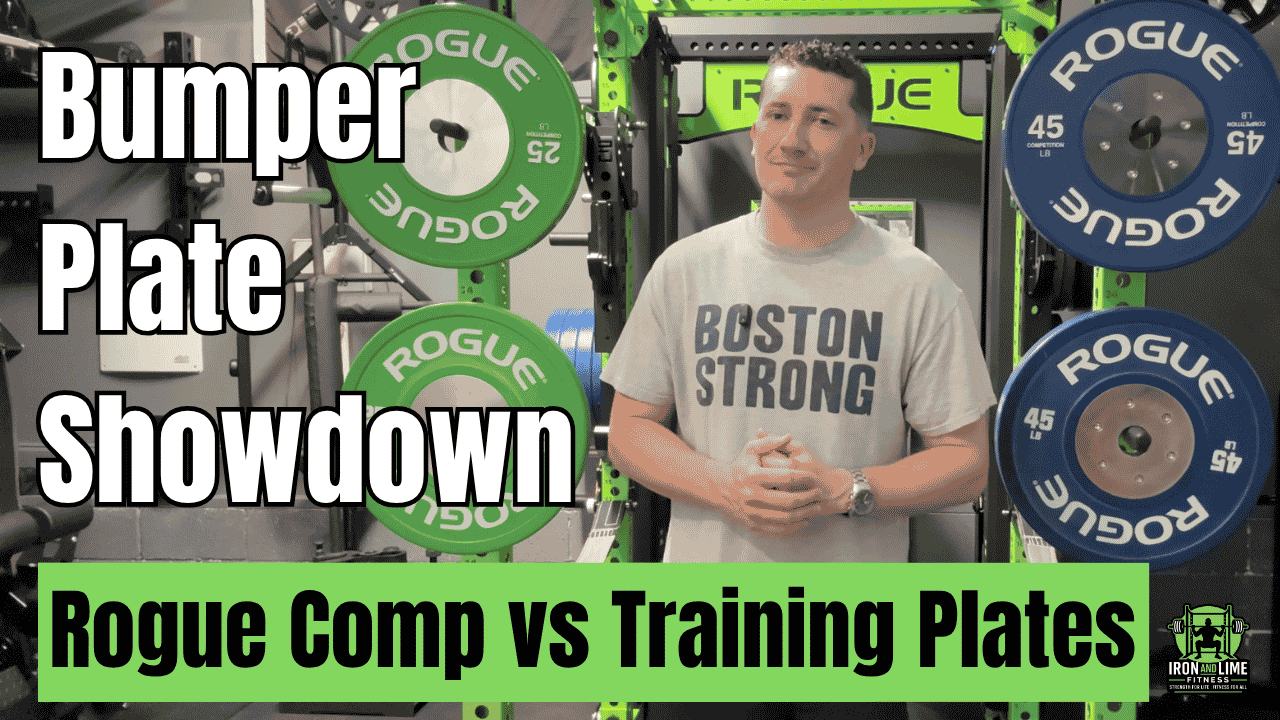
Watch the Youtube Video
The Short Answer
Both are legitimate, high-quality bumper plates. The Competition Plates are noticeably better in feel, grip, and long-term finish durability. The premium is about $150 on a full 300-pound set. If you are already spending over $1,200, the upgrade makes sense. If budget is the hard constraint, the Training Plates will not disappoint you.
Now let's get into why.
Specifications at a Glance
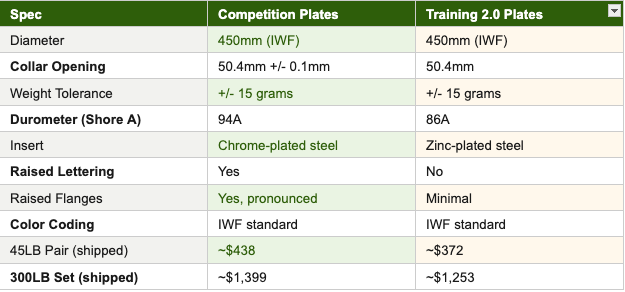
Bumper Specs
The table tells most of the story. Same outer dimensions, same weight tolerance, meaningfully different rubber hardness, insert coating, and grip features. Let's break down what each of those differences actually means.
Bounce and Durometer: The Number That Matters Most
The durometer rating is the most important spec on a bumper plate and the one most buyers ignore. Here is what it actually means.
A Brief History of the Shore A Scale
The Shore A durometer scale was developed by Albert Ferdinand Shore, an American inventor and metallurgist, in the 1920s. At the time, most hardness testing methods were designed for metals and did not translate well to soft, elastic materials like rubber. Shore created a standardized, portable instrument that could measure the hardness of flexible compounds consistently.
The test works by pressing a spring-loaded indenter into the material and measuring the depth of penetration under a fixed force. A reading of 0 means the indenter sinks completely. A reading of 100 means no penetration at all. Today the test is formalized and is used across manufacturing, automotive engineering, and strength equipment industries worldwide.
For context on the scale:
Rubber band: approximately 25A
Car tire tread: typically 60A to 70A
Shoe heel: usually in the 70s
Hockey puck: around 90A to 95A
When a bumper plate is rated 86A or 94A, it is operating near the very top of what rubber compounds commonly reach. Budget bumper plates tend to land in the low-to-mid 70s. Mid-tier training plates generally fall in the mid-to-upper 80s. True competition-spec plates push into the low 90s.
How This Applies to These Plates
The Rogue Competition Plate is rated 94A. At that hardness, the bounce is highly controlled. These are not zero-bounce plates, but when dropped from hip level or overhead, they come back predictably and minimally. For Olympic lifting, snatches, cleans, and repeated drops, this matters.
The Rogue Training 2.0 Plate is rated 86A. That is still a very firm plate. Compared to most bumpers on the market, these are not bouncy. But the gap relative to the Competition plate is real and noticeable on hard drops from overhead.
For squatting, pressing, deadlifting, or any controlled loading where you are not regularly dropping from height, the 86A rating is completely fine. For serious Olympic weightlifting, the 94A is the better tool.
As a reference point, the Rogue Echo Bumpers come in around 88A. They sit between these two options and offer excellent value for lifters who want a firmer plate without paying competition prices. They are still my budget recommendation.
Chrome vs. Zinc: The Insert Coating
Both plates use a steel disc insert. The insert is the metal center that slides over the barbell sleeve and takes the majority of the wear from loading and unloading. The coating on that insert is where they differ.
Competition Plate: Chrome-Plated Insert
Chrome plating is harder and more corrosion-resistant than zinc. In a garage gym environment, especially one that gets humid in summer, this matters. Chrome holds its finish longer, resists tarnish more effectively, and frankly looks better. If aesthetics are part of your buying decision, chrome wins without a debate.
Training 2.0 Plate: Zinc-Plated Insert
Zinc plating is functional and completely adequate for indoor gym use. It is softer than chrome and more susceptible to tarnishing over time, particularly in humid environments. Some owners have noted the zinc finish looks noticeably duller after a year or two of regular use.
For most home gym lifters, this is not a dealbreaker. But if you are buying plates to keep for a decade or more, the chrome coating on the Competition plate is going to age better.
Raised Flanges and Grip: The Biggest Practical Difference
This is the feature that almost nobody talks about when comparing these plates, and in my experience, it is the single biggest reason to spend up to the Competition Plates.
Competition Plates: Raised Outer Flanges
The Competition Plates have pronounced raised rubber flanges on both the inner and outer rings. This design serves two purposes.
First, it creates a natural grip ledge. When you are loading and unloading plates with sweaty hands, the raised edge gives your fingers something to catch. This sounds minor until you are 45 minutes into a session, hands slick, trying to strip a loaded bar quickly. The grip difference is real and substantial.
Second, the raised flanges prevent the steel inserts from ever touching each other when plates are stacked on the bar. Metal-on-metal contact causes scuffing and accelerates wear on the insert coating. The Competition Plates eliminate that through design.
Training 2.0 Plates: Minimal Flange
The Training Plates have a slight raised center and a smoother outer edge, but nothing approaching the grip lip on the Competition Plates. When your hands are sweaty, these are genuinely harder to handle. Not dangerous, but noticeably less ergonomic.
If I found another set of Rogue Competition Plates at a good price tomorrow, I would sell my Training Plates immediately. That is how significant the handling difference is in day-to-day use.
This is not a small quality-of-life difference. If you are loading and unloading a bar multiple times per session, five days a week, for years, the grip ergonomics of the Competition Plates compound into a meaningfully better ownership experience.
Price: What You Are Actually Paying
Both plates are available directly from Rogue. Here is how the pricing breaks down once you factor in shipping.
Individual Pairs
45LB Competition Pair: approximately $438 shipped
45LB Training 2.0 Pair: approximately $372 shipped
Difference on one pair: approximately $66
Full Sets (My Recommendation: 300LB Set)
If you are building a serious home gym setup, I recommend the 300-pound set. It includes two 25-pound plates, two 35-pound plates, and four 45-pound plates. That covers the vast majority of what most lifters realistically need for strength training or Olympic lifting.
Training 2.0 300LB Set: approximately $1,253 shipped
Competition 300LB Set: approximately $1,399 shipped
Difference: approximately $146
The Competition Plates carry roughly a 10 to 12 percent premium across most configurations. That is real money, and I am not going to pretend it isn't. But here is the framing I come back to: if you are already committing $1,200 or more to bumper plates, the incremental $146 for meaningfully better grip, a superior insert coating, and more controlled bounce is worth it, assuming it fits your budget.
The Training Plates are not a budget product. They are a legitimate, competition-quality plate by most standards. The Competition Plates are just better.
Honest Cons: Both Plates, No Sugar-Coating
Competition Plate Cons
Price. These get expensive fast on a full build.
Chrome is not scratch-proof. Normal loading and unloading will scuff the insert over time. I am careful with my gear and mine still look great, but they are not immune.
Raised lettering shows wear. The good news is that because the lettering is physically raised from the plate surface, you can touch it up with a paint pen without much difficulty.
Training 2.0 Plate Cons
Grip. I cannot stress this enough. These are noticeably harder to handle when your hands are sweaty. The lack of a pronounced grip flange is a real daily inconvenience.
Zinc tarnishes. In a humid garage gym environment, the zinc insert will show wear faster than chrome. This is cosmetic but worth knowing.
No raised lettering. Once the paint on the weight markings fades, it is gone permanently. You will still have the IWF color coding, but the weight numbers will eventually disappear.
Colors may not match product photos. Some buyers report the colors are slightly less vibrant in person than on the Rogue website. This is a minor point but worth setting expectations.
More bounce. Not dramatically more, but measurably more. If Olympic lifting is your primary training, the 86A rating is a real consideration.
Who Each Plate Is For
Buy the Competition Plates If:
You do Olympic lifting regularly, specifically snatches, cleans, and repeated overhead drops
Handling and grip quality matter to you during daily training
You want the best long-term finish durability, especially in a humid environment
You subscribe to the buy-once, cry-once philosophy and want to make a single purchase that lasts
You have the budget and want the best Rogue bumper available in this category
Buy the Training 2.0 Plates If:
Budget is the primary constraint and you want to maximize weight on the floor per dollar
Your training is primarily strength-focused with controlled loading and you are not dropping from height regularly
You want a premium plate at a lower entry point than full competition-spec
You are okay with slightly more bounce and less ergonomic handling in exchange for cost savings
There is no wrong choice between these two plates. Both are better than the majority of bumper plates on the market. The Competition Plates are simply better in the ways that matter most for daily use, and for $146 more on a full set, that premium is reasonable if your budget allows it.
My Final Verdict After Two Years
If I were starting over today, I would buy the Competition Plates from the beginning and skip the Training Plates entirely. The handling difference alone justifies the premium for anyone who trains regularly. The chrome insert and raised flanges compound into a noticeably better product over months and years of use.
That said, I trained on the Training Plates for a long time and they are solid plates. If your budget is firm at the Training Plate price point, buy them with confidence. You are not making a bad decision.
You just might regret it a little the first time you try to grip a sweaty Training Plate mid-session.
Where to Buy
Both plates are available through Rogue Fitness. My affiliate link is below. Same price for you either way, but it helps support the channel and this blog. I appreciate every click.
I am Drew from Iron and Lime Fitness. Veteran-owned, unsponsored, just real gear talk from someone who trains in a garage at 5am. If you found this useful, subscribe on YouTube for the full video review and drop any questions in the comments.
Strength for life. Fitness for all. If you have questions about the setup, drop them in the comments on the video. I read all of them.
- Drew
Iron & Lime Fitness
Support the Garage Grind:
If this helped you make a decision or gave you something you could not find anywhere else, hitting like and subscribing is the best way to keep this thing going. No fluff, No BS. Just real reviews from a real gym.
If you have questions about any piece of equipment in here, drop those too. I read and reply to everything because this stuff matters. Your money, your training, your goals. You can also reach me directly on Instagram or Facebook at @IronAndLimeFitness.
A quick note on what it takes to keep this channel running. I do the filming, the editing, the writing, the blogging, the website, the socials, and the marketing, all while working a full-time job and keeping up with three kids who just want to hang out in the gym. It is a family operation in every sense. If you are shopping Rogue anyway, using the Rogue affiliate link supports the channel at no extra cost to you, and it genuinely makes a difference in keeping the content coming.
If you want to hit Rogue, Bells of Steel, or Kensui to support the channel with your purchase at no cost to you, please use the below links.
Barbells and Balance Things:
Watch the full video review on our YouTube channel
Bumper Plate Showdown: Rogue Competition vs Training Bumpers | Which Rogue Plates Are Best?
More Articles here:
Rogue Monster vs. Bells of Steel Manticore Safety Straps: An Honest Home Gym Comparison
Straydog Strength GOAT Attachment Review: What Nobody Tells You Before You Buy
Rogue Dual Indy Functional Trainer Review: The Honest Breakdown After Daily Use
Everything in This Gym Has a Reason to Be Here: A Complete Home Gym Tour
Rogue Sandwich J-Cup Too Tight? Here's How to Fix It (Calibration Kit Explained)
Home Gym Makeover: How We Transformed Our Home Gym - Paint, Layout, and a Long-Awaited Delivery
Kensui Sapporo Swiss Bar & Calibrated Gold Plates Review: Worth It for Home Gyms?
Rogue Fitness CTM-1 Review: Is it better than the Rep Adonis Cable Tower for Home Gyms?
Moving the FM-6: Why Garage Gyms Must Evolve (And How to Survive the Move)
American Barbell 10-Sided Urethane Dumbbells Review: Commercial Luxury or Financial Mistake?
Here's Why I Wouldn't Buy The Rogue FM-6 Again: Rogue FM-6 Long-Term Review
Rogue Mutant Metals Ultimate Dip Attachment Review (1 Year Later): Is It Really Worth $365?
Rogue Kabuki Transformer Bar Review
Rogue Manta Ray Adjustable Bench Review
Rogue FM-6 Twin Functional Trainer Review
American Barbell Dumbbell Set and Rack Review
“Best Budget Gear for Building a Garage Gym”
Bells of Steel Safety Straps Review: A Perfect Fit for the Rogue FM-6
Train hard. Live bold. Stay lime.