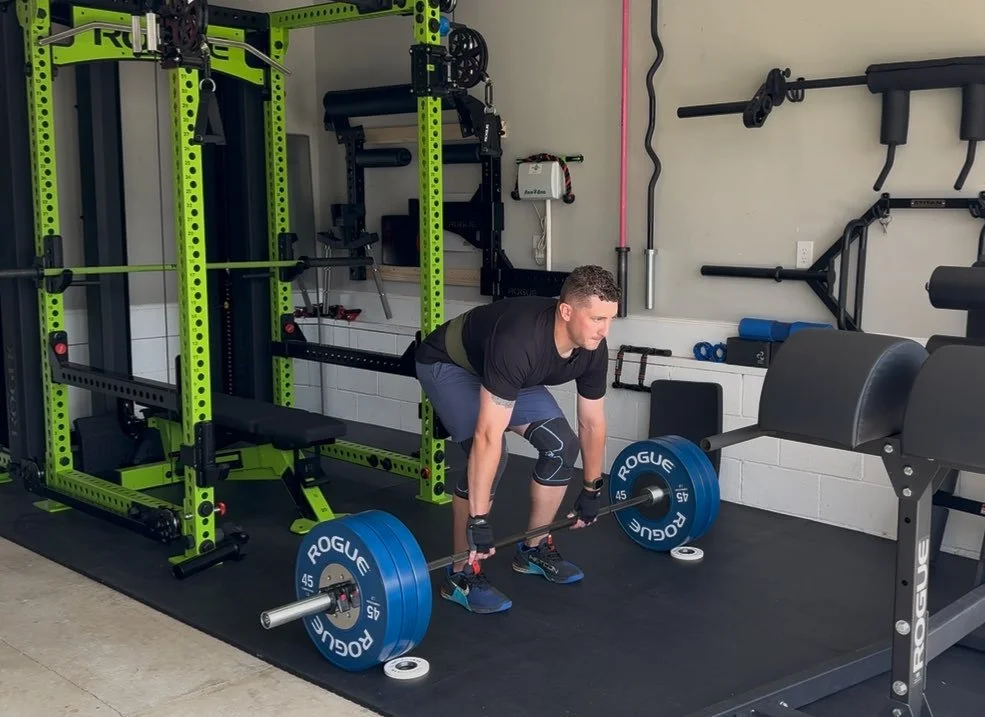

Rogue CG-1C Review: Is This $205 Cable Attachment Worth It?
By Drew
Iron and Lime | Gear Reviews
Last Updated: Oct 2026
Iron and Lime Fitness is independent and supported by readers. We may earn a small commission at no cost to you if you buy through an affiliate link. Shop Rogue here.
Summary
The Rogue CG-1C Multi Grip Camber Cable & Landmine Attachment is exactly the kind of product Rogue is very good at making: overbuilt, versatile, expensive, and somehow still difficult for me to argue against.
At the time of writing, the standard CG-1C costs $205. For that money, you get an American-made multi-grip cable attachment with adjustable neutral-grip positions, Rogue's Ohio-style knurled handles, and an integrated acetal-lined sleeve that lets the entire attachment slide directly onto a barbell for landmine work. The aluminum version weighs 8.25 pounds, while the heavy-duty steel version comes in at 14 pounds.
I've been using the aluminum CG-1C for lat pulldowns, low rows, landmine rows, and chest-supported rows with the Rogue Pritchett Pad.
My conclusion is pretty straightforward: This is not a necessary cable attachment. It is an excellent one. For the way I train, I would buy it again.
Things I Love
Multiple genuinely useful neutral-grip widths
Excellent knurled handles
Very comfortable for lat pulldowns and low rows
Cable and landmine functionality in one attachment
Landmine feature does not compromise its performance as a cable attachment
Aluminum version is relatively lightweight and easy to move around
Pairs particularly well with the Rogue Pritchett Pad
Extremely solid construction
Enough versatility to legitimately earn its storage space
Things I Don't Love
$205 is a lot of money for a cable attachment
Adjusting handle positions requires tools and takes a few minutes
The landmine sleeve occupies valuable barbell sleeve space
Plate clearance can become an issue during some landmine setups
Range of motion can be reduced depending on your landmine configuration
It will not replace every specialty cable attachment in your gym
I could see myself preferring an even beefier handle option
Would I Recommend It?
Yes, with a pretty important qualifier.
If you regularly use a lat pulldown or functional trainer, prefer neutral grips, and will actually use the landmine functionality, I think the CG-1C makes a strong case for itself. If you just need a basic lat pulldown bar, save your money. If you only occasionally use a landmine, there are cheaper dedicated handles.
But if you're going to use everything the CG-1C offers, I think it is worth the premium.
Iron & Lime Verdict: Recommended.
What Is the Rogue CG-1C?
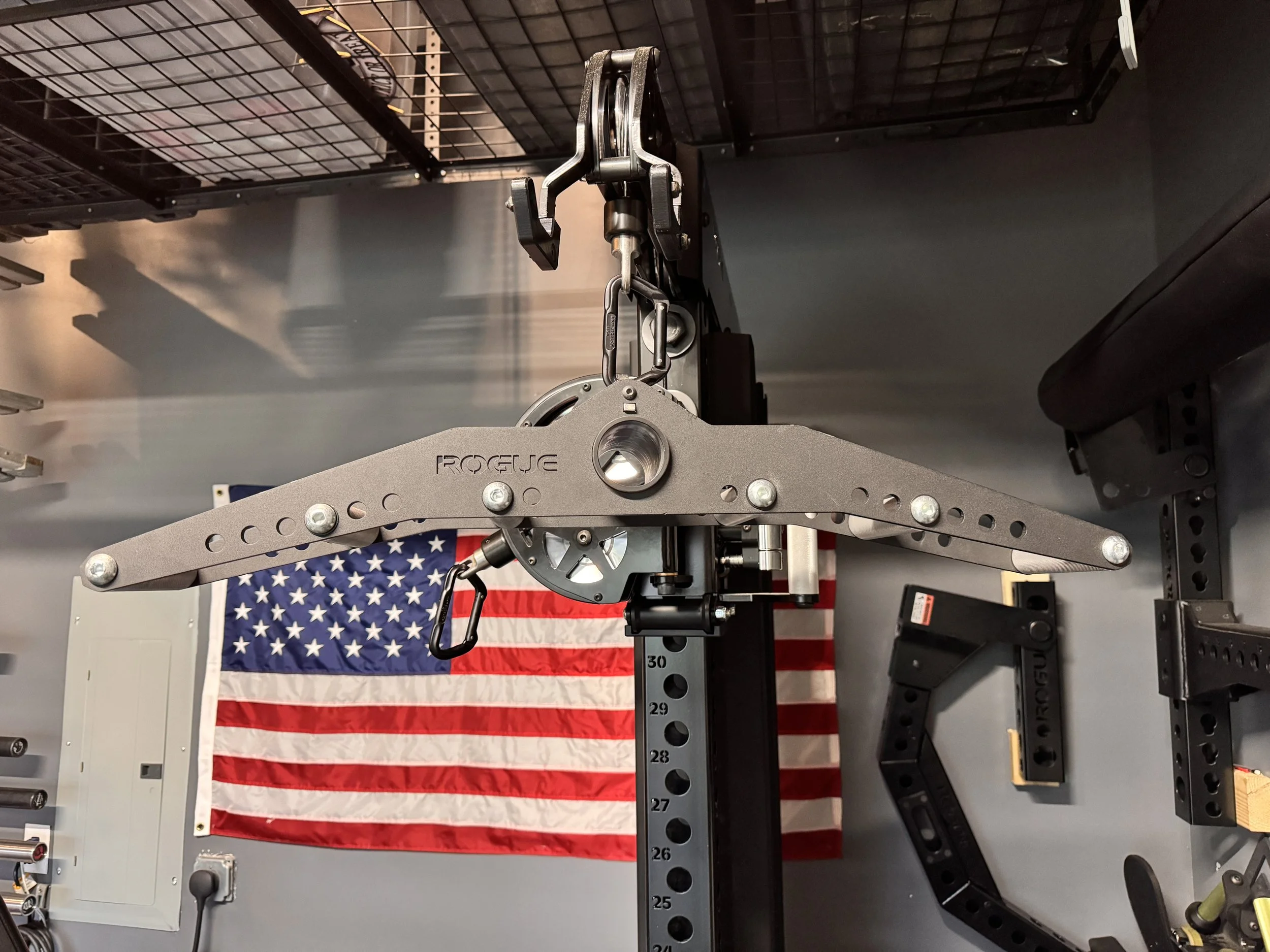
CG-1C Multi Grip Camber Cable & Landmine Attachment
The CG-1C is essentially Rogue's attempt to consolidate several pulling attachments into one premium piece of equipment.
At its core, it is a cambered multi-grip cable attachment designed primarily for movements like:
Lat pulldowns
Low rows
Close-grip pulldowns
Wide neutral-grip pulldowns
Seated rows
Landmine rows
Chest-supported landmine rows
What really separates the CG-1C from a conventional multi-grip pulldown attachment is the large opening built into the center of the frame. Inside that opening is an acetal-lined sleeve that allows the entire attachment to slide directly over a barbell sleeve for landmine work without metal-on-metal contact with your bar. Rogue designed the CG-1C from the start to pull double duty as both a cable and landmine attachment, and that was honestly one of the biggest reasons I bought it. At this point, I've accumulated enough specialized equipment in my home gym that I'm increasingly drawn to pieces that can legitimately do more than one job without becoming mediocre at all of them.
And that's the important distinction here. A lot of gym equipment gets marketed as "versatile," but sometimes that really means it does seven different things and isn't particularly great at any of them. That hasn't been my experience with the CG-1C. First and foremost, it feels like a premium, purpose-built cable attachment. The landmine functionality is simply layered on top of that without noticeably compromising what it does on a cable machine. For a home gym, where every piece of equipment eventually has to justify both its cost and the space it takes up, that's a big deal. Especially considering my cable attachment collection is already starting to look like I'm preparing to open a small sporting goods store. If Rogue can give me legitimate additional functionality without adding another attachment to the wall, I'll take that kind of versatility every time.
Rogue CG-1C Specs
Here are the important specifications for the standard CG-1C:
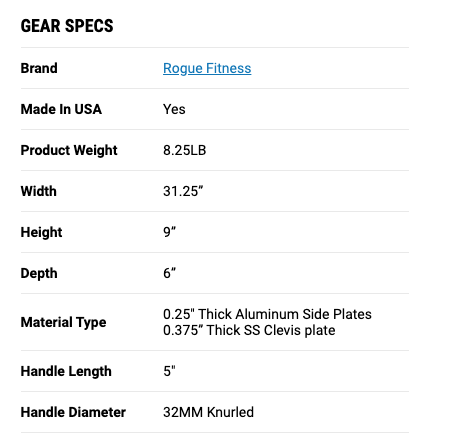
Rogue CG-1C Specs
Rogue uses quarter-inch side plates, a stainless-steel clevis plate, knurled aluminum handles, and an embedded acetal sleeve for landmine use. The standard handles use the same general Ohio knurl pattern that Rogue uses on its Ohio Bar. And most importantly, it feels super solid when you’re pulling with it.
Aluminum vs. Steel

CG-1C Multi Grip Camber Cable & Landmine Attachment Aluminum is thick and strong
I bought the aluminum version, and for a home gym, that's the one I would recommend. I don't think it's particularly close. The aluminum CG-1C weighs 8.25 pounds, while the heavy-duty steel version comes in at 14 pounds. Six pounds might not sound like a huge difference on paper, but it starts to matter once you think about how often you're actually moving this thing around.
I'm constantly taking it down from storage, moving it to the high pulley, pulling it off, switching it to the low pulley, sliding it onto a landmine, taking it back off, and then putting it away again. Once you accumulate enough oversized cable attachments, just moving them around starts to feel like part of the workout. The aluminum version cuts down on that friction without feeling flimsy or cheap in any way.
I've never picked it up and thought, "You know what this needs? Another six pounds." It still feels extremely solid, and for most home gym owners, I just don't see a compelling reason to go heavier unless you specifically prefer steel or you're putting it through some kind of commercial-level abuse. For me, the aluminum version is the easy choice.
Build Quality: Exactly What You Expect From Rogue
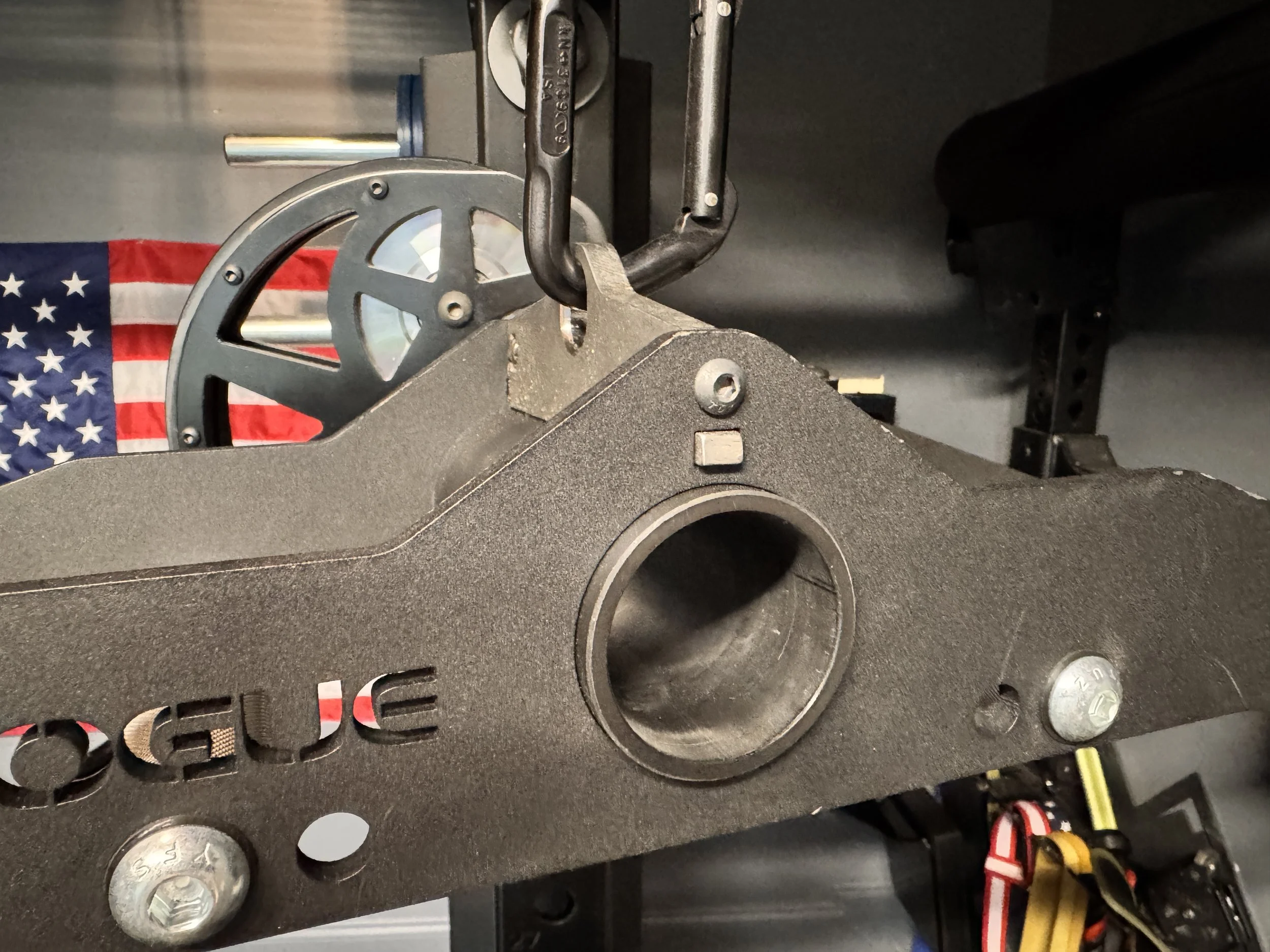
The quickest way I can describe the CG-1C's construction is that it just feels like Rogue. Solid, overbuilt, and probably more expensive than it needed to be. Which, at this point, seems to be my love language with Rogue: overbuilt, unnecessary, and somehow already in my cart. The aluminum frame still feels substantial without becoming cumbersome, the stainless-steel connection point inspires confidence, and the hardware has stayed tight through regular use. Nothing has started rattling, shifting, or feeling loose, and the finish has held up exactly how I would expect from a premium Rogue attachment.
But as good as the frame is, that's not actually the part I notice most when I'm training. The part that really stands out is the handles.
The Knurled Handles Are Excellent
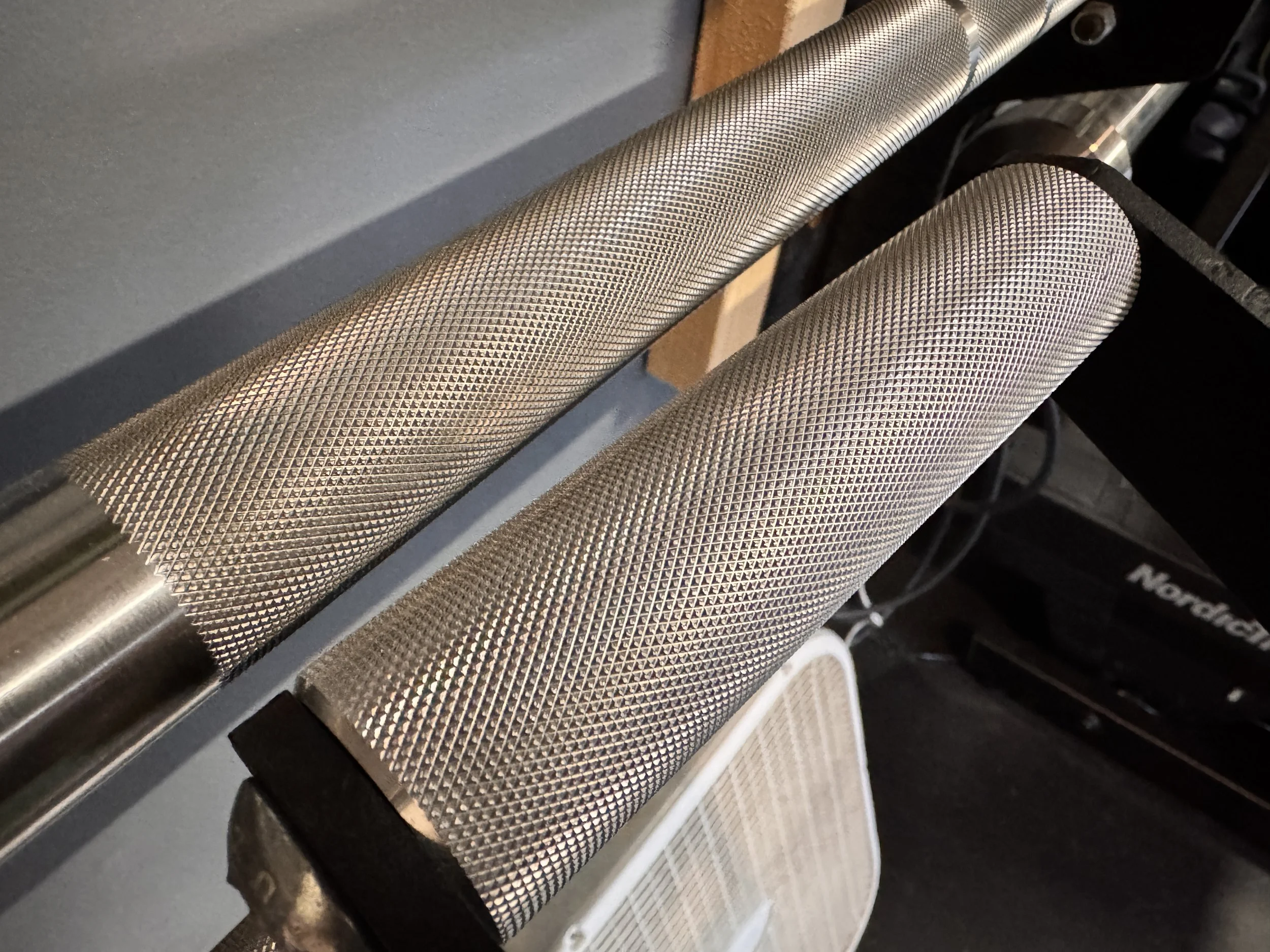
Rogue Ohio Bar Knurl
The CG-1C uses five-inch-long knurled aluminum handles, and Rogue lists the standard diameter at 32 millimeters with the same general Ohio-style knurl pattern they use across a lot of their equipment. In use, they feel excellent. There's enough texture to keep the handle planted in your hand under heavier loads, but not so much that higher-rep pulldowns and rows start feeling like a grip endurance test.
That's exactly what I want from a cable attachment. I don't want a slick rubber handle that starts moving around once my hands get sweaty, but I also don't need the attachment trying to sand my fingerprints off. The CG-1C lands in a really comfortable middle ground.
The only thing I'm still curious about long term is whether I might prefer one of Rogue's beefier handle options. The H-5 system gives you some room to experiment with different configurations, which is a nice bonus. That's not really a knock on the stock handles because they're very good. It's more of a personal preference thing, and the fact that the handles are replaceable means you can fine-tune the attachment later instead of being locked into one setup.
The Adjustable Grip System Is the Main Event
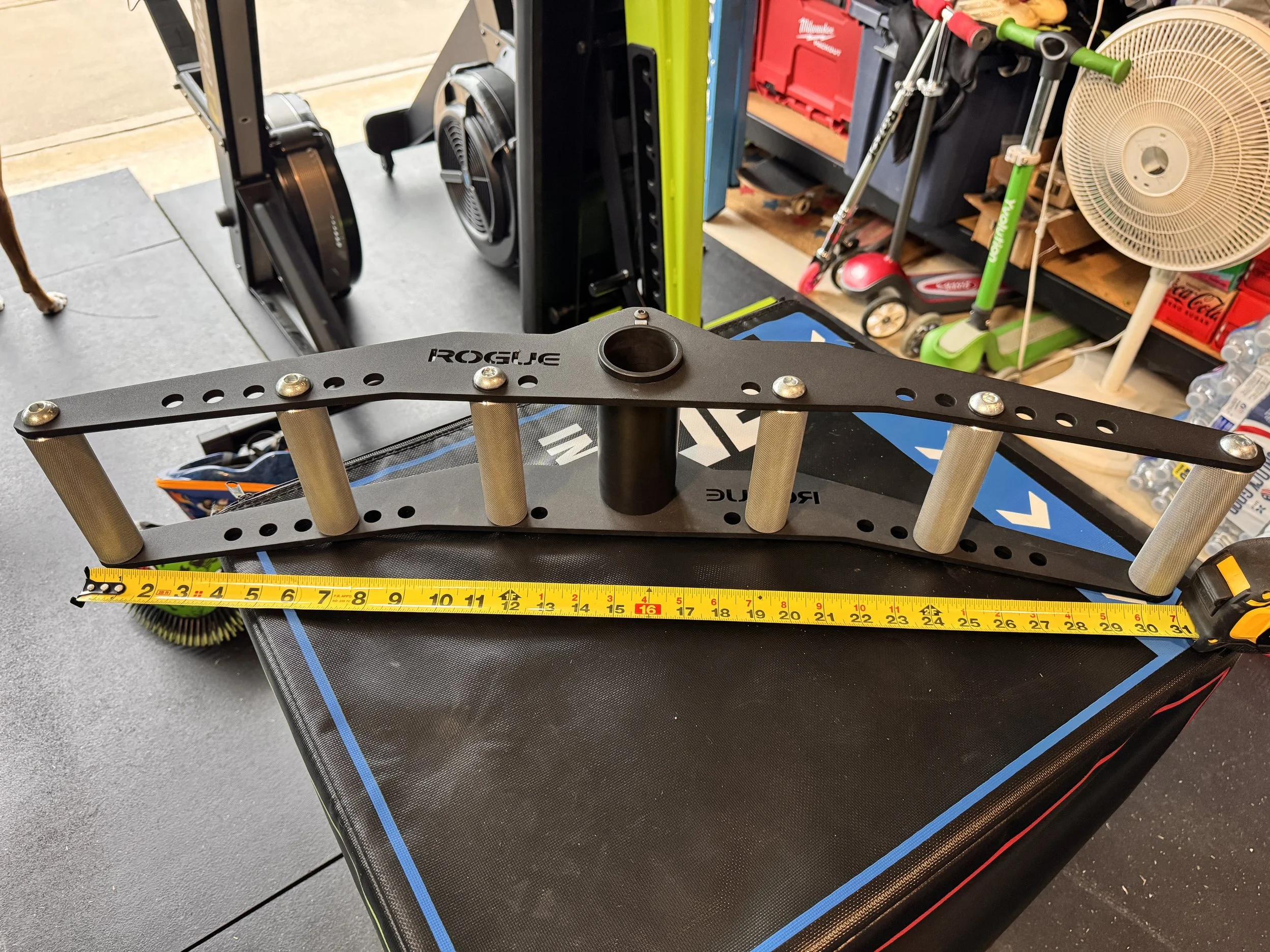
Rogue CG-1C Adjustable Options
The CG-1C gives you three basic grip zones, and there’s a lot of adjustability built into them. You’ve got a fixed wide grip at 30 inches, adjustable middle handles that can be set anywhere from 14 to 24 inches in two-inch increments, and close-grip handles that can sit at either six or eight inches.
On paper, that sounds like a ridiculous number of options, and honestly, it is. But the reality is that most people probably aren’t going to use every single position. I don’t. You’ll spend the first few workouts experimenting, find the two or three setups that feel best, and probably leave it there most of the time.
And that’s completely fine, because the real value isn’t in using every hole Rogue drilled into the thing. The value is that you get to choose the positions that actually fit you instead of buying a fixed multi-grip attachment where the manufacturer has already decided where your hands are supposed to go.
That gets even more useful if more than one person uses the gym. A grip width that feels perfect to me might not be what Jess prefers, so having that adjustability gives both of us a better setup without needing another attachment. Marriage is already one giant compromise. Apparently lat pulldown width is part of that now too.
Adjusting the Handles
Changing the handle positions isn’t difficult, but this definitely isn’t a quick-adjust system. You’re using the included Allen wrenches and physically relocating the handles, and for me that takes roughly two to three minutes per handle. That’s not terrible, but I’m also not stopping mid-workout because 20 inches suddenly doesn’t feel right and today somehow became a 22-inch kind of day.
That’s not really how I use the adjustability. I look at it more as setup customization than something I’m constantly changing between sets. Find the positions that feel best, tighten everything down, and train. Once I had mine configured, the handles stayed secure and I haven’t had any issues with them loosening during normal use.
Lat Pulldowns: Where the CG-1C Really Earns Its Money
If I had to pick the movement where the CG-1C makes the strongest argument for itself, it would probably be the lat pulldown. The neutral handles feel extremely natural, the grip is secure, and moving between the different handle positions actually changes the feel of the movement in a meaningful way. Go wide and you get one pulling position, move into the middle handles and your elbows naturally tuck more, and go all the way inside and you’ve basically turned it into a close-grip pulldown attachment.
I also appreciate that a lot more now than I probably would have 15 years ago. I barely use my traditional straight lat pulldown bar anymore. After more pushups than I care to count during my Army career, my shoulders have made their preferences pretty clear, and they definitely prefer neutral grips. The CG-1C lets me change the width and feel of the movement without giving up that neutral hand position, so I can still get some variety in my training without forcing my shoulders into positions they don’t particularly enjoy anymore.
And that’s where the price starts becoming a little easier to defend. If you look at the CG-1C as a $205 lat pulldown bar, that sounds pretty ridiculous. But if you look at it as several different premium neutral-grip pulling attachments consolidated into one piece, then we’re having a very different conversation.
Low Rows May Be Even Better
As much as I like the CG-1C for lat pulldowns, I might actually like it even more for low rows. The middle and close-grip positions feel especially natural, and the cambered shape gives you plenty of room to pull the attachment into your torso without the frame getting in the way. That might sound like a small detail, but it really isn’t.
One of the best compliments I can give gym equipment is that I stop thinking about it while I’m using it. With the CG-1C, I grab the handles and row. I’m not constantly adjusting my wrists, worrying about the attachment hitting my chest, or fighting against the geometry of the handle. It just works. Considering how much time I already spend thinking about gym equipment, it’s nice when I occasionally get to grab something and simply lift. Pasted markdown
Does the CG-1C Replace Every Cable Attachment?
Absolutely not, and I wouldn’t recommend buying it with that expectation. The CG-1C is primarily a neutral-grip attachment, so if you enjoy pronated or supinated grips, angled handles, rotating handles, MAG-style attachments, straight bars, or other specialty row handles, all of those still have a place in the gym.
The value of the CG-1C isn’t that it replaces every attachment you own. It’s that it gives you a huge range of neutral-grip pulling positions in one really good attachment, then adds legitimate landmine functionality on top of that. That’s enough for me. It doesn’t need to replace the entire attachment wall to justify its existence, and no, I’m not selling all my other cable attachments. Let’s not get carried away. Pasted markdown
Landmine Functionality Is More Than a Gimmick
The landmine functionality is one of my favorite things about the CG-1C and one of the main reasons I bought it in the first place. The center opening is designed to slide directly over your barbell sleeve, which means setup is about as simple as it gets. Slide it onto the bar, load your plates, and start rowing.
What I really like is that all of those grip options you have on the cable machine carry directly over to the landmine. You can go narrow, medium, or wide depending on the kind of row you want to perform. For a home gym, that’s smart design. Instead of buying a premium cable attachment and then another dedicated multi-grip landmine handle, I can use the same piece for both.
More importantly, Rogue didn’t have to compromise the cable side to make that happen. That’s what separates useful versatility from marketing versatility. This isn’t Rogue adding another feature just so the product page can have one more bullet point. It’s a second function that I actually use. Pasted markdown
The Landmine Limitation You Should Know About
The CG-1C isn’t perfect for landmine work, and the biggest limitation is pretty straightforward: it takes up a decent amount of barbell sleeve space. Once the attachment is sitting on the sleeve, your plates are pushed farther toward the end of the bar, and depending on your setup, that can affect both how much you can load and how much range of motion you have available.
I use competition-style plates, which helps because they’re relatively thin. If you’re using thicker bumper plates, I’d pay a little more attention to this before buying. I don’t consider it a dealbreaker, and for me the added versatility easily outweighs the limitation, but it’s absolutely something you should understand if landmine work is going to be one of your primary reasons for buying the CG-1C. Pasted markdown
Using the Rogue CG-1C With the Pritchett Pad
One of my favorite combinations since adding the CG-1C has been pairing it with the Rogue Pritchett Pad for chest-supported landmine rows. The Pritchett Pad gives me a stable chest-supported position, while the CG-1C gives me several different grip options. Together, they make for a really good rowing setup.
I can start with a tighter grip and keep my elbows tucked, then move wider and change the feel of the row without swapping attachments or rebuilding everything. That’s exactly the kind of equipment interaction I like in a home gym. You buy one piece, another piece makes it more useful, and suddenly those two pieces together unlock another movement entirely. That’s when a home gym starts feeling like a system instead of just a random collection of equipment. Pasted markdown
Plate Clearance With the Pritchett Pad
There is one thing you have to pay attention to with that setup, and that’s plate clearance. Because the CG-1C consumes some of the barbell sleeve, your plates are pushed farther outward. Depending on where your Pritchett Pad and landmine are positioned, full-diameter plates can get close to, or even contact, the underside of the pad before you reach the depth you want.
I’ve been able to make it work without too much trouble, but you may need to spend a little time dialing everything in. Adjusting the position of the landmine or Pritchett Pad can help, and using smaller-diameter plates or changing your loading order gives you a few more options.
Basically, you might have to play a little garage-gym Tetris. If you’ve owned a home gym for more than about six months, you already know the game. Pasted markdown
The Biggest Problem: $205 Is Still $205
Now we have to deal with the obvious problem. At the time of writing, the CG-1C costs $205, and no matter how much I like it, that is a lot of money for a cable attachment.
You can buy a perfectly functional lat pulldown bar and a basic row attachment for significantly less money, and your back is going to grow just fine. There’s nothing magical happening here. Your lats don’t know that your attachment was made in Columbus, Ohio.
What you’re paying for is the overall package. You’re paying for Rogue’s build quality, the adjustable grip system, the knurled handles, the cambered geometry, American manufacturing, the built-in landmine functionality, and the ability to consolidate several uses into one attachment. And yes, you’re also paying a Rogue premium.
Whether all of that adds up to $205 for you is really the entire question. For me, it does, but I also think it’s important to be clear about what this is. The CG-1C is a premium home gym purchase. It isn’t a foundational piece of equipment that everybody needs. Pasted markdown
Is the CG-1C Overpriced?
Probably, but I think that answer needs a little context because overpriced and poor value aren’t necessarily the same thing. Could Rogue make a functional cable attachment for less money? Of course. Could you train the same muscles with cheaper equipment? Absolutely.
But I don’t think value in a home gym is determined solely by finding the cheapest possible way to perform an exercise. I also care about how often I’m going to use something, how good it feels when I train with it, how much friction it removes from the workout, how long I expect it to last, and how many legitimate movements I can get out of it.
That’s where premium equipment starts making more sense to me. I’m generally a buy-once, cry-once kind of guy when I know I’m actually going to use something, and the CG-1C fits pretty comfortably into that category. Pasted markdown
Storage
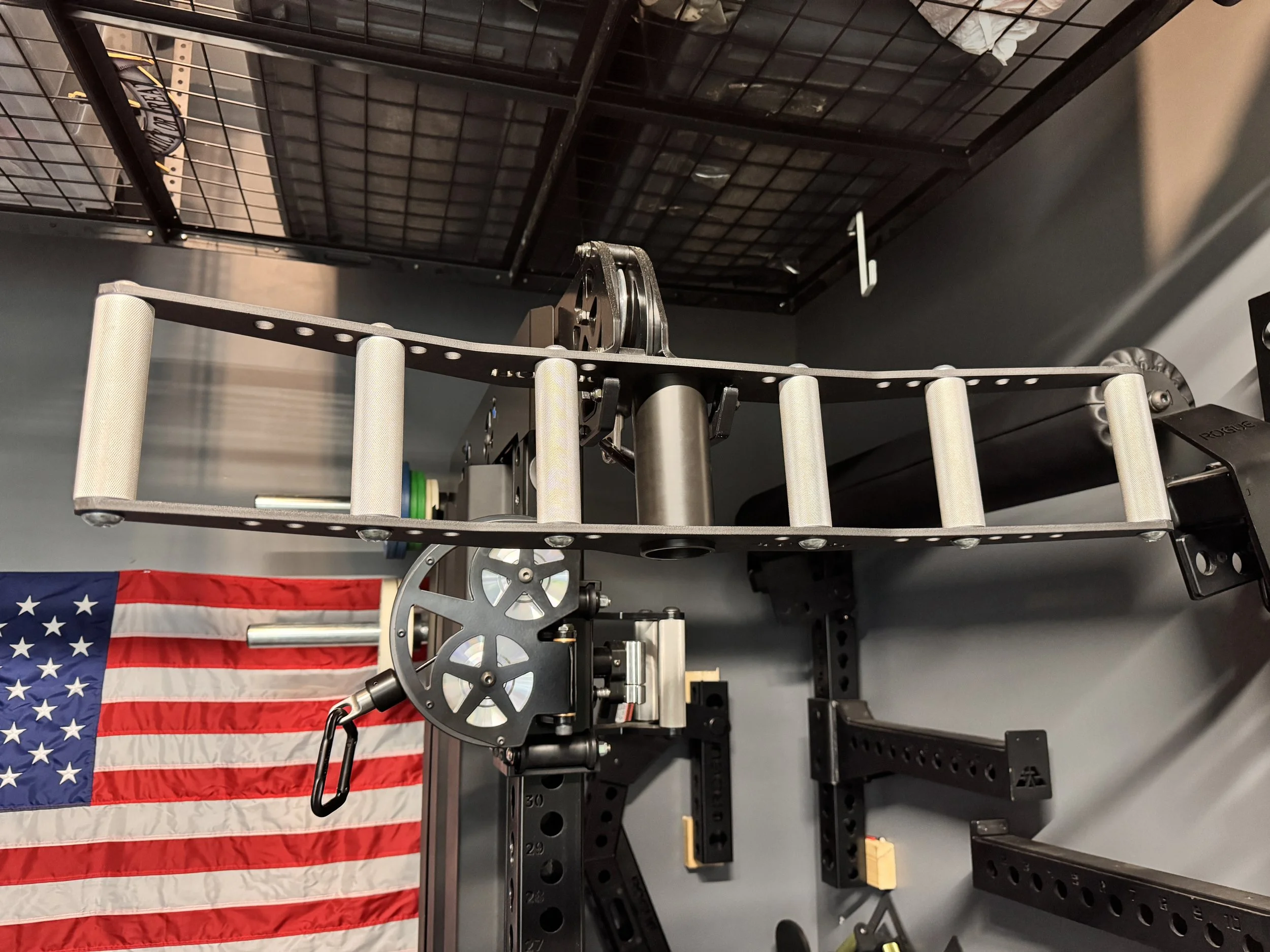
Rogue CG-1C stored on the Rogue CTM-1
Every home gym equipment review eventually comes back to storage, at least mine do. The CG-1C is more than 31 inches wide, so even though it consolidates several functions into one attachment, it’s not exactly small. I keep mine stored at the top of my CTM-1, which works well for my setup, but you’ll want to have a plan for it if your cable attachment storage is already getting crowded.
The good news is that this is one of those attachments that actually earns the space it takes up. I can use it for wide neutral-grip pulldowns, medium-grip work, close-grip pulldowns, low rows, landmine rows, and chest-supported landmine rows with the Pritchett Pad. That’s enough utility that I’m happy to give it some real estate in the gym.
Does that mean I’ve gotten rid of all my other attachments? Of course not. Prices only seem to move in one direction, so I say keep everything. That’s my highly disciplined financial advice for fellow home gym owners. Pasted markdown
Who Should Buy the Rogue CG-1C?
I think the CG-1C makes the most sense for someone who already uses a cable machine or lat pulldown regularly. If pulldowns and rows are staples in your training, better handles, better ergonomics, and multiple grip options are things you’re actually going to notice. It makes even more sense if you already prefer neutral grips, because that’s really where this attachment shines.
It’s also a much stronger value if you’re going to use the landmine functionality. That’s what takes the CG-1C from being another expensive cable attachment to something that can legitimately serve two different roles in the gym. And if you already own something like the Rogue Pritchett Pad or another chest-support setup, you can build a really nice landmine row station around it.
The other part of this is simply how you approach your home gym. If your priority is getting the absolute most training capability for the least amount of money, there are cheaper ways to accomplish almost everything the CG-1C does. If you’re willing to spend more on equipment that feels better, lasts a long time, and removes a little friction from training, then the argument for the CG-1C gets much stronger. Pasted markdown
Who Should Skip It?
I’d probably pass on the CG-1C if you only occasionally use your cable machine, strongly prefer traditional straight-bar pulldowns, don’t care much about neutral-grip variation, or have no real interest in landmine work. I’d also put it pretty far down the list if you’re still building out the basics of your home gym.
If you have $205 to spend and you’re choosing between the CG-1C and a piece of equipment that adds an entirely new training capability to your gym, buy the new capability first. The CG-1C is an optimization. It makes movements you can already perform better, more comfortable, and more versatile. That has value, but it isn’t the same thing as filling a major hole in your gym. Pasted markdown
Rogue CG-1C Review: Final Verdict
After spending a good amount of time with the Rogue CG-1C, I really like it, and honestly, I probably like it more than I expected to. As a cable attachment, it’s excellent. The neutral-grip handles feel great, the adjustable positions give you meaningful options instead of gimmicky ones, the aluminum construction keeps the weight manageable, and the cambered shape works especially well for rows.
The landmine functionality is what really rounds out the package for me. It gives the CG-1C a second legitimate use without making it worse at its primary job, and that’s where I think Rogue really got this one right.
Is it overpriced? Probably. Is it overbuilt? Absolutely. Is it necessary for most people? No. But do I think it’s worth it for the way I train? Absolutely.
Necessary isn’t really the standard I use when I’m evaluating premium home gym equipment. The better question is whether a piece of equipment improves my training experience or removes enough friction that I’m going to use it regularly. The CG-1C does both. It’s comfortable, versatile, extremely well built, fits the way I prefer to train, and most importantly, it earns its space in the gym.
Would I rather save some money and go back to a cheap chrome lat pulldown bar? Not a chance. I’d choose the CG-1C every single time, and that probably summarizes my relationship with Rogue better than anything else I could say.
Buy once, cry once, and then apparently start shopping for the next attachment.
Support the Garage Grind:
If this helped you make a decision, or gave you something you couldn't find anywhere else, hitting subscribe is the best way to keep this going. No fluff. No BS. Just real reviews from a real gym.
Got questions about any piece of equipment in here? Drop them in the comments. I read and reply to everything because this stuff matters. Your money, your training, your goals. You can also reach me directly on Instagram or Facebook at @IronAndLimeFitness.
-Drew, Iron & Lime Fitness
Barbells and Balance Things:
Watch the full video review on our YouTube channel
Rogue CG-1C Review: Is This $205 Cable Attachment Worth It?
More Articles here:
Rogue Multi-Use Rack Roller Review: 18 Months Later…I Wouldn’t Buy It Again
MERACH UltraRow R60N Review: Is This Air + Magnetic Rower a Real Concept2 Alternative for Home Gyms?
Rogue Ohio Bar: Cerakote vs. Stainless Steel
Bumper Plate Showdown: Rogue Competition vs Training Bumpers | Which Rogue Plates Are Best?
Rogue Monster vs. Bells of Steel Manticore Safety Straps: An Honest Home Gym Comparison
Straydog Strength GOAT Attachment Review: What Nobody Tells You Before You Buy
Rogue Dual Indy Functional Trainer Review: The Honest Breakdown After Daily Use
Everything in This Gym Has a Reason to Be Here: A Complete Home Gym Tour
Rogue Sandwich J-Cup Too Tight? Here's How to Fix It (Calibration Kit Explained)
Home Gym Makeover: How We Transformed Our Home Gym - Paint, Layout, and a Long-Awaited Delivery
Kensui Sapporo Swiss Bar & Calibrated Gold Plates Review: Worth It for Home Gyms?
Rogue Fitness CTM-1 Review: Is it better than the Rep Adonis Cable Tower for Home Gyms?
Moving the FM-6: Why Garage Gyms Must Evolve (And How to Survive the Move)
American Barbell 10-Sided Urethane Dumbbells Review: Commercial Luxury or Financial Mistake?
Here's Why I Wouldn't Buy The Rogue FM-6 Again: Rogue FM-6 Long-Term Review
Rogue Mutant Metals Ultimate Dip Attachment Review (1 Year Later): Is It Really Worth $365?
Rogue Kabuki Transformer Bar Review
Rogue Manta Ray Adjustable Bench Review
Rogue FM-6 Twin Functional Trainer Review
American Barbell Dumbbell Set and Rack Review
“Best Budget Gear for Building a Garage Gym”
Bells of Steel Safety Straps Review: A Perfect Fit for the Rogue FM-6
Train hard. Live bold. Stay lime.